

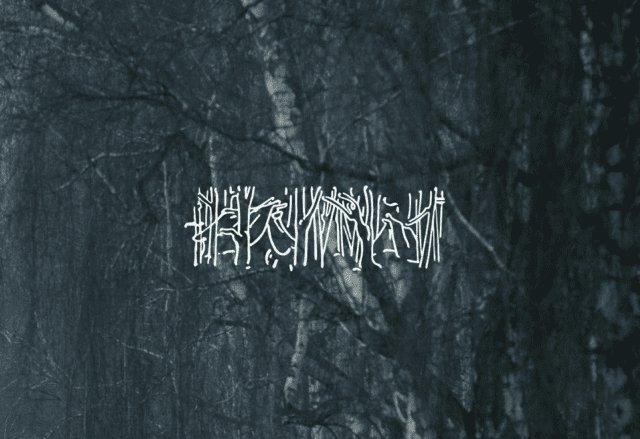
Everything you see in Landscapes of Resistance is, indeed, a landscape: the fields of flowers, the green meadows, the forests. But also the weathered walls, the colourful blankets placed on the bed, the reflections in glass windows. And the wrinkled skin of the protagonist, covered with lines and bumps, liver spots and a fading tattoo, representing a number.
All of these landscapes tell a tale. It is the universal tale of birth and bloom, of strength and growth, of decay and destruction. But it is also a very personal and painful tale, told by the film’s subject Sofija Sonja Vujanović, born in former Yugoslavia, before the Second World War.
It is Sonja’s voice we hear as we indulge our eyes with the mesmerising poppies, which symbolise the famous Partisans, those heroic resistance combatants whom Sonja was part of. But she also tells her story as we watch her, old and vulnerable, but with eyes full of fighting spirit, as she goes about her day – being dressed, fed and massaged.
This beautiful documentary is made by Marta Popivoda, who built a friendship with this amazing Auschwitz survivor, and whom she considers to be a fellow combatant against latter-day right wing intolerance and prejudice. Marta has modestly pencilled herself into the movie, quite literally. Excerpts of letters she wrote to Sonja over a period of over a decade are placed over yet another landscape. This time no voice-over, just silent reflections on a shifting climate with in an increasingly capitalist 21st Century Europe.
The impact of the unfolding story is as strong as it is grim. Sonja tells of her love for communism, which in her early years confronted her with the rise of fascism. With some pride she tells of the attacks she participated in as a Partisan, albeit in a matter-of-fact way. She could be describing a group outing, with a nice hike and a cosy dinner afterwards. Almost cheerfully, she proceeds to talk about her deportation to the concentration camp in Banjica, where she was interrogated and beaten unconsciousness. ‘You’ve beaten me up so badly, I can’t talk anymore’, she recalls telling her torturers, triumphantly.
And on it goes, packed like an animal onto a train to Auschwitz, with no knowledge of what was going on there. She couldn’t guess why people were chanting ‘gas, gas, gas!’ or what the high chimneys within the camp were for. But even those experiences didn’t break her soul – she never lost her will to resist, and to plot.
Marta Popivoda presents the horrendous story in a way that makes it not only bearable, but even hopeful and uplifting. It is like she wrapped these hideous facts in colourful sheets of tissue paper – you can still see the contours and feel the sharp edges, but it looks beautiful and serves to comfort the soul.
The shots of the sumptuous landscapes, the soothing interiors, the dogs playing in green pastures calm the mind and soften the blows that Sonja delivers with her words. The humour with which she shows her Auschwitz tattoo strengthens your faith in human resilience. And the love with which filmmaker Popivoda talks about her friend and her ideals gives you hope for the future.
The film is testimony to those who believe in justness, or in a world of empathy, and is a reminder that there will always be fighters who are ready to ‘break the fascist chain’.
Serbia, Germany, France, 2021, 95 minutes
Director and writer: Marta Popivoda
Writer and dramaturge: Ana Vujanović
Director of photography: Ivan Marković
Editor: Jelena Maksimovic
Sound designer: Jakov Munižaba
Producers: Dragana Jovović and Marta Popivoda for Theory at Work, Jasmina Sijerčić for Bocalupo Films
Executive producer: Zsofi Lili Kovacs
With: Sofija Sonja Vujanović, Ivo Vujanović





