

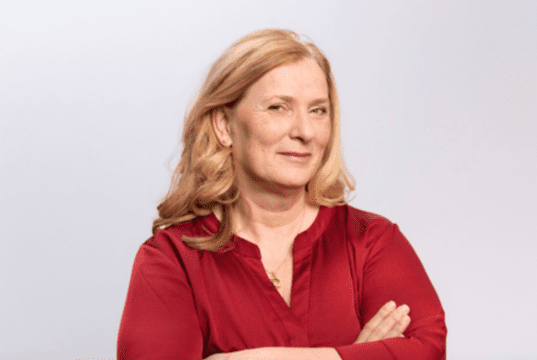


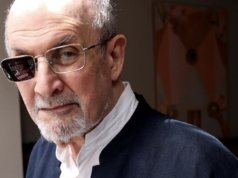

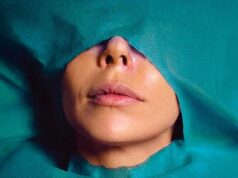
TIFF Lightbox: Tehran, Under the Skin by Afsaneh Salari
Afsaneh Salari’s new feature documentary Tehran, Under the Skin scrapes away at a side of Iranian life you won’t see in many other documentaries, namely the booming world of cosmetic surgery. Thousands of Iranian women every year are heading to surgeries to get noses sculpted, stomachs tucked, breasts lifted or skin tightened. The film, sold by CAT&Docs, has its world premiere in TIFF Lightbox this weekend. Director Salari talks to BDE.
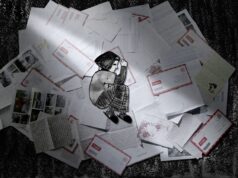
Venice Open: Letters from the Silenced Country by Andrei Kutsila
In Letters from the Silenced Country, exiled Belarusian director Andrei Kutsila, now living in Poland, combines archives, found footage and animation, as well as testimonies derived from letters written behind prison walls, to deliver a searing indictment of the regime that governs the country was forced to leave. “I only hope that this film will offer the international audience this opportunity to understand better our society, what is going on now, in my country.”
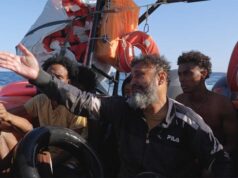
TIFF Lightbox: Rescue by Sine Plambech
In a film that has as many plot twists as any fictional movie, a kidnapping at sea splits a Yemeni family apart, as a mother’s fight for survival reveals the human cost of Europe’s border regime. Director Sine Plambech emphasises to BDE that this is “not an activist film… I see it as an artistic documentation of a human rights violation - but definitely I want people to watch it and say ‘is this a good idea, to continue to outsource the border responsibilities to countries with conflicts and war and militia and weapons? Does that live up to our European values?”
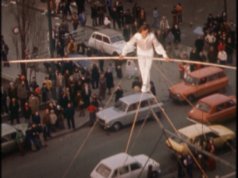
Venice FF, Giornate degli autori: Auber 89 by Giuseppe Schillaci
Paris-based Italian director Giuseppe Schillaci talks to Business Doc Europe about his new feature documentary, world-premiering in Venice, which recalls a period in the 1980s when a programme of regenerative investment in a run-down Paris housing estate led to a glorious spike in community empowerment and connection. It was “an intimate yet collective moment of solidarity and social transformation - before the banlieues went up in flames,” he says.
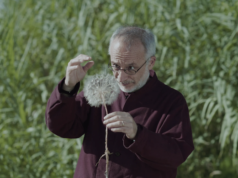
Venice Open: Holy Wood Dust by Victor Kossakovsky
Director Victor Kossakovsky and botanist Stefano Mancuso take viewers on an unprecedented journey into the life of trees. As Kossakovsky tells BDE, when he was three or four years old, growing up in the Soviet Union in the early 1960s, he was shown a leaf by his mother. She explained how trees are highly complex and sensitive organisms. “It is my first memory of myself,” Kossakovsky tells BDE of this early nature lesson.
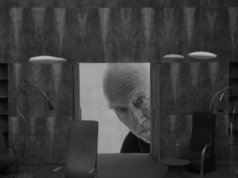
Venice Open: From Inside Out… by Wim Wenders
In his new 3D feature doc, Wim Wenders profiles the work of Swiss architect Peter Zumthor. The parallels between architecture and filmmaking are obvious, points out Wenders, who works in a similar way to his illustrious subject. A house, he believes, “is a story,” and in a film, each shot can be regarded as “a brick in time” out of which scenes and then entire movies are built. “I don’t think the movie is remotely there when you have a script. Actually, I don’t think it is there at all. It is only in the shooting process that the film takes shape,” he adds.
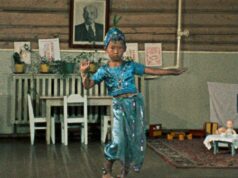
Venice Open: Imperium by Sergei Loznitsa
The Soviet Union is revealed in all its contradictions in Sergei Loznitsa’s sprawling new archive-based documentary Imperium (screening this week in Venice Open - Out of Competition). The footage he uses was shot by Italian filmmakers in the early 1970s. They travelled to every corner of the Soviet empire, from major cities like Moscow and St Petersburg to far flung towns in central Asia; from Ukraine to the Baltics, from Azerbaijan and Kazakhstan to Uzbekistan. The Ukrainian director talks to Business Doc Europe.

Venice Open: They’re Here by Laura Poitras and Rachel Lauren Mueller
Laura Poitras and Rachel Lauren Mueller’s 25-minute ‘horror’ film, which started shooting in January this year, shows ICE (Immigration and Customs Enforcement) agents terrorising the residents of Minneapolis. “We knew it had to be filmed then,” Poitras tells BDE. “It [the US] is a country that has violence at its core; it has empire at its core, and it is engaging in violence [all the time],” she adds.
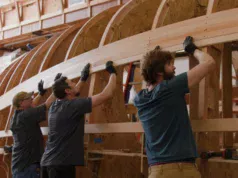
Venice Open: Boatbuilders by Luke Lorentzen
In Luke Lorentzen’s sublime meditation both on community and competence, we meet some of the workers at the 60-strong Brooklin boatyard who, over four seasons, are tasked with building a 56-foot luxury sailboat. It is a film populated almost exclusively by men. “I think it just emerged...how they treat one another, and how they are men who are both very strong and very sensitive,” Lorentzen tells BDE. “They just have a spirit to them that I really enjoyed being with, and that felt different from the [male] ego or power or dominance that we often see in our culture.”
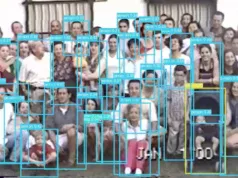
Venice Critics Week: The End of Times by Bibiana Rojas Gómez, Juan David Cárdenas
In Bibiana Rojas Gómez and Juan David Cárdenas’ hybrid doc world-premiering in Venice, Salomé sifts through five decades of Cardenas family footage in search of the reasons behind her mother’s depression. Co-director Gómez was able to bring a detached eye to over 70 hours of family footage that was so personal for Cárdenas. “I am so close to it that I am not seeing the creative possibilities, because I am seeing mainly my family,” Cárdenas recalls the dilemma that his partner was able to solve.





