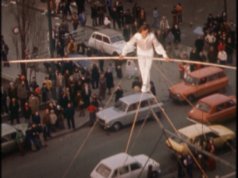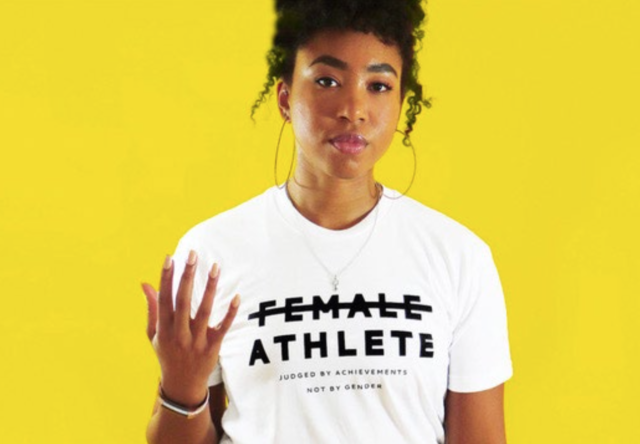
Julia Fuhr Mann’s British Pathé Archive Award-winning project Life Is Not a Competition But I’m Winning sets out to explore the utopian potential within the Olympic discipline of running, and sketches a world of sport beyond rigid gender images.
The documentary argues that the way bodies are depicted in sports contributes to persistent prejudices about women’s physical inferiority, and cements “inflexible, outdated assumptions about the binary gender divide.” Her film, therefore, “dreams of a queer-feminist redesign of competitive sports – because gender segregation as persistent and yet socially accepted as it is in competitive sports is almost inconceivable in other areas of society.”
Life Is Not a Competition But I’m Winning will embrace archive and contemporary footage in arguing its case, and will apply a further layer to counter what they believe is an inherent imbalance in the very notion of competition. A “gang” of runners, consisting of activists and current and former athletes, will design their own competition based on the notion of fairness.
“So someone with long legs is going to get hurdles or someone with more muscles gets heavy weights in order to show how ridiculous competition is in the first place,” says producer Melissa Byrne. At Munich DOK.fest, director Fuhr Mann stated how this gang “is creating their own rules and creating a queer feminist utopia of sports.”
Byrne adds that Lizzie Borden’s classic/iconoclastic doc-style sci-fi drama Born In Flames (1983) is a major influence over the Fuhr Mann’s 80-90 minute documentary, which is fully financed (€335k) and which shoots August to November 2021. Post-production is expected to be completed by Autumn 2022.
Byrne acknowledges that not everybody shares her and Fuhr Mann’s views, even within the LGBTQ community, pointing out how Caitlyn Jenner (formerly Olympic gold medal-winning decathlete Bruce Jenner) recently voiced opposition to transgender girls competing in girls’ school sports.
“People are not of one opinion, and we thought that would make a great subject for a documentary hybrid feature film,” Byrne stresses. “Everywhere people are talking about gender barriers and language of course. And sport is such an important topic in a lot of people’s lives that it’s going to come up more and more there in the future too. So we wanted to make kind of a provocative film to make people think about it. Everyone can have their own opinion, but we would like to get a discussion going.”
In her director statement Fuhr Mann stresses how, “I love watching sports competitions. But at the same time, I reject the basic idea of competitive sports – competition, hierarchies, and the concept of two supposedly clearly separable genders and all the social unevenness that results from that assumption. Can these extremes be reconciled? Is a world of sports beyond stereotypical gender assumptions possible?”
“Julia is a great director and her past films have already focused on topics of social inequalities,” reflects Byrne, referencing Fuhr Mann’s Riot Not Diet which argues that in times of self-optimization, your belly is a statement. “She has a very interesting take on showing problems in society, but not using a critical, negative voice, but in an upbeat way which makes the audience more interested and engaged…She wants to design a utopia where these problems don’t exist anymore. And this is, in my opinion, far more interesting in most cases.”