We are living in a “tough world,” Christine Camdessus, Creative Director of Biarritz-based Fipadoc (Jan 19-27) acknowledges, and if each competition section were a bouquet of flowers, a prominent plant in each would be the local chardon bleu, perfectly formed but sharp and dangerous, she says. Hence the festival’s decision to include the already highly lauded (and shocking) 20 Days in Mariupol in the International Competition programme, a film that Camdessus that acknowledges may well become the “iconic film on this war in Ukraine.”
She points to another film, which is equally tough but which offers a greater degree of hope. In One of the Thousand Hills (Bernard Bellefroid, Impact Programme), we are reminded of the genocide that took place in Rwanda in 1994. The film tells of three kids; Fiacre, Fidéline and Olivier, aged 4, 5 and 9 respectively, who were innocent of everything other than being born Tutsi. They children were murdered in their village in broad daylight.
“What is really striking is all of that happened in villages where it was neighbours killing each other,” says Camdessus of the film. “And this ability to now live together and to accept and pardon what has happened, this is stunning. And it gives some hope to the capacity with time to get over the worst… to look at the most dreadful events and see that there’s a way of reconciliation.”
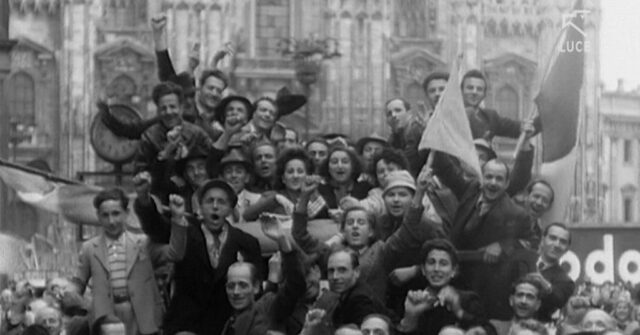
This year Italy is in the frame at Fipadoc. The festival opens with Giulia Giapponesi’s Bella Ciao, about the origins of the eponymous people’s folk anthem and which precedes a programme of recent Italian docs, including the quite wonderful Pure Unknown by Valentina Cicogna/Mattia Colombo and Marco Bellocchio’s Marx Can Wait, as well as a professional assessment of how to work with and within the Italian doc industry.
“It’s true that the strategy of focus by territory helps us to get into a specific documentary production [such as in Italy],” says Camdessus. “And that’s very useful both for Fipadoc programming and also for the colour of the Industry program because it offers a strong proposal in getting more to know the talents, the way to work with a country, the way to work with the institutions. Which are the festivals? Who are the [institutions] who can finance your project? Who are the [companies] who are open to co-production? And it’s very pleasant to be able to make a synthesis of that and propose that to the French and European professionals.”
During Fipadoc Industry (January 22-25), Italian RAI and France Televisions will be announcing details of a package of projects on which broadcasters will collaborate.
Camdessus is confident that wider relationships will begin to develop during Fipadoc between Italian professionals and their French and international counterparts. “We don’t expect an immediate result. We are aiming for midterm. It takes time to make documentaries. It takes times to find films that you can produce together, but we are planting little seeds for the future.”
The Fipadoc boss expresses her surprise and regret that, when she goes to many international festivals and markets, the local industry isn’t adequately promoted to the international guests in attendance. She feels that she leaves these events still with little understanding of the make-up of the industry within the host country. “I would say for sure that what is specific to Fipadoc is we are a door that opens to the French market,” she says. “We are very attentive to create two or three sessions in English for the Europeans who come to Fipadoc to know better this French market, which is a rich market, which is a market where broadcasters buy foreign films and where French producer wants to co-produce.”
In addition to Fipadoc’s regular high-level presentation of international pitching sessions (including International and European First Film pitches) European-focused producer networking sessions round tables, conferences and keynotes, Camdessus flags up the inaugural Panoramas du documentaire programme, presented in partnership with LaScam and Procirep. “The programme consists of three afternoons of collective debates on the future of documentary in all its forms and from all angles. This is a brand new opportunity to bring together directors, producers, broadcasters, and distributors to analyse and discuss future solutions for our documentary industry.”
On the European First Film pitch programme, Camdessus underlines how she wants Fipadoc very much to be a place where newcomers are welcomed. “It is easier to feel welcome in a smaller event. So when you were asking what make us different, I think one of the things we’re trying to develop now is being a place where new talents, young producers, young directors, would be part of the game. And as an experience, I remember the first time I went to IDFA, I di§
n’t even know who to talk to. So we are welcoming them and mentoring them. So they’re never going to be alone.”
Elsewhere, the Doc á la page programme enables the pitching of books for potential doc adaptation, while there will be dedicated slots for documentary films and filmmakers from Italy, with specific pitching, matchmaking and co-production sessions.
Camdessus further underlines the relaxed and welcoming nature of her event, one which promotes inclusivity especially to Europe’s smaller industries. “We are very active to make sure that the Visegrad countries are here, all the small countries of Europe, the Baltic Sea countries, the central Europe countries, and the Balkan countries who will be the focus of 2025. So being in a place where when you are from a smaller place, you don’t get into a huge jungle where you feel you can’t compete. This is Europe. And it’s all of Europe, not only the big countries,” she signs off.