

“Sunny Side is an incontournable market for the NFB — a place where we can solidify and confirm alliances with key industry players while also discovering new ones,” Nathalie Bourdon, Director of Distribution & Market Development at National Film Board of Canada, told Business Doc Europe just after doors opened on La Rochelle 2025. “It’s one of the most commercial and fruitful markets we attend, alongside MIPCOM and IDFA, especially when it comes to documentaries.”
Bourdon is looking to entice international broadcasters with a diverse slate of new films, while assessing the output of counterparts this side of the Atlantic. “We’re noticing more and more European platforms and content aggregators making a strong, aggressive presence at the market,” she says. “As a North American, it’s especially valuable to review the upcoming line-ups of the major broadcasters — like France Télévisions and Arte — to understand the trends and priorities shaping the European documentary landscape for the year ahead.”
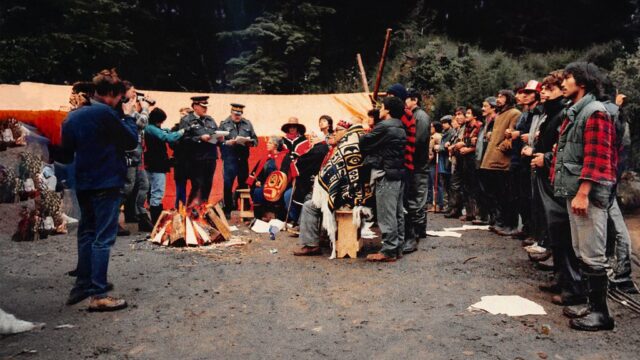
NFB’s The Stand, directed by Christopher Auchter, recently received a Special Mention of the Youth Jury at Sheffield Doc Fest. The synopsis reads: On a misty morning in the fall of 1985, a small group of Haida people blockaded a muddy dirt road on Lyell Island, demanding the government work with Indigenous people to find a way to protect the land and the future. In a riveting new feature documentary drawn from more than a hundred hours of archival footage and audio, award-winning director Christopher Auchter (Now Is the Time) recreates the critical moment when the Haida Nation’s resolute act of vision and conscience changed the world.
For the 88-minute Posthumans, director Dominique Leclerc spent years depending on medical devices for her survival. Then, looking for alternative solutions, she entered the world of emerging technologies. Posthumansfollows her as she meets with cyborgs, biohackers and transhumanists who are trying to use these technologies to outsmart illness, aging—and even death. The documentary looks at pressing ethical and political questions that are sure to impact the future of our species.
Nova Ami and Velcrow Ripper’s Incandescence (52/105 mins) is an immersive cinematic experience that weaves together on-the-ground footage with extraordinary stories of survival and adaptation that transform our understanding of wildfire.
Meanwhile, Noam Gonick’s Parade: Queer Acts of Love & Resistance captures pivotal moments that sparked Canada’s 2SLGBTQI+ movement, honouring the activists and elders whose resistance led to the rights we have today. Through rarely seen archival footage and first-person accounts, audiences are brought to the frontlines of the struggle.
In Chase Joynt and Julietta Singh’s 89-minute The Nest, at the end of her mother’s life, decolonial writer Julietta Singh returns to say goodbye to her childhood home. As she digs into the history of the house, she uncovers 140 years of forgotten matriarchs and political histories she never knew. “In this genre-defying cross-community collaboration, a single home is transformed from a place of siloed stories into a site of radical potential,” says Bordon.
I Lost Sight of the Landscape blurs the boundaries between art and life, Bourdon further points out. Intrigued by a theatre artist’s creative process, director Sophie Bédard Marcotte makes 16 different versions of the same film—one in which art and life are continually intertwined—revealing the uncontrollable nature of life, with honesty and a good dose of humour.
The 77-minute Siksikakowan: The Blackfoot Man comprises an intimate exploration of Indigenous masculinity. Siksika filmmaker Sinakson Trevor Solway intimately portrays the lives of Blackfoot men as they navigate identity, kinship and the complex expectations of manhood. Through unfiltered moments and revealing conversations set against the breathtaking landscape of the Prairies, the film reimagines what it means to be a Native man. Siksikakowan: The Blackfoot Man is a profound ode to strength, vulnerability and love across generations.
Finally, in Anne-Marie Rocher’s 95-minute Urban Forest, the director demonstrates how green spaces have long been neglected in our cities, but in recent years how grassroots mobilization has helped us rediscover the beneficial effects of urban forests. Exploring innovative nature-restoration projects in cities across Canada, Urban Forests is nothing less than an antidote to pessimism, proving that solutions to environmental challenges are closer than we think.
When not pitching, Bourdon will be an eager participant during Sunny Side’s expansive programme of talks. “I want to highlight the quality and relevance of the industry conferences. They’re always insightful and valuable for us,” she signs off.





