

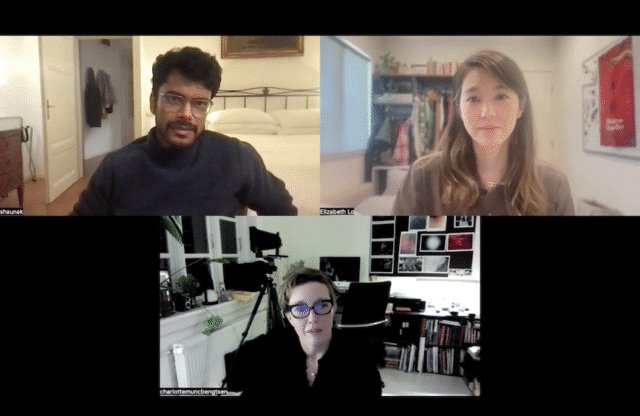
US-based Hong Kong director Elizabeth Lo and editor Charlotte Munch Bengtsen sat down to discuss their Mistress Dispeller, sold by The Party Film Sales, with Academy Award-nominated filmmaker Shaunak Sen (All That Breathes, 2022).
The synopsis reads how, in China, a new industry has emerged devoted to helping couples stay married in the face of infidelity. Wang Zhenxi is part of this growing profession, a “mistress dispeller” who is hired to maintain the bonds of marriage — and break up affairs — by any means necessary. Offering strikingly intimate access to private dramas usually hidden behind closed doors, Mistress Dispeller follows a real, unfolding case of infidelity as Teacher Wang attempts to bring a couple back from the edge of crisis. Their story shifts our sympathies between husband, wife and mistress to explore the ways emotion, pragmatism and cultural norms collide to shape romantic relationships in contemporary China.
“The thing that struck me while watching is that there is something that this doc gets at that usually documentary films aren’t able to access,” Indian director Sen told Lo. “And we kind of relegate it to the precinct of fiction cinema, by which I mean, usually so much of docs have to do with a kind of surface of behaviour instead of internality. And the way to articulate internality is usually a voiceover or other kinds of stylised devices. Whereas it’s our fiction counterparts who are able to kind of excavate the delicious existential rigmaroles of things that happen between relationships.”
“We almost never get scenes of ‘an ugly childhood’ kind of tableaux in documentary because, one, it is a question of access, but also the proclivity to mine interiority is not something that is usually consigned to doc filmmaking.”
Sen adds: “This is arguably one of the first films I’ve ever seen, which is able to get into the innards and entrails of that subterranean world [of the characters] – which I think is marvellous…I genuinely think that, and I do think that the film’s form and structure help that.”
Lo responds: “I think for me…as a documentarian and as a filmmaker…that the seduction process that fiction filmmakers will often employ to seduce you into the subtext, into the subterranean of the consciousness through action and through expression and through what’s not being said – that’s something that I felt formally was really important to lean into, because I wanted to experience what I experience when watching [feature] films, and feel very drawn in. And [the experience] lingers with you psychologically afterwards because there’s no explanation for how they’re behaving and whythey are, but you figure it out afterwards as you’re ruminating.”
“I wanted these scenes to play out in a similar way, I think, not relying on their interview as much,” Lo adds. “We wanted audiences to have some handholding and guardrails to get into [the characters’] inner psyche a little bit, to tip into it, [so] we used this voiceover that we crafted from the interview. But the way that we use that voiceover, we wanted it to be kind of dreamlike, like in Wong Kar Wai’s films, like in Chungking Express, where you have those characters talking about how they feel about love and the details of their lives…”
Click above the watch the entire discussion between Elizabeth Lo, Charlotte Munch Bengtsen and Shaunak Sen.





