In her feature doc In Defense of Self Norwegian filmmaker Linn Helene Løken explores the fatal shooting of a man in urgent need of psychiatric help. The film reconstructs the final years of writer Morten Michelsen through more than 35 hours of personal audio recordings, alongside police reconstructions of the incident.
World-premiering at CPH:DOX 2026, the 87-minute film examines the fragile intersection between mental healthcare systems and law enforcement, while raising broader questions about responsibility, narrative control and institutional transparency.
Speaking with Business Doc Europe, Løken outlines the film’s origins, the ethical challenges of building a narrative around the voice of a deceased protagonist, and why listening became the central creative principle behind the project.
The project did not initially begin with Michelsen’s case itself. Løken explains that her interest in the subject emerged while researching a series of similar incidents involving police interventions in mental-health emergencies. “Actually I started with a different case that happened three months before Morten died,” she says. “Within about three years there had been six people who were killed by the Norwegian police in circumstances where they were called out to help in a healthcare emergency.”
These incidents struck the filmmaker as deeply unusual within a country widely perceived as peaceful and historically reluctant to arm its police force. “Norway is a country where the police haven’t even been allowed to wear guns up until this year,” she notes. “So I was very curious as to why this would happen.”
As she investigated further, Løken began to connect these tragedies to broader structural changes within Norway’s mental-health system. “It obviously also has to do with the fact that we’ve dismantled the psychiatric healthcare system here. There are very few long-term facilities or treatment centres these days.”
The film eventually took shape when she made contact with Michelsen’s family. “I connected with Morten’s parents about a year after his death, and there was immediately a trust between us,” she recalls. “They trusted me with his voice recordings.”
The material proved extraordinary: more than 35 hours of tapes documenting Michelsen’s thoughts, struggles and creative ambitions. “They hadn’t even listened to them themselves because it was too painful,” Løken reveals. “But when I heard them I thought: this is a voice that needs to be heard.”
She felt that public narratives surrounding such cases were overwhelmingly shaped by institutional perspectives. “What usually happens is that the police or the Bureau for the Investigation of Police Affairs write a report,” she explains. “And it’s always from the perspective of the authorities. But what about the perspective of the person who was shot? That voice is always missing.”
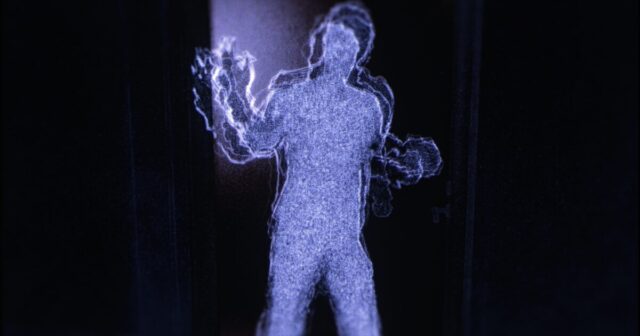
The final film is structured around three distinct narrative layers: Michelsen’s own recordings, police reconstructions of the shooting and scenes from a police academy training programme.
For Løken, the protagonist’s voice naturally became the spine of the film. “From listening to the recordings it became obvious that Morten’s universe had to guide the story,” she says.
Much of Michelsen’s audio diaries revolve around his attempts to write a novel and document his experiences. “He talks about his script and his book all the time, in every kind of situation,” Løken explains. “He was really a storyteller himself.”
At the same time, the filmmaker spent nearly two years trying to gain access to police documentation related to the case. “It took a very long time to get access,” she says. “I applied for access in five or six cases and I only got it in Morten’s case.”
The reconstruction footage became a crucial narrative counterpoint. Rather than focusing solely on what happened during the shooting, Løken became interested in how the official narrative itself is constructed. “It’s not only about what happened,” she says. “It’s also about how they write the story about what happened. How they control the narrative.”
The reconstruction footage reveals subtle differences in recollection among the officers involved. “We tried to capture all the nuance — how their memories differ, how they stand and act and rationalise what they’ve done,” she says.
Although Norway is often considered relatively transparent compared to many countries, the research process proved slow and bureaucratic. “We did get a lot of material,” Løken says. “But we were denied the two other videos from the reconstruction.”
Besides, obtaining the documents required an old-fashioned and time-consuming process. “You have to sit in their office and read everything there. You can only take notes — they give you nothing digital, no papers, nothing,” she explains.
The process can become prohibitive for filmmakers without institutional backing. “If I hadn’t had the support that I did, I wouldn’t have had time to do it.” Løken worked with legal advisors from the Norwegian press association as well as an independent lawyer attached to the production to navigate the complex access procedures.
Meanwhile, building a film around the voice of someone who has died — especially in such tragic circumstances — required careful ethical considerations. The filmmaker worked closely with Michelsen’s family throughout the process and everyone appearing in the recordings was contacted and informed about their presence in the film.
Healthcare professionals featured in the material were anonymised where necessary, while some voices belonging to emergency personnel were altered because the production could not identify them. The director also offered authorities the opportunity to view the film before its release. “But they didn’t want to,” she tells us.
While In Defense of Self is rooted in a specific tragedy, Løken sees the film primarily as a way of highlighting systemic challenges rather than proposing definitive solutions. “As a filmmaker I’m not sure I should be pointing at solutions,” she says. “I can point at the challenges.”
Nevertheless, she believes Michelsen’s story exposes important gaps within the current mental-health system. “We have dismantled the psychiatric healthcare system for a long time,” she notes. “And even the clinic where Morten applied to go has now been shut down.”
She also emphasises the importance of listening more carefully to patients themselves. “I think we should listen to people like Morten,” she says. “He actually has solutions himself. He knows what works for him.”
At the time of his recordings, Michelsen advocated for experimental therapies that were not yet widely accepted. “He was suggesting psychedelic-assisted therapy,” Løken explains. “Last year it was accepted in several Norwegian hospitals, but when he talked about it five years ago it was a no-no.”
Emergency services, she adds, must also develop stronger psychiatric expertise. “There was actually a psychiatric ambulance in Bergen the same day Morten was killed,” she says. “But it stopped operating at nine o’clock — and this happened one and a half hours later.”
From the outset, Løken wanted sound to guide the film’s aesthetic approach. “Because the recordings were so important, I wanted them to be the centre,” she says. The director believes listening can create a deeper form of intimacy than images alone. “This may sound strange coming from a filmmaker, but I believe we get closer to people when we listen to them instead of looking at them,” she explains. “There is more intimacy in listening.”
The creative team therefore designed the film around Michelsen’s subjective perspective. “I wanted to put the audience inside his body, basically,” she says.
Løken sat down with editor Truls Krane Meby, describing their collaboration as “a dance with the material.” Across cinematography, sound and music, she encouraged collaborators to resist conventional documentary polish. “I told everyone to do as little as possible and forget what they normally do,” she says. “I didn’t want it to feel artificial.”
Even the visual compositions were deliberately imperfect. “Because when something isn’t harmonious it creates discomfort — and I wanted that feeling,” she insists.
After five years working on the film, the emotional toll of the story was significant for the team. “All of us working on the film have been very affected by the material. It’s very hard to spend so long with such a tragic story,” she signs off.