The World Congress of Science and Factual Producers (November 9-12) is a leading international gathering for the factual media industry, bringing together professionals to exchange ideas, explore new approaches and examine how science, history and other intellectually engaging subjects can be brought to mainstream audiences.
Every year it is hosted in a different city – this year it is Tallinn – where up key insights into global market developments and editorial trends are offered up, while at the same time top doc execs can celebrate both innovation and excellence in the production of intelligent, thought-provoking content. It’s also a core networking hub, offering “privileged access” to the major global players in factual media.
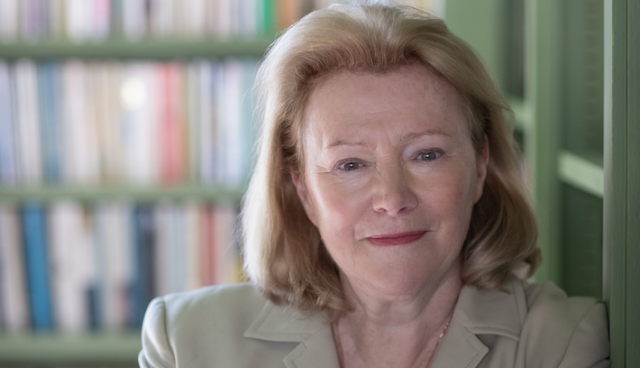
Before sitting down to questions posed by Business Doc Europe, Editorial Director Sara Ramsden reminded me of a chat we had some five months earlier.
“I don’t know if I told you on the plane to La Rochelle [for what was to be the final Sunny Side] that I first went to World Congress in 1994, so I’ve been going for 32 years,” she confides. “There will be several people in Tallinn this year that were there then, about five of whom are still my close personal friends, and all of whom are senior in the industry. That’s what Congress inspires: loyalty and connection. It’s genuinely unique in the TV festival world. It’s small enough to have the intimacy of human connection, but big enough to matter.”
Ramsden further underlines what she believes to be the necessity of a gathering such as WCSFP, or Congress, as she terms it. “It’s necessary because the industry is going through a period of extraordinary upheaval, and people need somewhere to make sense of it together,” she tells BDE.
“The economics of television are changing. The traditional commissioning structures are under pressure. Streaming platforms, YouTube and independent creators are changing the relationship between audiences and content. AI is transforming both production and distribution,” she adds. “But perhaps most importantly, the relationship between science and the public is changing too. Misinformation is flourishing, trust in expertise is contested, and younger audiences are finding their information in very different places.”
“These are not challenges that any one producer, broadcaster or platform can solve in isolation,” she underlines. Congress provides a place to step outside the day-to-day pressures of making programmes, and ask some bigger questions: Where is our industry going? What is our responsibility? And how do we make sure science storytelling remains relevant, ambitious and influential?”
WCSFP is an event that really “matters,” Ramsden further underlines, especially at a time when science literacy has never been more important. That said, the ways in which people encounter scientific information are becoming increasingly fragmented, she argues.
“The traditional gatekeepers of information are losing their dominance. Anyone can become a science communicator. Some are brilliant; some are irresponsible; some are actively misleading,” she stresses. “Meanwhile, the traditional television industry is struggling to work out how to finance and deliver ambitious factual content. There is a danger that, just as the world needs more intelligent, entertaining and authoritative science and factual storytelling, the industry that produces it is becoming less confident and less well funded.”
“We need to get better at telling important stories, not retreat from them. And that requires a new conversation between television, YouTube, podcasts, streaming platforms, scientists and the next generation of creators. That is what Congress is about.”
Like the best market gatherings, whether for large or small screen, Ramsden describes an event that is as convivial as it is invigorating. “The atmosphere is one of the things that makes Congress genuinely special. It’s intellectually stimulating, certainly, but it’s also enormously sociable. There’s a real sense of community. People come for the programme, but they also come for the people.”
“We have a packed social programme, which is an important part of the experience. There’s the Happy Hour drinks, the big dinner at the Tallinn Maritime Museum, with a performance from Puuluup, Estonia’s Eurovision entry, and all the opportunities to get together over dinner in smaller groups. People make their own arrangements, reconnect with old friends and introduce themselves to new ones,” she adds.
“What’s remarkable is the loyalty. We have people who have been coming to Congress for more than 30 years. They wouldn’t miss it for the world. That tells you something about the strength of the community. This isn’t simply an annual industry event that people attend because it’s useful. It has become a fixture in their professional and social lives.”
Not that it’s all about schmoozing and reminiscing. While not pretending to be a MIPCOM or an EFM, there is still an insistent market dimension to WCSFP, Ramsden tells BDE.
“People come to be intellectually stimulated, to reconnect with their international community, but also to make business happen,” she says. “In many ways, Congress operates as a continuous informal market. Throughout the event, people are meeting, pitching projects, discussing ideas, looking for co-production partners and getting their programmes in front of potential commissioners. Business happens over coffee, over lunch, in the bar and in the corridors. There is a constant exchange of ideas and opportunities.”
“We also have a more formal initiative called Pitch Me, where we pair people who have projects to pitch with relevant decision-makers. It gives producers a much more direct opportunity to get their ideas in front of commissioners, broadcasters and platforms,” she continues.
“Congress is a much broader proposition. The business is important, but so are the ideas, the debates and the people,” Ramsden rebuffs comparison to the larger, juggernaut markets. “Indeed, one of our problems is that the editorial programme is so strong that people sometimes don’t want to miss a session to go to a meeting! And I think that’s rather a nice problem to have.”
“Ultimately, our audience is anyone who cares about how we tell important stories about the world – and how we get those stories in front of audiences,” she adds.
And when doors close on Congress 2026, what constitutes a job well done? “For me, a job well done is when people leave feeling that their batteries have been recharged. That they’ve been challenged intellectually, inspired creatively and reminded why they came into this industry in the first place,” she enthuses. “I want them to leave with new ideas, new contacts and new opportunities. Perhaps they’ve met a potential co-production partner, found a way into a new market, or had a conversation with a commissioner that could lead to a programme. Those practical outcomes are important.”
“But I also want them to leave thinking differently,” Ramsden adds. “I want them to have heard something that surprised them, challenged an assumption or opened up a new possibility. We shouldn’t just be congratulating ourselves or talking about how wonderful things used to be. We need to be asking some difficult questions about where this industry is going and what we need to do differently.”
“And perhaps most importantly, I want people to leave with a renewed sense of optimism and purpose. We’re operating in a very challenging environment, but the need for great science and factual storytelling has never been greater. There are enormous opportunities if we’re brave enough to seize them.”
“If people leave Tallinn feeling more connected, more ambitious and more excited about the future of what they do, then I think we’ve done our job,” Ramsden signs off.