My Dear Spies by Vladimir Léon
Leading Iberian doc fest DocLisboa “takes its next breath in Movements through the most diverse landscapes, reflecting physical and personal displacements and trajectories that flow between concepts of identity, space and time.”
The second outing of the 2020/21 six-part Doclisboa fest sees a returns to Culturgest and takes over Cinema Ideal and Aljube Museum to present 26 films in 12 sessions, including 6 world premieres and 5 international premieres. Movements runs 5-11 November.
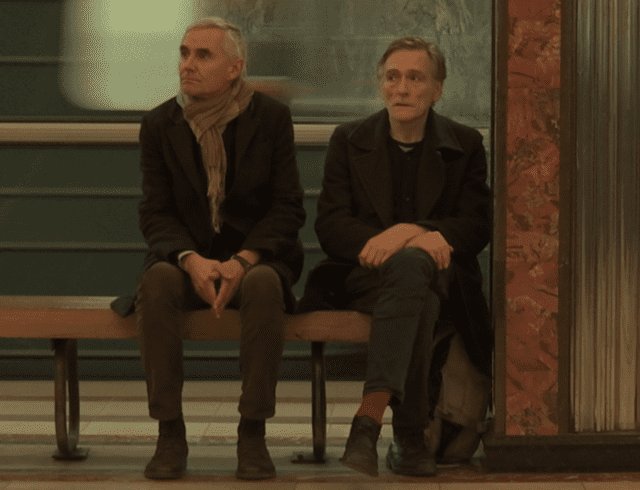
Daniel Kötter will be in Lisbon to present his latest work Rift Finfinnee, a film that observes the outskirts of Addis Ababa to bear witness to the social, economic and geographical transformations arising from the impulsive urbanism of the Ethiopian capital. Vladimir Léon will also be present at the festival for the international premiere of My Dear Spies, a deep dive into a mysterious family archive that takes him on a journey between Paris and Russia, crossing his grandparents’ Soviet past with a present full of stories yet to tell.
The festival also witnesses the return of Italian filmmaker Luciana Fina, whose Questo é il Piano dwells, the festival notes, in Alentejo’s threatened landscape, and Portuguese Cláudia Varejão, with the national premiere of Amor Fati, a set of portraits of different couples, romantic and other, opening the door to explore intimate relational bonds.
Desiring to extend spaces for discussion around and through cinema, Doclisboa also presents, in partnership with the Goethe-Institut Portugal, the programme “Cinema and Sustainability”, a cycle of four films in two sessions addressing diverse relationships between human beings and the various ecosystems they inhabit. The cycle pursues new dialogues on issues related to ecology and sustainability through artistic perspective and practice, featuring a conversation between Philipp Hartmann and Danilo Carvalho (directors of virar mar/meer warden which world-premieres at Doclisboa), Inês Pontes (director of Making a Living in the Dry Season) and Carolina Dias (Sustainability Science Researcher).
The 18th Doclisboa began its first moment and the festival’s six month journey in October with “Signals”, marked by the world premiere of José Barahona’s Nheengatu – The Language of the Amazon Forest, a sold-out session that took place at Culturgest.
Over the course of the festival’s first eleven days it has explored new landscapes in ‘Permanent Travel – The Restless Cinema of Georgia’, offered a prismatic view of diverse labour issues in ‘Body of Work’, created expansive spaces of debate for participants from more than 50 countries within Nebulae (Doclisboa’s area dedicated to the film industry), and involved multiple directors for presentations and discussions about their films.
With “Breaking the Silence, Unveiling Racism” (November 1), a debate in the context of Cinema of Urgency moderated by Mamadou Ba (SOS Racism) with the participation of Ruth Wilson Gilmore and Djamila Ribeiro, Doclisboa’s first ‘moment’ comes to an end.
‘Movements’ is above all a kaleidoscope of transformations built in relation to space and time, transformations which happen inside and outside of us, the festival underlines.