Jan Švankmajer’s Kunstkamera
During the 26th Ji.hlava International Documentary Film Festival running October 25 to 30, organisers are offering “new original documentaries, thematic retrospectives, the best in experimental filmmaking and a number of non-competitive programme sections.”
“It wouldn’t be accurate to say that Ji.hlava’s film programme was curtailed during the pandemic, but this year’s edition is absolutely exceptional – both in terms of the international sections and in the highly popular Czech Joy competition showcasing Czech documentary films,” says festival director Marek Hovorka. “Ji.hlava has always been a festival of discovery. Audiences can look forward to the largest retrospective of the cinema of the Philippines shown outside Asia, as well as a reflection on the war in Ukraine,” adds Hovorka. “We will be looking at the latter in depth and from different perspectives. Aside from the screening of Ukrainian films or the Inspiration Forum discussions, there will also be a section called Notes on the War composed of world documentary classics.”
Notes on the War: Resnais and obedience
“The experience of the last couple of months has completely changed the way we think about war and peace,” says Marek Hovorka commenting on the retrospective entitled Notes on the War. “Iconic documentaries made after 1945 provoke us to take a different perspective of the films themselves and of the world around. We were surprised by the extent to which we suddenly see films from several decades ago in a new light,” continues Marek Hovorka. The selection includes Night and Fog (1956) by French director Alain Resnais, which gives testimony to the lives of prisoners in Nazi concentration camps.
The section will also feature Obedience (1962) by social psychologist Stanley Milgram which explores our relationship to authority and what we are capable of when given orders. Atomic Café (1982), directed by the trio Jayne Loader and Kevin and Pierce Rafferty, “glosses over the American propaganda that in the past echoed with the threat of nuclear war,” write organiser..
Sergei Loznitsa: Traumas of the past
War is also one of themes reflected in the Constellations section, which comprises the best of docs screened at international film festivals. Ukrainian Sergei Loznitsa’s The Kiev Trial reconstructs the Nazi trial from 1946. “I started making the film before the Russian invasion of Ukraine and it gradually became very topical,” says the director. “If we don’t talk about the traumas and tragedies of the past, they will always haunt us,” he adds. Another film by the Loznitsa, On the Natural History of Destruction, to be screened in the Testimonies competition section, also works with archival footage. The film maps the destruction of German cities during World War II and examines the question of whether it is possible to justify the use of means of mass destruction to achieve a higher goal. “We are now seeing attacks on civilians in Ukraine, the same thing was also happening in Syria, and the world was just watching. This principle of mass destruction must be analyzed and reflected upon not only by politicians, but also by philosophers, anthropologists, sociologists, all those who study human society,” Sergei Loznitsa.
Nature according to Peleshyan – floods and tornadoes
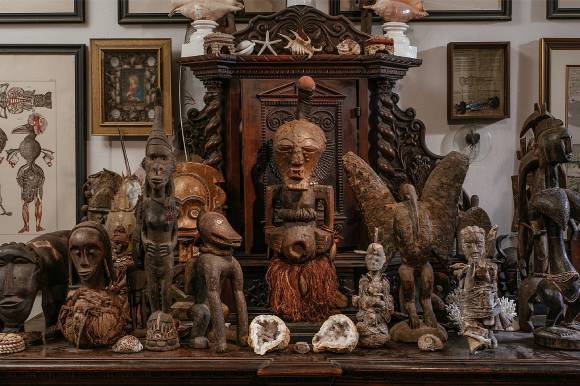
The Special Screenings section traditionally brings “exceptional film experiences.” This year, it will offer a two-hour director’s cut of Jan Švankmajer’s Kunstkamera, and Nature by Armenian director Artavazd Peleshyan, a film that returns to Ji.hlava seven years after it was first screened. Produced by the French company Cartier, the film was 15 years in the making, consisting of found-footage sequences and poetically depicting natural forces such as volcanic eruptions, floods, tornadoes and hurricanes. Peleshyan won the Award for the Contribution to World Cinema in Ji.hlava in 2015.”
The Philippines: Largest showcase in Europe
Viewers are offered the biggest showcase of Filipino cinema held outside Asia, say organisers. “It’s an exceptional retrospective that has been two years in the making and showcases the evolution of documentary and independent experimental cinema,” says Ji.hlava’s programmer Adriana Belešová. “Thanks to extensive research and a trip to the Philippines, we were able to get an up-close look at the films. We had the opportunity to meet the filmmakers and spontaneously engage them in the search for lost film treasures,” adds Adriana Belešová.
The show will feature films such as Oliver by director and leading Filipino film historian Nick Deocampo that looks at the life of the gay community in the Philippines. “In the 1980s, that is during the dictatorship when martial law applied, an experimental documentary line of filmmaking developed in the Philippines, which from today’s perspective could be described as queer cinema. During this period, several films were made in the Philippines that formally transcended the conventions of documentary cinema,” says curator Andrea Slováková. Red Saga (2004) is another title on the programme, a documentary depicting the war in the countryside in the Philippines. The film will be presented by its director Kiri Dalena, who will also be a guest speaker at the Inspiration Forum.
Czech Joy with Adam Ondra, Jan Kapr and VR
This year, the festival programme will also offer up a large showcase of latest Czech documentaries. The Czech Joy section will present a portrait of one of the best sport climbers in the world, Adam Ondra. Adam Ondra: Pushing the Limits directed by Jan Šimánek and Petr Záruba follows the climber’s preparation for the 2020 Summer Olympics in Tokyo.
The story of the life of Czechoslovak composer Jan Kapr is captured in the film Kapr Code by Lucie Králová. This documentary opera explores the life and work of a man who was initially protected by the communist regime but later not allowed to produce works during the normalisation period.
For the first time in the festival’s history, the Czech Joy section will also include a VR film – Darkening by Ondřej Moravec. “I’ve been thinking about Darkening ever since I became interested in virtual reality seven years ago. From the beginning, the idea was to create a simulation of what happens in the head of someone who suffers from depression,” explains Ondřej Moravec.
World premieres of experimental films in Fascinations and Exprmntl.cz
Film experimentation will not be missing this year either, say organisers. The Fascination section will present more than two dozen experimental films from all over the world. “It is a showcase of the diverse artistic practices that directors use or explore in their representation of reality. It is fascinating to see what strategies filmmakers from such politically and culturally diverse territories as Latin America, Asia and the Middle East employ in relation to their social context. What aesthetic diversity do they create in relation to their experiences or their efforts to change the world they are speaking about?” asks Andrea Slováková, the section’s curator, about the selection, which will offer films from twenty-two countries. Among them are films from Brazil, Finland, Cuba, Iraq, Australia and Taiwan.
Ji.hlava also delivers a competition of Czech experimental film works. The section Exprmntl.cz will offer more than ten films this year. “Some of the authors who have presented their progressive methods of audiovisual representation of the world during the past editions of the Ji.hlava IDFF are coming back to the Czech competition, but we also have new talents experimenting with the moving image,” says Andrea Slováková, introducing the showcase that brings together the works of established authors (Zbyněk Baladrán, Martin Kohout, Jan Rousek) and student films.
Siren Test offers Stockhausen and German marks
The Siren Test section brings an exceptionally impressive roster this year,” says programmer Pavel Klusák. “Light is a monumental testimony to the first staging of Karlheinz Stockhausen’s week-long opera at the Holland Festival in the Netherlands. The film is also an in-depth portrait of the personality of the late composer, the founder of electronic music, a genius and a megalomaniac: director Oeke Hoogendijk tries to find out how common it used to be in the twentieth century to sacrifice everything for a work of art, both on the level of the family or society.” continues Pavel Klusák.
“[At] an explosive and dynamic pace, Love, Deutschmarks and Death depicts the fate of Turkish immigrants in Germany and their parallel music scene, as if invisible to white Europeans,” says Pavel Klusák. He continues, “The Ukrainian tragicomic piece Roses. Film-Cabaret follows the controversial female theatre and music troupe Dakh Daughters from Kyiv five years before the war. Renowned Danish filmmaker Jørgen Leth then poses existential questions to influential jazz musicians such as Bill Frisell and Lee Konitz in Music for Black Pigeons, a tribute to the great work of ECM Records.
Inspiration Forum: Freedom, technology, degrowth and Ukraine
For the twenty-first time the Ji.hlava IDFF features the Inspiration Forum whose audience can look forward to five days of lively discussions and lectures. “This year’s Inspiration Forum comes to a world that we could not have imagined a year ago. The need to understand the world around us is even more intense than it was before,” says Tereza Swadoschová, head of the Inspiration Forum. “This year we will be looking at democracy, freedom, technology, the situation in Ukraine and also the theory of degrowth,” she adds. The concept of “degrowth” that will be discussed by Greek economist Giorgos Kallis, who is one of the leading theorists of the degrowth movement.
Elsewhere at the Inspiration Forum, Hungarian LGBTQI+ activist Dorottya Rédai will speak on the topic of freedom. “Being a scholar of gender studies, I could lecture endlessly about how this government’s approach to social issues is patriarchal, sexist, homophobic, transphobic, nationalistic, racist and xenophobic. Or at least, I might have, until my very discipline was banned in Hungary in 2018,” says Dorottya Rédai.
Filipino artist and human rights activist Kiri Dalena will also speak about freedom: “Hope is the resolve to remain steadfast in defending what our fathers, mothers, and forefathers have devoted and given their lives to so that we can have better futures. It is still knowing what it means to be human and humane even if you may appear to belong to a very vulnerable minority,” she says.
American expert journalist Ben Tarnoff will focus on digital technologies, while Ukrainian writer, poet and civil activist Oksana Stomina, who survived several weeks of intense Russian shelling and humanitarian crisis in Mariupol, and is now working on a book about the ongoing war, will speak about the situation in Ukraine. Stomina says that what the Russians are demonstrating is “medieval cruelty, multiplied by modern capabilities and morbid, maniacal ambition”.
For more information visit www.ji.hlava.com.