In No táxi do Jack (Jack’s Ride) we are told the engaging story of our eponymous hero’s emigration to New York in the 1970s with just $300 in his pocket. Now he is back in his native Portugal and eyeing up an altogether different lifestyle, one of retirement. Director Susana Nobre grabs a cab with BDE.
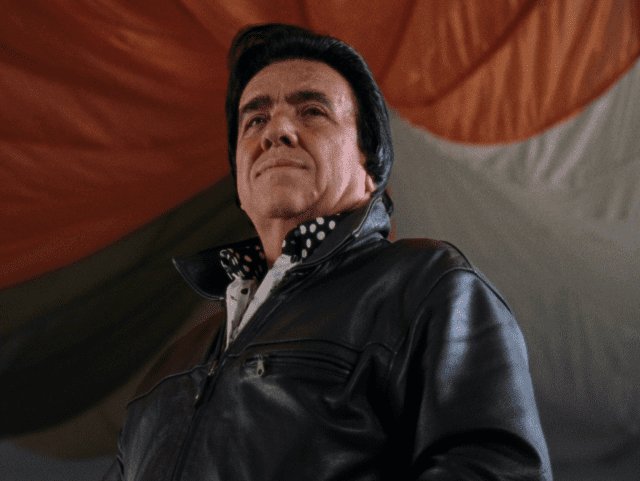
Portuguese Joaquim (aka Jack) cuts a striking figure throughout Susana Nobre’s feature-length documentary, selected for Berlinale Forum. Sporting a jet black Elvis-style coiffeur and always impeccably (and flamboyantly) turned out, he is the obvious candidate to play himself in the film, even when it comes to dramatizations of events that happened 40 years ago.
The film starts with Joaquim assessing his impending retirement when back in Portugal, for which he needs to acquire job tokens from various employers to guarantee a full pension. This is how he met director Nobre, who was at the time working part-time as a public servant advising on such matters.
The pair struck up an immediate rapport, not least because Joaquim’s story seemed so fascinating, and his character seemed to throw up so many intriguing polar opposites.
“We talked a lot,” says Sobre. “He was very attentive with me. He told me a lot of stories about his life, and I was attracted by all those stories and the way he talks, and the way he is mixing between kindness and crudeness. He is very supportive, and on the other side he can be very rough when his agreements are not accomplished.”
After many jobs in New York, such as within a car dismantling plant and as a maintenance worker for the Bell Telephone Company (all the time perfecting his English), he settles into gainful employment first as a taxi driver, then as a limo driver when he transported the likes of Jackie Kennedy and Muhammad Ali. All the time he was surviving within the harsh environment of 1970/80s New York, and quickly had to learn to look after himself.
“He is a very complex character, also with particular, singular aspects that have to do with his life as an immigrant,” Sobre points out. “If you go to another country, another continent, you are very open, you [experience] solidarity with the other immigrants, but on the other side you have also these instincts for survival that can be very violent also.”
The potential violence to which Sobre refers follows his loan of $2000 to an acquaintance, which is never repaid. We are not told how Joaquim dealt with the debtor, although we fear that it may not have been pretty, and our hero talks of “a pinch” of anxiety that he still feels in his heart.
The filmmaker employs a plethora of styles in telling her story, with a great 70s soundtrack, garish over the top titles and dramatic re-enactments (such as when demanding the repayment of the debt). At one point Sobre forefronts the filmmaking process as her camera pulls back to reveal that the car that Joaquim is driving in is actually studio-based, with a receding road projected onto a screen behind him.
But at the core of the film is a deep sense of melancholy, especially when we see Joaquim engage with his wheelchair-bound buddy Rato, who was blinded and rendered disabled by diabetes. The location of the doc, a small town just outside of Lisbon, is also slow and seemingly devoid of youth, its landscape dominated by an enormous and imposing concrete factory.
That said, Sobre always saw great narrative and cinematic potential within Joaquim’s big and encompassing, highly dramatic, story. And while this film is ostensibly a documentary, albeit one that relies upon dramatizations, the director tells of a strong calling towards fiction. She likes to find the place, she says, “where the fiction emerges.”
To further satisfy this innate “impulse” she reveals how, after completing her docs, she sometimes makes “a small fiction from the images in the archive that I didn’t work into the documentary.”
Right now Sobre is developing a regular fiction film about a middle-aged woman who, after the death of her parents, decides to throw caution to the wind and live like a teenager again. “I want to work with an actress… I want to have that kind of certain freedom to work a character,” she says.
And will she be making a short fiction from the out-takes of No táxi do Jack? On this occasion, alas not, she ends.