Feature doc debutant Samuel G Barbosa argues that the late filmmaker Paulo Rocha, founder of the “new Portuguese cinema,” should be viewed in the same vein as his contemporary Jean-Luc Godard.
In the experimental doc Around Rocha’s Table, selected for Locarno, the young filmmaker engages in a “dialogue” with Rocha’s films and enlists the support of Rocha’s former collaborators, such as renowned Portuguese actress Isabel Ruth and screenwriter/poet Regina Guimarães, to reflect on the auteur’s life, and culls the archives to allow Rocha to articulate his filmmaking philosophy.
There is no doubting the affection that Barbosa feels for his subject, with whom he worked closely as assistant for ten years before Rocha’ s death in 2012. The pair, he explains, enjoyed a “professional intimacy.”
“A film is a constellation of affections and a form around which those affections gravitate,” Barbosa says in the film. “I still feel too close. I still think of Paulo as alive.”
“From my point of view, the contribution of Paulo Rocha to cinema was the nonconformity to the current conventions and the will to innovate and experiment [with] each film,” Barbosa adds to Business Doc Europe. “He was someone who looked at the several tools that cinema has available to its creation, and dared to think of them as something dynamic.”
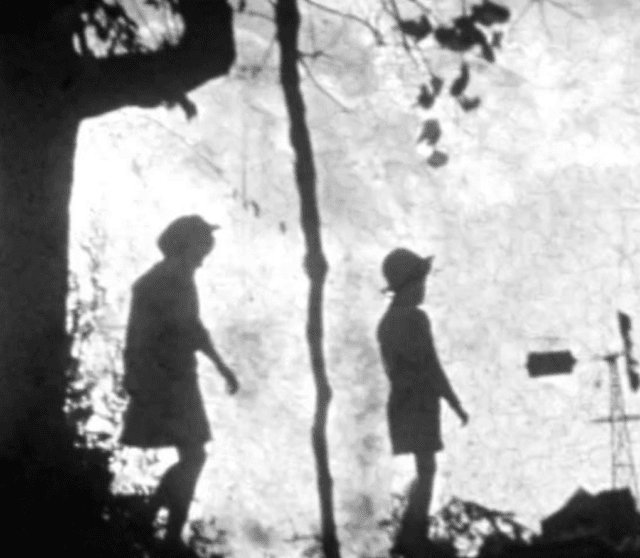
Rocha’s earliest movies, such as Os Verdes Anos (The Green Years, 1963) and Mudar de Vida (Change of Life, 1966), heralded the shift towards the new Portuguese cinematic aesthetic, and we are presented ample footage from these films.
But it is later films such as the sumptuous, allegorical and collage-laden A Pousada das Chagas (short,1972) and The Desired/Mountains of the Moon (feature,1987) which defined Rocha’s avant-garde aesthetic, Barbosa argues, reserving special praise for A Ilha dos Amores (The Island of Lovers, 1981), made in Japan, which he references in his own film with a mirror scene recreating the emblematic Noh theatre tradition of ritually burning the name of the character in order to fully be able to interpret and understand him.
Of The Island of Lovers, Barbosa claims how, “he [Rocha] put it all together in that film. For the first time, he made a beautifully conceived film, conceptual, with experiment, with collage. That is his masterpiece.” He adds that Rocha “never wanted to make the same film, to use the same process. He always wanted to try something new. That was his way of being in movies.”
Nevertheless, like many artistic auteurs who deploy metaphor and allegory within their works, Rocha suffered criticism and accusations of incomprehensibility, such as on his River of Gold which was selected for Cannes Un Certain Regard in 1998. “I’m worried about the growing insensitivity of people. People are losing their sensibility,” Rocha expressed regretfully of public and critics alike. “Audiences used to be able to understand everything by being shown only part of the message. In this age of sensibility, we need more aggressive descriptions and more explicit dialogues.”
Rocha further explains his modus operandi: “What comes first are the sounds and rhythms of the characters, their emotional and dramatic rhythms. I get fragments of the film before I have the story. It’s like being visited by spirits, by obsessions. You’re dreaming every night. A woman comes knocking on your door…but what’s the story, I ask. How does it end? Little by little and by visiting locations often, the story begins to begins to grow.”
In the notes for his own film, Barbosa explains that one of the key purposes is “to give a different perspective of the man and his oeuvre to those who know his films and to invite new spectators to his life work, dedicated to cinema….[Rocha’s] is a body of work which has been in the underground scene for far too long and that should be elevated to the category of cult classic.”
“We witness the cinematic production of a free aesthetic spirit, a test tube cinema, which spawn from the junction of several modern reagents [in chemistry, reagents are compound substances added to create a chemical reaction] which granted him the marathon status of an avant-garde author,” the apprentice concludes of his master.