Since 2002, border regulations between Belarus, known as the ‘last dictatorship’ of Europe, and its neighbour Lithuania have intensified, with 23 of the 27 border crossings closed and those left in place subject to strict visa regimes. Where the World Ends looks at the absurdity of the bureaucratic procedures by highlighting a few individuals on both sides of the border.
While a fascinating subject, Anna Savchenko’s film at times lacks drama, offering up a series of pragmatic individuals as they go about trying to cross the border for relatively ordinary reasons, with the director choosing not to delve into the political machinations involved.
Just one hour’s drive from Vilnius, and everyone must pass a strict border control on leaving the ‘Free West’ for Belarus. Crossing this border is a laborious and often absurd procedure. Some people are confronted with this on a daily basis, since the border literally cuts through their backyards, as folk visit friends or relatives or go to church or to cemeteries. It is a complicated process involving crossing point schedules, visas and other bureaucratic procedures.
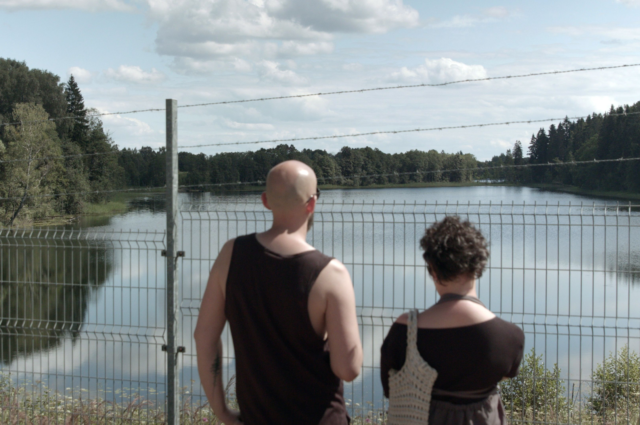
Lena, who was forced to leave Belarus for political reasons and now lives in Vilnius, drives to the border fence to try and catch a glimpse of her summer house and its nearby lake; Zinaida is assisted in filling in complex on-line forms by Ivan; Renya, an elderly woman who forages in woods next to the fence complains “we are like imprisoned criminals” while in Belarus the elderly married couple Victor and Victoria make plans to try and visit the graveyard just across the border where both of their parents are buried.
The film flits between the different personalities, each absorbed with the past and how it was easier to move across the border and each gently determined to try and find ways to visit the land that means so much to them. Initially it is hard to feel much for Lena and her lost Belarus summer house (her worries are about broken windows and the like), but when she talks about how her civil rights and legal career saw the Belarus Ministry of Internal Affairs tell her she must leave the country for three years, it is easy to have more sympathy.
More moving is Victor and Victoria yearning to be able to visit family graves in Lithuania so they can place flowers and tend to the gravestones. These are simple and honest people who just want to tend to the graves of their loved ones. In the end, the film follows them on their separate journeys – Lena drives to her country home and opens the doors once again, while Victor and Victoria queue at a border gate, cross a muddy piece of land that separates both countries and finally visit long-dead loved ones.
Lovely visuals of beautiful landscapes replete with fences and observation towers help make the point that just a few years ago these border villages were all part of the Soviet Union and that political changes have had a massive impact on the local population. It is a gently engrossing film, eschewing political statements and instead telling simple personal stories to good effect.
Belgium, 2021, 53mins
Director Anna Savchenko
Production Off World
International sales 3BoxMedia
Producer Frederik Nicolai
Screenplay Anna Savchenko, Frederik Nicolai
Cinematography Tatsiana Haurylchyck
Editor Thomas Pooters
Music Frederic Vercheval