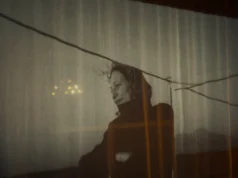
The logline says it all, telling of two shamans, their tech-obsessed kids and a 1000-mile road trip that takes them back into the heart of the Amazon rain forest. Glasgow-based Basque director Borja Alcalde tells BDE about his doc that will be ready for early 2022, and which he describes as Little Miss Sunshine meets The Mosquito Coast.
The dilemma at the heart of La Sagrada Familia is a universal and hence a very relatable one, even if Carmen and Sergio and their three teenage kids aren’t exactly your average family.
The parents are Peruvian artists and modern shamans who spent several years living in isolation within the Amazon rain forest with their young children, connecting with nature and experimenting with the ancestral knowledge derived from their study of the Ayahuasca plant and its efficacious properties.
But a return to the city and its 21st Century trappings proves borderline disastrous, from both familial and spiritual perspectives. Sixteen-year-old Valentin becomes addicted to Netflix and Fortnite. Thirteen-year-old Antu is obsessed with his phone, and 10-year-old Lua believes she is a witch. What’s more the strain shows in the marriage of the couple as Carmen’s new business is, Sergio believes, over-commercializing the Ayahuasca ceremonies, which (he further argues) is feeding their daughter’s persistent nightmares.
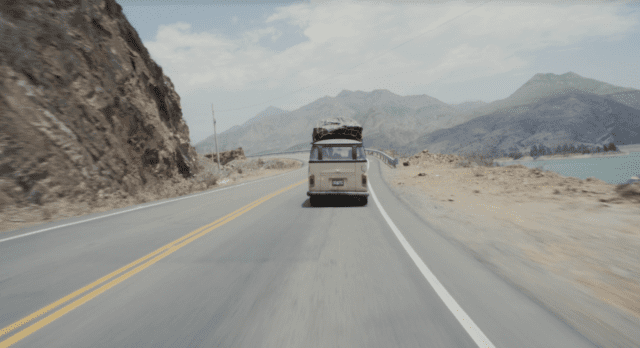
To restore order, unity and mental wellbeing, as well as recommit to their marriage, the couple therefore take to the road, with kids in tow, on an odyssey to where (and how) they used to live in the Amazon, and to see if this experience can enable them to embrace the 21st Century more easily.
So how did director Borja Alcalde find his subjects in the first place?
“To be completely honest, I found them before having any story,” he answers, referring to his own trip that he took to the Andes to explore the indigenous communities and their practices. “I just met this family and I fell in love with them as a unit. I loved how they are trying to create their own reality based on a stronger connection with nature and the rest, so I kept going to Peru to meet them, as friends and to travel with them and to learn.”
“Then eventually I saw how technology was affecting this family, as it was affecting anyone else back home in Scotland,” Alcalde continues. “So eventually when they made the decision to take their kids on the road trip of a lifetime, I thought, okay, there’s a beautiful cinematic storyline, there is a natural narrative arc, and there is something difficult and tangible at stake, which is really big, the future of their marriage and their duty to their family.”
“I thought that’s a very fine story,” Borja adds. “And I also love road movies.”
All the time Borja was there, in the van, recording their exploits, always careful to give space to each (especially the kids) when or if the camera may have seemed an imposition. “This is direct story telling. There’s no interviews. It is just as it happened,” says the director. “And it gave me confidence to adapt all the time, you know, because there was no expectation that it would be the documentary that I had [in my head] at the beginning, and I think a beautiful and very different documentary has emerged.”
He follows them as they visit family members, stop at important historical shamanic sites, make offerings to the Pachamama (Mother Earth), perform rituals, and even pause for a dip in a pool in the middle of the Peruvian desert.
“Every time they got into water, you know, when there is a river or the sea, things would calm down,” Alcalde adds. “I could see that. So I’ve been playing the element in this film, and all the natural elements as we go.”
The film is produced by director Alcalde, exec-produced by Adam Dawtrey and supported by Screen Scotland and BFI/Doc Society, and will be ready for festival selection from January 2022 onwards. Alcalde is hopeful of a long festival career for the film thereafter. In the meantime, the production launched a kickstarter campaign on November 1 looking to raise a further £20,000.
High impact is, of course, a major consideration. The production notes stress how “in line with our commitment to showcase and protect the diversity of these indigenous communities, we will donate 5% of the profits from the film to the Kusi Kawsay Association which has, for the last 20 years, has worked on a crucial mission to honour, cultivate and celebrate the ancient wisdom of Andean indigenous communities through education, agriculture and cultural activities rooted in reciprocity, respect, love and social justice, serving as a model which encourages global awareness that respects cultural and ecological diversity.”