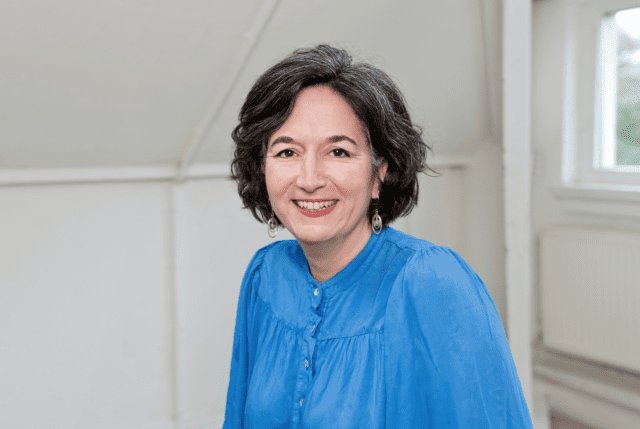
The IDFA Bertha Fund Managing Director and IDFA Deputy Director explains to Business Doc Europe how the fund’s role has taken on even more significance over the past 18 months, and how proud she is of this year’s “super harvest” of IBF-supported films.
“I guess that particularly in light of what has happened in the last year and a half, yes, our role has become more and more important,” IDFA Bertha Fund’s Isabel Arrate Fernandez explains on the eve of the 2021 festival. “With the disappearance of the Tribeca Film Fund, for example, there’s one door less for filmmakers to knock on, and that is next to the consequences of national film funding bodies cutting down on culture in the countries that we work in. Yes, of course it’s super good to be important, but I wish there were more like us.”
“I think that it’s only good and healthy for filmmakers and for projects, for them to have an array of partners and not just one,” she adds.
The fund, which offers grants and tailor-made support for doc projects from Africa, Asia, Eastern Europe, Latin America, and the Caribbean (IBF regions), announced prior to IDFA that the amount and number of grants for IBF Classic scheme will increase for the first time in ten years.
Grants for documentary films in production will increase from €17,500 to € 25,000 (a 43% hike) and those for project development from €5,000 to €7,500 (50% increase). In addition, 25 projects will be supported each year instead of 20.
The financial injection is complemented by tailor-made support via IDFA’s Filmmaker Support Department, which offers access to talent development opportunities and issues invitations to the festival, ensuring that filmmakers can source both knowledge and experts as well as build their network.
The “super harvest” of IBF-supported films in evidence at IDFA 2021 includes 14 titles, four of which are world-premieres. The others read like a who’s who of top festival titles over the past year, and include Aicha Macky’s Zinder, Sushmit Ghosh and Rintu Thomas’s Writing With Fire, Salomé Jashi’s Taming the Garden and Rami Farah’s Our Memory Belongs to Us.
“They’re all extremely strong films and so very different,” says Arrate Fernandez. “They are coming from authors who are telling their stories and giving their visions, and they all came about in very different situations.” She cites the financial and technical hoops that Egyptian Samaher Alqadi, director of As I Want, had to jump through to get her project made before delivery to Berlinale 2021.
“We also have a few films from countries that are dealing with super complicated circumstances, not just financial, but political repression, and which have to work within the margins,” she adds. “Such as a film like Where are we Headed(Ruslan Fedotow, Belarus/Russia,) which is this almost one-man production by a super committed guy.” The film concerns the wide panoply of life to be found in the Moscow Metro.
“He’s coming to IDFA with this first feature length on which we are the sole financier. We supported him for development and production, but he’s the other financier and was able to finish that film in a relatively short time, but out of a full commitment to go for it and to make it work,” Arrate Fernandez ends.