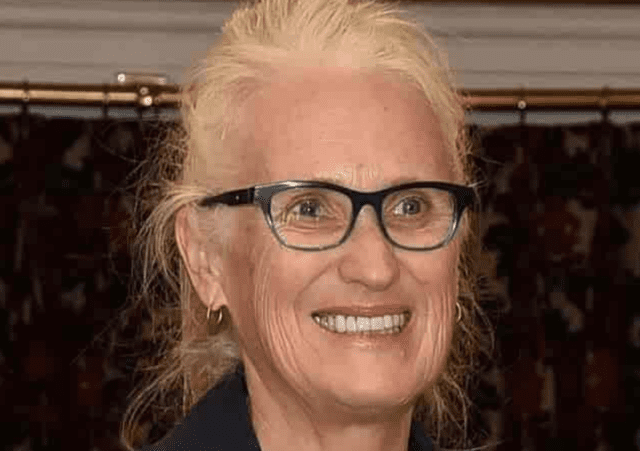
Pic: New Zealand Government / Wikimedia commons
Jane Campion is one of the towering figures of world cinema. She was the first woman to win the Palme D’Or in Cannes and has made a string of hugely powerful and influential movies, among them An Angel At My Table, The Piano, In The Cut, Portrait Of A Lady and, most recently, the Oscar winning Power Of The Dog. Nonetheless, the New Zealander still doesn’t always get her due.
“She [Campion] is a wonderful woman and no film had been done about her,” says French director Julie Bertuccelli, herself an auteur with several award winning features and documentaries to her name.
Bertuccelli was determined to make a film about Campion, but at first, funders were sceptical.
“I really wanted to make this film from a long time ago,” the director recalls of the ideas for her doc Jane Campion, Woman Of Cinema (sold by West End and Cinephil, and which screens in Cannes Classics this week). Initially, she was rebuffed. ARTE told her it wasn’t the right time for such a project. However, two years ago, just as the pandemic was beginning, the funders came back to her and told her that, yes, it might be a good moment after all.
An Angel At My Table was the first Campion movie that Bertuccelli saw. She was immediately entranced. “She was so free,” she enthuses of her fellow director. “It was also a story about a woman. The way she approached this intimacy, I thought I had never seen this sort of film before!”
When she began her own filmmaking career, Bertuccelli always thought to herself, “I have to make films like her [Campion].”
Bertuccelli knew Campion’s films inside out but didn’t know Campion’s personality at all. Making the documentary was her chance to work out what made the director tick.
When she informed Campion of her idea, the subject was surprised but “quite happy.”
The documentary is archive-based. Bertuccelli worked hard on it during the Covid lockdowns and describes the process of pulling it together as “my way to cross this horrible pandemic. It gave me strength and confidence. I spent all the confinement with her.”
Bertuccelli didn’t interview Campion directly but came to Lyons to film an interview Campion gave when she was awarded the 13th Prix Lumière last year when presenting The Power Of The Dog.
“She really hates interviews. I understand that so well and I didn’t want to push her to do it. In fact, I had 100 hours of [archive] interview already and so it wasn’t a problem for me.”
The interviews shown in the documentary are always taken from the periods when Campion had just completed a new film, not 20 years afterward when her memories may have faded. Bertuccelli also used behind the scenes material of her working on set with her actors. Much of this was taken from “making of” promotional films which, Bertuccelli suggest, were of a surprisingly high standard.
One of the most shocking moments in the documentary comes early on, when Campion is invited to the celebrations for the 50th anniversary of the festival in 1997. She is the only female, bobbing in a sea of male directors. “Even the guys are looking a bit bored when they look at Jane Campion.” Twenty-five years later, this material seems to belong to a different age. Equally grating is the footage of male critics dismissing Campion’s erotic thriller In The Cut, starring Me
g Ryan and Mark Ruffalo, because it deals so frankly with sexuality.
“It’s shocking for [male] critics, guys used to looking at girls and sexuality and intimacy [to be so critical]. It was a new, new thing for guys to see that women can have their own sexuality…it was funny that all the guys were shocked by this film. I don’t know why. If it had been guys making this film, it wouldn’t have been shocking for them. Maybe, it’s because it puts them in another role.”
Sexual politics within the film industry have changed dramatically over the last two decades. Gender equality may not yet have been achieved, but at least it is an active part of the discussion – and Campion can take some of the credit for that.
Bertuccelli has long had a foot in both the documentary and fiction worlds. She has had international success with dramatic movies like The Tree and Since Otar Left and is also head of the Documentary Cinematheque, founded in 2017 to champion the documentary form and prevent major cinema chains and institutions from shunting it to the sidelines.
“Both are part of my life,” she says of how she regards docs and fiction. When it comes to the latter, Campion is still the benchmark.
One of Campion’s qualities which emerges most strongly in Bertuccelli’s documentary is her self-deprecating humour. She is not known as a comic director but when she is talking about her work, she is often very witty. There’s no pretentiousness to her either. “She is really very human to me. It’s like her films. She is simple and funny too…she is real. It is not easy to find people so real.”