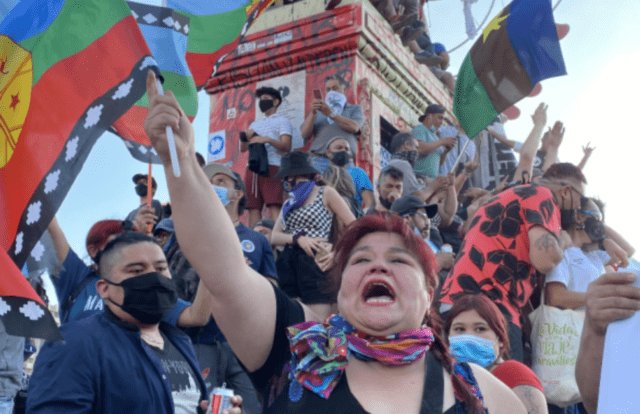
In 2019, millions of Chileans rose up in popular revolt after the authorities announced an increase in transport fares. This resulted in a movement towards radical change and the call for a new assembly to change the constitution imposed by the former Pinochet dictatorship and its economic neoliberal model, referred to as ‘The Brick.’
This political upheaval is seen through the eyes of two Chileans, on opposing sides of the political spectrum, as they experience a year of turmoil as protests give way to transformation; Ramiro, a former economist and now wealthy businessman, and Mariana, a lower middle-class teacher who travels the country trying to help teach youngsters.
Co-directed by Carola Fuentes and Rafael Valdeavellano, the film is traditional in structure – it intersperses interviews, commentary and news footage as well as archive footage to track the two storylines – and very watchable without ever delivering great drama. It is a tough call to make a gripping documentary centred around economics, but it is to Fuentes and Valdeavellano’s credit that their central characters are intriguingly complex.
The film opens with footage of crowds, protesting before being driven back by tear gas fired by the police. It then takes time for a potted history lesson, detailing the neo-liberal regime of the late 1970s, the military junta led by Augusto Pinochet in 1980 and the recovery of democracy in 1988 through to 2019 where the increase in transport fares sparked a popular revolution which would put in check the results of half a century of extreme capitalism.
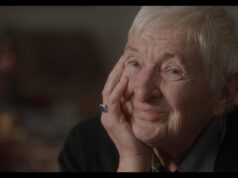
Businessman Ramiro is filmed at work in his lovely country house where staff serve food and he keeps up with the political turmoil, admitting he couldn’t take eyes off the television and that he is “very afraid” that the streets might be taken over by the military. “Is it personal frustrations or a failure of the system?” he muses.
Meanwhile Mariana heads off to help mobilise the protests. She says: ”It was a lie – we were selling ourselves abroad as successful. But nevertheless, you pull the rug out and we are all down there. What success are you talking about? The success of a few families. This country is not what they were selling. It was marketing…image. It was not like that. We are an unequal country.”
As the film develops – and the protests increase – we learn more and more about these two very different individuals. As an economist Ramiro believed in the brick economic model, becoming an academic before turning to business and running a successful company. He admits to not being aware of issues because he was caught up in economics. “I was possessed by an immense level of arrogance…let’s say, we thought we were the people who were saving the country – arrogance blinds you.”
After becoming seriously ill he decided to dedicate himself to philanthropy, and clearly while still very wealthy he spends his time trying to do good, admitting that it is challenging to turn businessmen into activists and make them change their attitudes.
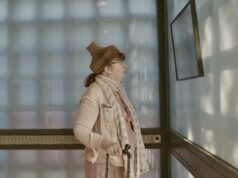
Mariana says she saw the dark times of the dictatorship in the country when there were protests and the police came out shooting. She had limited schooling before having to earn money as a youngster, selling items on the streets and singing on buses. She eventually turned to education again at the age of 40, becoming a teacher herself, and now spends time telling stories to children in parks and encouraging them to learn.
The film wraps on a more uplifting note. On October 25, 2020, one year after the protests started, 78% of Chilean people went to the polls and elected new officials who eventually drew up a new constitution. In December 2021, 35-year-old Gabriel Boric, former leader of the 2011 student protests, won the presidency and became the youngster president in the world.
Through the period of protest, historical conflicts that were long thought resolved came to light again as the process of electing the new assembly drew closer, showing how the deep wounds of a brutal dictatorship were deep lasting but had to be reconciled at all costs.
Chile, 2022, 86mins
Dirs: Carola Fuentes, Rafael Valdeavellano
International sales: La Ventana Cine
Producer: Rafael Valdeavellano
Cinematography: Sebastián “Benito” Caro
Editor: Andrés Acevedo Vega