A family road-trip with a difference, director Borja Alcalde Rubio’s The Sacred Family (La Sagrada Familia) – which world-premiered at the Edinburgh International Film Festival – blends mysticism with modern-day distractions, all set against the stunning backdrop of rural Peru as the family use their journey to try and address fractures and tensions within the group.
Carmen and Sergio are artists and modern shamans in Peru, though neither was raised in the traditions of shamanism. Instead they grew up in ordinary families but discovered an instinct for the Ayahuasca plant, exploring its properties and using it to help others. They spent several years living in isolation in the Amazon rainforest with their young children in order to connect with nature and experiment with ancestral knowledge. But when they returned to the city, the sense of the unity within the family was severely challenged.
Sergio lives apart from his wife and three children and is concerned about the commercialisation of Carmen’s practice, believing that the increased frequency of Ayahuasca ceremonies, which Carmen now runs for tourists, is impacting on the kids.
The children themselves have adapted differently. Sixteen-year-old Valentin is addicted to Netflix and the video game Fortnite; 13-year-old Antu spends his free time on his phone, while outgoing and chatty 10-year-old Lua believes she is a witch.
Early in the film Carmen talks about the 1000-mile trip and of ultimately returning to their rainforest home. “The Amazon is like my home, I want to go back,” she says. “It always makes me want to go back. I feel that my body is nourished. The experience of the years that we lived there gave me a lot of gifts.”
She adds: “Some people call me Shaman, but I don’t like that much…Medicine woman sounds better to me…I’m a bit tired of the television and phones and the responsibilities. I want to teach my children to sow, light a fire…have a simple life…I don’t want to watch TV anymore.”
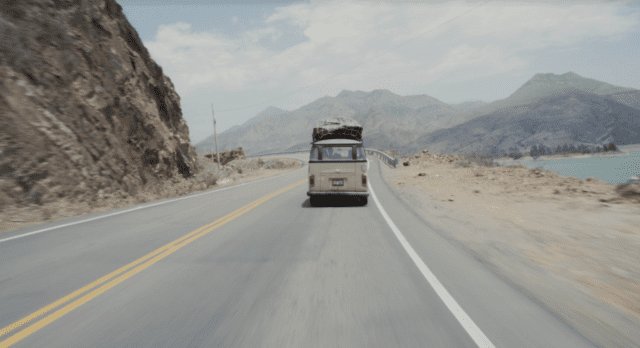
Rather ironically, as they head off on their journey in an appropriately battered VW campervan, Carmen is the one using a digital camera and asking how to connect to a laptop, and is also happy to use her mobile phone. Charmingly the children are happy to play out in the rain, and Antu engagingly sings ‘Baby Shark’ in her spare moments.
Carmen is also the one with the cash, paying for fuel and food. The family parks on a beautiful beach, cooks outside and play in the sea and eventually stops off to visit Sergio’s clearly well-to-do parents, where Carmen comments amusingly: ”Sergio’s mum thinks I bewitched him.”
The highpoint of the family trip comes when they are all filmed happily playing in a beautiful waterfall. Back in the van, Lua draws a picture of the fun they had, with the picture titled “Lua’s Family at the Waterfall. Happy Day.”
The ending is deliberately enigmatic. The campervan breaks down (but then it was probably bound to) and as they eventually reach their ‘garden of freedom’ the implication is that they have finally found a happy end to their journey. Perhaps not in terms of family perfection but their quest sees them finding a balance between ancestral beliefs and modern-day life.
The Sacred Family is engaging and warm-hearted, and despite being set in Peru is a relatable and astute story about the nature of family and relationships. Director Borja Alcalde Rubio crafts a thoughtful film about an unusual journey and impresses with striking cinematography and an immersive shooting style, largely inside the battered VW.
UK, 2022, 90mins
Dir/Producer: Borja Alcalde Rubio
Production: Yanantin World
International sales: Silver Mountain Productions
Cinematography:
Editor: Colin Monie
Music: Juana Molina