A meandering meditation on the rhythm of life, the resonance of folk music and the history and charm of the Old Town of Edinburgh during lockdown, Edinburgh International Festival project The Ballad of a Great Disordered Heart is a film about how people are connected by history and music, with the central narrative driven by Edinburgh musician Aidan O’Rourke.
O’Rourke, who lives in the heart of the Old Town in the Cowgate area, got to know three of his octogenarian neighbours (engagingly all of them are called Margaret) during lockdown and listened to their stories. The conversations and memories sparked a fresh appreciation of his own Irish family roots, and he set about bringing together a group of Irish and Scottish folk musicians to delve into the notions of what home and belonging mean, and the role of music and storytelling in binding them together.
There is a slightly disjointed nature to the film – which runs just over an hour – but this perhaps reflects the complex emotions that came out of lockdown, which much of the footage dealing with O’Rourke musing over his feelings about the city, family and music during that period.
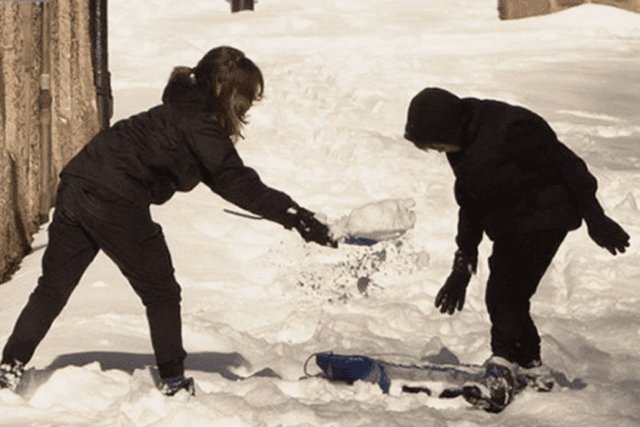
The film opens with footage of a snowy and peaceful Edinburgh, with icicles dripping into puddles and with the sound of O’Rourke gentle breathing. “I’ve always felt the rhythm in things…I’m kind of obsessed with it. This last year I have really tuned into the rhythm of the seasons – the heartbeat of the city. It feels like city has come up for air,” he says.
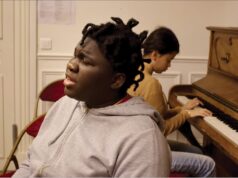
O’Rourke debates how, following conversations with the Margarets, he started to link more into his Irish heritage. There is footage of him playing and singing to the three women (“you still haven’t learned the words” one says), though actually there is little material of them reminiscing.
He is briefly interviewed by Edinburgh-based filmmaker Mark Cousins (the credits says the film is devised by Cousins, with Aidan O’Rourke, Becky Manson and Cousins credited as directors) as he recalls his lockdown feelings. “The first thing I noticed was the change in sound around me – the rhythm of the city was different” he observes. “It was almost silent for a couple of days – it was eerie, it was magical and everyone felt it. I was able to notice neighbours and neighbours to noticed me.”
The film then pivots and features interviews with – and performances by – Edinburgh-based musicians Liam Ó Maonlai, Brìghde Chaimbeul, Comac Begley, Róisín Chambers and Aoife Ní Bhriai as they debate music, heritage, the importance of storytelling and the lifestyle of a touring musician. The final scenes sees O’Rourke staging an intimate musical event and the musicians coming together as the pandemic comes to an end.
At times the film feels like a confluence of ideas, but this very much reflects the lockdown journey O’Rourke was going on. As the festival blurb states, it is a “musical melange of fiddles, friendship and a search for home” with O’Rourke linking the rhythm of his heart with the heartbeat of the city.
A Robert Louis Stevenson quote at the end of the film further emphasises this notion (and also explain the film’s title). After he walked the city’s Cowgate at night, he wrote: “And thus, as I fancied, the dense life within made itself faintly audible in my ears, family after family contributing its quota to the general hum, and the whole pile beating in tune to its timepieces, like a great disordered heart.”
UK, 2022, 65mins
Dirs: Aidan O’Rourke, Becky Manson, Mark Cousins
Production: Edinburgh International Festival, Hopscotch Films
Producer: John Archer
Scr: Aidan O’Rourke
Cinematography/Editor: Becky Manson
Music: Aidan O’Rourke
With: Liam Ó Maonlai, Brìghde Chaimbeul, Comac Begley, Róisín Chambers, Aoife Ní Bhriain, Aidan O’Rourke, Margaret Dirkin, Margaret Daley, Margaret Bishop