King Edward VII of England was astounded when French cinema pioneer Georges Méliès filmed a staged recreation of his 1902 coronation. The movie was made in his studio in France with French actors but released in England on the day the crown was put on his head. “What a fantastic machine,” the monarch exclaimed of the movie apparatus.
Little did the King know that 120 years later there would be an estimated 45 billion cameras in the world and humanity would be drowning under a digital deluge of photographs and films.
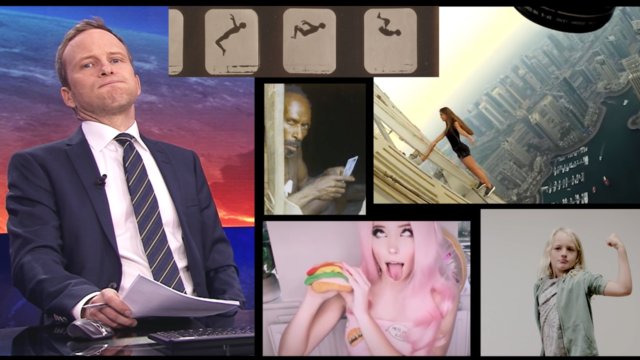
The King’s remark provides the title for the playful but provocative new documentary And the King Said, What a Fantastic Machine, directed by Axel Danielson and Maximilien Van Aertryck for Swedish production house Plattform Produktion, the company behind last year’s Palme D’Or winner, Triangle Of Sadness. The film, premiering this week in the World Cinema Documentary Competition in Sundance, is sold internationally by Heretic.
“Max and me have, for many, many years, been interested in the consequences of the photographic image and the impact of the photographic image on society,” Danielson explains the origins of the project.
This may be a documentary but it is very much in the spirit of other Plattform projects. Company principals Ruben Östlund and Erik Hemendorff are executive producers. Danielson and Van Aertryck both talk about the camaraderie at the company. “We are all involved in each other’s films,” they say.
It was actually Östlund who came up with the title while they were “having an editing session at his place in Majorca.” Meanwhile, Mikel Cee Karlsson, editor of Triangle Of Sadness, helped with the cutting of the film.
“The moving image is so fantastic at capturing how social behaviour is playing out between people. You could say literature is master at going inside people’s heads and showing what is going on there, but the photographic image is just amazing in showing how things play out,” Danielson adds.
The co-directors have been sending each other clips for many years, collecting revealing and humorous bits of online footage. They have very similar sensibilities and tend to “tune into” the same moments when they watch the clips. Danielson is the more “impulsive” of the two directors while Van Aertryck is very “precise” but they have a very close working rapport.
Fantastic Machine begins in chronological fashion, taking audiences through the early history of photography and filmmaking with nods in the direction of Eadweard Muybridge and the Lumière brothers. There’s a twist, though. The filmmakers aren’t telling the familiar story of the “birth of cinema.” They are looking instead at how the camera was used in the economy of the time. Méliès isn’t portrayed as a magician but as a clever entrepreneur, utilising the camera to make a lot of money and boost his social status.
The doc also has plenty of very contemporary references.
“During production, certain things happened, for example the storming of the US Capitol,” Van Aertryck says of events in January 2021 when supporters of defeated President Donald Trump ran amok in Washington. “We immediately saw it as something connected to this evolution of the use of cameras, mass media, algorithms and new digital tools.”
Both directors are involved in media literacy initiatives at Swedish schools and universities. They plan to use the documentary as an educational tool as well as to have it distributed in a more traditional way.
“That has been the aim, for the film to have one journey in the cultural field, where we’re aiming for the cinemas, the prestige and that kind of trajectory, but we have always had in mind that we would like to come into the schools,” Van Aertryck says. He and his co-director are also planning a book which will accompany the film and contextualise its arguments.
Some of the clips in the doc are very funny. For example, Isis terrorists making a propaganda video are continually interrupted by the chirping of a very noisy bird. Elsewhere, German director Leni Riefenstahl is seen blithely talking about the aesthetics of her Nazi propaganda film, Triumph Of The Will, seemingly oblivious to the fact she is glorifying a genocidal dictatorship. Alongside the clips is chilling imagery from Nazi death camps.
Combining the tragic and the comic has always been the Plattform way. As Danielson points out, this is exactly what Ruben Östlund does too in movies like Triangle Of Sadness and Force Majeure.
“For us, a really powerful tool to talk about serious things is to use humour,” he suggests. In the Isis clip, for example, the film may make viewers identify with the terrorists for a few moments, forgetting that they’re hardened killers. “The humour is always in combination or in contrast with moments that are very, very serious,” adds Van Aertryck.
During editing, the directors showed parts of the documentary to different audiences. A teenage boy told them, “I was able to laugh but then I had to swallow my laugh because it became so serious – and then I could laugh again.”
Making the film has meant the directors have become far more self-conscious about how they use cameras in their own everyday lives. They also analyse every image they see in commercials or on social media, trying to work out how the pictures are trying to manipulate them.
Now the directors are in Sundance for their premiere. They’ll be in the Berlinale next month too and are delighted that they’re screening Fantastic Machine in the Generation 14plus section which means the film will be seen by school kids. They plan to travel to Germany with their very own Camera Obscura in tow. And, yes, they know how to put it up.
“We’re going to build the Camera Obscura outside the cinema…it’s such a powerful way to make people understand how the [photographic] image works,” Danielson ends.