We’ve all seen the movies about crusading journalists in pursuit of big stories. The heroes tend to be massive egotists with messy private lives. They’ll meet their sources in underground car parks and will labour through the night to meet their deadlines.
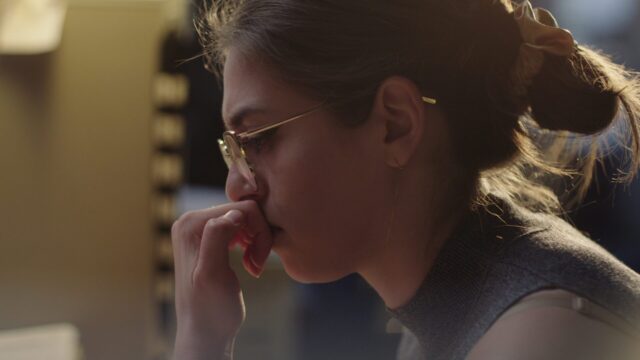
Rae de Leon, the protagonist of Nancy Schwartzman’s Victim/Suspect (the Netflix-backed film receiving its international premiere in F:act Award at CPH:DOX) shares their work ethic – but not their personal habits. A reporter for non-profit outfit The Center for Investigative Reporting, she is quietly spoken and unfailingly respectful. She doesn’t keep a bottle of whisky in the bottom drawer of her desk either.
“Rae absolutely doesn’t give up. She is totally pragmatic, she is polite always…and she is just so persistent,” Schwartzman says of the “self-effacing and humble” journalist. “You don’t have to be swinging into town and swaggering. No, persistence and putting yourself at risk, knocking on doors and never giving up [is what matters]. I wanted to show that journalism is a profession. It’s not glamorous. It’s really hard work, but it’s exciting and rewarding – and I love the way that she does it.”
The documentary follows de Leon’s painstaking investigations into the disturbing number of cases of young women across the US who report being sexually assaulted to the police but then end up being charged themselves. The cops don’t believe them and accuse them of fabricating their stories. There have been cases of imprisonment and suicide among the young women.
Schwartzman was approached by the Center for Investigative Reporting to make the documentary. They had seen her earlier film Roll Red Roll, about a high school rape case in which the teenage victim was treated as if she was a criminal. (Roll Red Roll was produced by UK producer Steven Lake, responsible for Phantom Parrot by Kate Stonehill, also in F:act Award Competition.)
“When we first started talking, I was pretty adamant that we would figure out a way we could really expose the police behaviour,” says Schwartzman of her collaboration with the Center for Investigative Reporting. She was determined, too, to capture “the stories and perspectives of the victims.”
Through her investigative reporting and by using the Freedom of Information Act, de Leon had secured 20 hours of police footage.
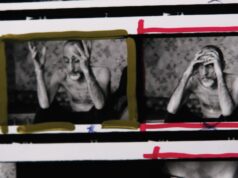
“Once I saw that material, that raw material, the interrogations of Emma Mannion, Megan Rondini…of a few other people, I thought, oh my god,” the director remembers her reaction to the material which shows the cops bullying and browbeating the young female victims. “That is what really hooked me.”
The project was greenlit in March 2020 but delayed by Covid. De Leon had been researching the story for four years. Again and again, the police in Alabama turned down her request for interviews. Eventually, one officer, Walberto Cotto, agreed to talk on camera. He was brazen about how he would lie and try to trick the young women who were reporting sexual assault.
“He was proud of his technique. He believes in his ruse. He believes in these tactics,” Schwartzman says of the shameless cop who seems impervious to the women’s pain.
“These are very powerful people in small towns…the national conversation may not affect the local conversation,” the director adds of the lack of response from the police authorities to the documentary since its premiere in Sundance. Some of the officers involved are now retired. Others are trying to ignore the film. However, when the film premieres on Netflix in late May, they are bound to be under renewed scrutiny.
Schwartzman is campaigning “to harness a large national and federal awareness” of police behaviour in the build-up to the launch of the film.
Detective Carl Hershman, another interviewee, is a far more sympathetic figure. Hershman, now a consultant to Ending Violence Against Women International, is the one insider ready to lift the lid on his former colleagues’ approach to female sex assault victims.
“We met Detective Hershman because he was across two of the cases,” Schwartzman remembers. When she interviewed him, she had no idea that he had a close family member who had suffered experiences similar to those of the young women featured in the documentary.
“I think it’s important to understand that rape affects everyone connected to the victim. It affects husbands, it affects brothers, it affects fathers,” Schwartzman says. “These fathers want their daughters to be safe and the next paternalistic safety arm is the police – and this is what happens to their daughters in the care of the police.”
The media is shown in very mixed light in the film. On the one hand, de Leon is doggedly chasing down leads. On the other, there are the newspapers and websites who publish police reports about the women accused of making up the stories about sexual assault. These outlets don’t question the fact that the police reports themselves may be biased and flawed. The net result is that the young women find their faces in newspapers and all over the web.
“The larger public really feasts on these stories of women making it up,” Schwartzman suggests of the cases “splattered all over the news” which suggest that the suspects are liars. This reporting reflects an obvious, ingrained misogyny.
Netflix came on board the documentary at a very early stage. Schwartzman hails their role in supporting a project “about independent journalism exposing systemic harms by law enforcement.”
“It [the documentary] is such a good fit for the Netflix crime and investigation audience which is quite large,” the director adds. Motto Pictures, the company behind projects like Love To Love You, Donna Summer and The Velvet Underground, joined the film a few months later.
Schwartzman describes Victim/Suspect as “a love letter to investigative reporting…I hope it inspires a [new] generation of young women journalists.”