Queer feminist filmmaker Julia Fuhr Mann freely admits that she loves sports. She watches football and athletics. What infuriates her, though, is the gender stereotyping in the TV sports coverage and the patronising attitude toward queer, trans and intersex athletes.
She also gets angry at the panels of male commentators who sit around pontificating on the latest sporting event…”and then some nice lady comes around and brings the drinks,” says Fuhr Mann.
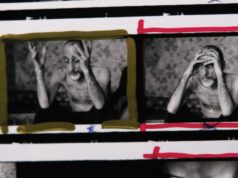
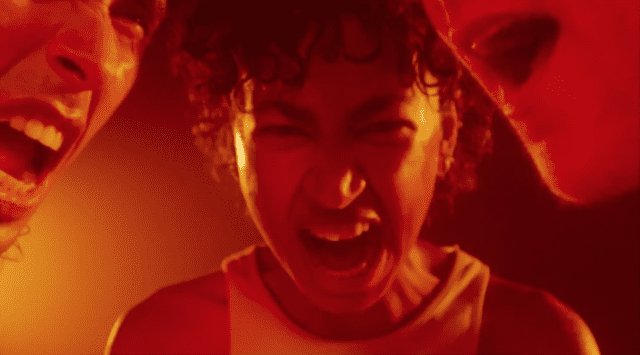
In her feature documentary Life Is Not A Competition, But I’m Winning (premiering in Critics’ Week in Venice), Fuhr Mann exposes the prejudices that persist throughout the sports world. She also pays tribute to athletes who’ve been written out of history.
“I am always really annoyed by how binary and boring the gender ideas in sports are,” the director says. “It [the film] was not connected to a certain sports event. It was more like [it was made] from years of watching sports and years of making queer films and then bringing that together.”
Few today remember Lina Radke, the first Olympic champion in the 800 metres in Amsterdam in 1928. The problem was that another athlete collapsed at the finish line. Rather than celebrate the German’s achievement, the organisers promptly banned the race from subsequent games on the grounds that it was obviously far too exhausting for female runners.
Stella Walsh was a phenomenal athlete but she too has been neglected. She may have broken world records and worn Olympic medals in the 1930s but the chauvinistic sports authorities of the era felt she wasn’t feminine enough.
In Fuhr Mann’s hybrid documentary, a group of gay and trans athletes visit the Olympic stadium in Athens. “We were only allowed to shoot from 6am-7am before the tourists came. We had to use this one hour every morning,” the director remembers.
The group also visits the Olympic Stadium in Berlin, the venue built for “Hitler’s games” in 1936. They are only allowed in there for a few hours. They get to use the stadium tannoy system, though, and have the place to themselves.
Much of the film is upbeat and celebratory. “I am a bit annoyed that a lot of documentary films focus on showing protagonists who suffer…mostly, it is [done with] good intentions but still it gives so much space to show the violence and the suffering all the time,” Fuhr Mann reflects. “That’s why we wanted to connect it [the film] with some fictional layers and have those layers look into some more Utopian moments…”
The subjects come from a range of backgrounds. “I didn’t know them, no. It was all research. But some of them knew each other. Some are in a queer big park runners’ collective in Berlin…when I brought them together, there were so many subjects for them to talk about because they all had different backgrounds.”
The director hopes the film will reach a “wider audience than usually with my very queer feminist bubble films. So many people are into sports.” The doc is aimed at viewers who “are open-minded” and maybe didn’t think about “whether it was a good idea to have this gender binary in sports and in the world in general.”
Certain topics the film touches on remain contentious. Sporting authorities continue to argue that it is unfair to allow transgender and intersex athletes to compete in women’s events, claiming these athletes will often have a physical advantage over their rivals.
“They [the authorities] don’t want to integrate them [trans athletes] into the regular categories. I see a lot of pushbacks and weird things happening in these huge organisations like the Olympic Committee or FIFA,” the director says.
Fuhr Mann acknowledges that she loves watching competitive sports but adds that values are often very skewed. “I am interested in how to still keep it competitive but I guess it would be a good idea to think about more interesting and more complex categories,” she suggests. The director believes “man” and “woman” is too restrictive. “The differences in the category of men are also huge. There are small men and bigger men; men with less and more testosterone. I guess maybe it would be more fair and interesting to make categories, like weight class in boxing. In the Paralympics, you have a lot of categories depending on the physical constitution you start with, so maybe a change could be about how you think categories.”
Life Is Not A Competition, But I’m Winning won a British Pathé sponsored DOK.Archive Award in Munich in 2021. In advance of Berlin, First Hand Films came on to handle world sales. The producers are Fabian Altenried, Sophie Ahrens and Kristof Gerega, working through Schuldenberg Films. Funding came through the University of Television and Film Munich and ZDF/3sat.
“It’s my final film at film school – so it’s still a film school project,” the director says of the documentary. After Venice, the German premiere will be held at the FilmFest Hamburg. Its TV broadcast will be timed to coincide with next year’s Olympics in Paris.
Now, Fuhr Mann has left film school and is looking ahead to future projects, among them a new hybrid doc which she describes as “a queer feminist revenge on patriarchy.” This will be “not too stupid and too bloody.” It will look at how traumas from the wartime generation continue to trouble German families today. “I wanted to do something with this traumatic energy that is still in the bodies of me and my generation and to use it and do something with it – not only stupid violence!”
As for her own sporting life, she still plays soccer and tennis. “I do a lot of sports but not in high competition because I am really bad at losing,” she confides. “I am only playing for fun…”