Co-director Kristine Nrecaj set out her stall early when describing the intriguing doc project Women Speaking, currently in post-production.
“There’s a very old tradition in Albania which says when there was no male inheritor in the family and there were only girls, one of the girls had to decide to live as a man and take over the social role of a man,” she said. “So she would swear eternal virginity. She was not allowed to get married. She would live as a man and she would get all the rights and [perform] the duties like a man. She would be the head of the household.”
But of course Kristine Nrecaj and Birthe Templin’s story is one of seemingly limitless complexity as they follow six Burrneshas whose lives have panned out in diverse ways. (Nrecaj pointed out that her own great aunt was a Burrnesha.)
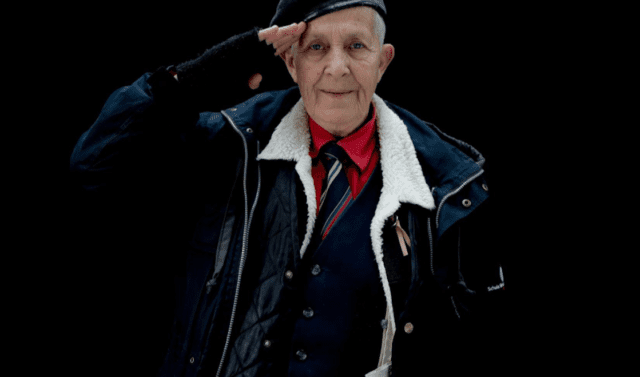
Diana’s fate was sealed even before she was born, says co-director Templin. “When she was born, her father announced that there was a new boy in the house, but she adapted and she became a very renowned public figure and she fights for women rights, for human rights and she’s very strong against injustice.”
For Bedri and Lume, “a female life was never an option, their drive for freedom and independence was indomitable,” the filmmakers explain.
And then there’s Sanie who was raised as a boy by her father. On his death bed he gave her the choice of either continuing to live like a boy or to live as a woman. She chose to stay as a man, moved to New York but now regrets her decision as she misses not having had children.
In their notes for the film the filmmakers stress how “patriarchal structures still rule but not every woman is willing to accept the restrictions of personal freedom. Living as a Burrnesha gives the film’s characters the same rights and obligations as men. Fully accepted within Albanian culture, they begin to think, speak and even behave like men. Over the years, some of them are no longer recognizable as women at all.”
“It becomes their character and in the end it becomes the destiny… our mind is so strong that the body adapts to our thoughts and the way we behave,” suggested Nrecaj. “This is universal for us because we all have our mind, we all have thoughts and we can influence our body with it… which was super interesting for us.”
In Leipzig, the film team were seeking sales representation, festival interest “and people who would like to work with us together on the exploitation of the film and its message,” said producer Katrin Springer of Filmkantine, who confirmed that the project is now picture locked and that missingFILMs is on board for German distribution.
“The tradition is fading out as life is changing,” said co-director Templin. “But of course somewhere in the mountains in Albania life is different. Structures are still different. So we don’t know, but we did a lot of research and we do believe that we found the last ones [Burrneshas].”