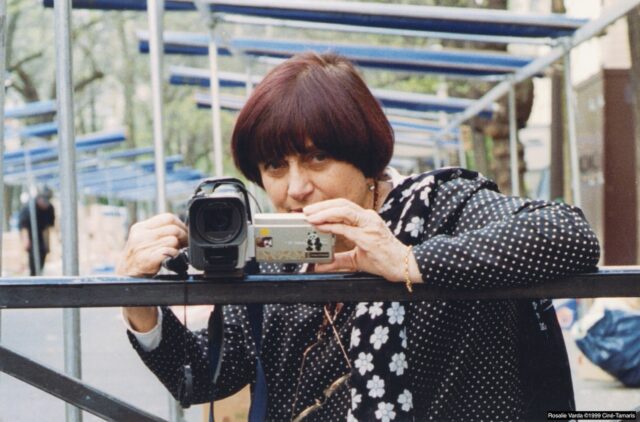
Film students around the world will have the opportunity to use images from the work of French filmmaker Agnes Varda (1928-2019) thanks to an extraordinary new project that will make Varda’s rushes available on an online platform. They can then be downloaded and edited in any way the students see fit. “The platform is going to be online in June,” explains Varda’s daughter Rosalie Varda whose family production company Ciné-Tamaris has been shepherding the project.
The idea for ‘The Gleaners and I: Revisiting Agnès Varda’s Edit’ platform began two years ago when legendary US director Martin Scorsese asked Rosalie what she was planning to do with her mother’s archives. (This comprised both the digital images Varda had shot in the years before her death and film footage from the pre-digital era.)
Rosalie admitted to Scorsese that she hadn’t thought about it. Scorsese responded that it was important to protect the footage – and perhaps to find a clever way to use it.
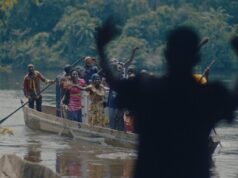
Together with her brother Mathieu Demy, Rosalie came up with the idea of putting Varda’s dailies for The Gleaners And I, Varda’s classic 2000 doc, on an educational platform. The students will therefore now have the chance to edit together their own versions of the movie.
Varda had filmed over 60 hours of material for The Gleaners And I but ended up making a film lasting less than 90 minutes. There is therefore plenty of unseen material that the students can access and remould.
“It gives the possibility to the students to create, to think, to organise, to understand the narration of the documentary of Agnes,” Rosalie elaborates. “When a university is interested in being part of the project, they make contact with us and then we give them access via another platform that has been developed by INA (Institut national de l’audiovisuel) where you can go and get the dailies subtitles in English and you can do your editing. And then the students will put back on the platform their films so other students will be able to see them.”
The venture has big-name supporters including CNC, Netflix, MK2, Janus Film and The Criterion Collection. It’s envisaged as a five-year programme but may extend far longer depending on how well it works.
Before her death, Varda was already considering such a project. There is footage online of the legendary filmmaker from late in her life when she is already talking about giving the potato-picking rushes from The Gleaners And I to the Femis Film School.
Ciné-Tamaris is planning two parallel projects. The idea is not only to make the 60 hours of rushes from The Gleaners And I available to the students but eventually also, through the ‘Memories Of Images’ initiative, to create a database of 1000 hours of a lifetime’s worth of footage shot on both film and digital by Varda.
“When Scorsese asked me what I was going to do with the archive, we went through what we had at the office and we discovered a lot of boxes that Agnes kept. We never talked about it…we began to understand what we had,” Rosalie says.
As she and her colleagues went through all the old cans and files kept in the basement, they discovered 35mm, 16mm, 8mm and 9.5mm film The aim is to digitise all the material. Some little gems have already been uncovered including an interview that Varda did with Pier Paolo Pasolini in New York in 1967 and an early film from Varda’s partner Jacques Demy, made with a family film camera when he was still a teenager.
“When filmmakers used to shoot in 35mm, they would do eight takes, nine takes or 15 takes but they would only give the labs two takes. The rest would go to the trash. But when you shoot in digital, you keep in everything – and Agnes kept everything. The idea is to protect and put on the server all the images shot by Agnes,” the director’s daughter explains.
Rosalie is a distinguished figure in her own right. She produced her mother’s 2017 film Faces, Places, collaborating with photographer and street artist JR. She also worked as a costume designer on movies made by, among others, Jean-Luc Godard and Sam Fuller.
“It was the best decision of my life. I really loved working with her. We had a beautiful relationship,” Rosalie reflects on her experience working alongside her mum. “She would trust me a lot. I loved to be with her and to discover her imagination, her spirit. I had the idea to produce Faces, Places with artist JR whom she didn’t know, but this went really nicely. It has been a long journey. I worked with her since 2006. I produced her films, her exhibitions, her books until her death in 2019…I stopped my professional career in costume design to go next to her, to help her take care of the company and to give her the strength and possibility to concentrate only on her projects and not [to have to worry about] the production, the money problem and all the organisation.”
With Rosalie’s support, Varda was able to keep on working until the end of her life. (She was almost 91 when she died).
Rosalie contrasts Varda’s methods with those of Frederick Wiseman, the legendary US documentary director, who was honoured in Cannes this year with a screening of his 1969 classic, Law And Order. Whereas Wiseman wouldn’t shoot “outside” a project he was working on, Varda would sometimes pick up her camera and start filming something from her own life.
“I think she would have been proud of us,” Rosalie says of how Varda would have responded to the new project to give her rushes and footage to the film students.
Rosalie was in Cannes to present the initiative but also to attend the screening of Florence Platarets’ documentary Jacques Demy, le Rose et le Noir, on which Ciné-Tamaris was one of the co-producers. The festival is also screening Demy’s 1964 classic The Umbrellas Of Cherbourg in a 4K restoration.
The new doc on Demy includes some never before seen interview footage of the director during the making of Varda’s Jacquot de Nantes (1991), about Demy’s early life in Occupied France and taken from Varda’s own archives. “I am a little gleaner myself,” Rosalie jokes of how she found this precious material.