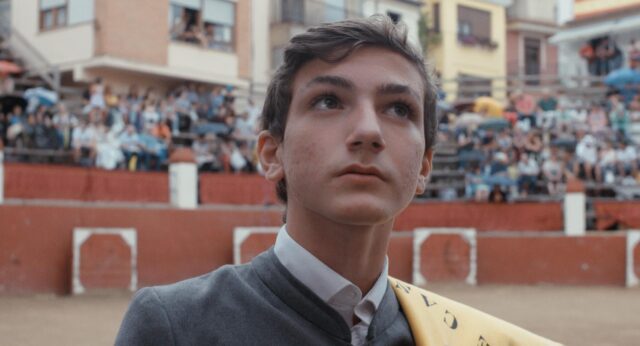
Scottish-based Spanish filmmaker Inma de Reyes originally comes from the same town as Borja, the aspiring bullfighter protagonist of her new film The Boy And The Suit Of Lights – but she had never realised that the small city of Castellón is considered to be Spain’s bullfighting capital.
“First I had the idea of making a film about my home town. Then I think it was my mum who sent me a picture of the newspaper – and the front page said Castellón was the capital of bullfighting in Spain. I wanted to learn more about this,” she explains the origins of the documentary, a world premiere in International First Feature Competition at Sheffield Doc Fest and sold by Syndicado Film Sales. The film is produced by Aconite Pictures. Other partners include Screen Scotland, Chicken and Egg, Rustic Canyon and Women Make Movies.
De Reyes began asking contacts if they knew anyone in the bullfighting community. “Then my friend said ‘my brother is a bullfighter. He is in the school of bullfighting.’”
This wasn’t something that the friend was proud about. Bullfighting remains highly controversial in Spain and many predict it will eventually die out as the public turn against it and funding is withdrawn. It is therefore possible that the film is capturing one of the last generations of bullfighters.
“I have never been interested in bullfighting,” de Reyes admits. “My family have never taken me to a bullfight or anything like that. I’m just completely oblivious to that world. But I think now you cannot be neutral in Spain. You’re either in favour or you’re against…”
Through her friend’s brother, de Reyes met Borja, the young would-be matador from a poor working-class family. She had previously thought that bullfighting was “for rich people” but she soon realised that it was “very ingrained in some families’ traditions” and that people in the town still regarded it as a potential way out of poverty.
For the documentary to work, the director had to persuade Borja’s mum to allow her to film his progress.
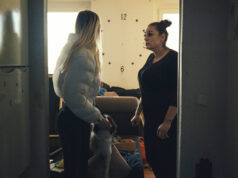
“It was harder at the beginning especially because the kids were younger and we didn’t know each other that much. She was with us all the time…we’ve made this film over seven years and so we have always stayed in touch,” de Reyes says of her evolving relationship with the family. Early on, the mother was wary but she soon warmed to the filmmakers. “She was very welcoming. She made food for all of us when we were there.”
When Borja’s grandfather Matias (who had been pushing him hard to pursue the bullfighting dream) died, the bond between the director and the mother strengthened yet further. “She just lost her dad. I had lost my dad three weeks before. We were both going through similar feelings…I would say that we are very close now.”
The director realised immediately that Borja was an unusually sensitive subject. “I think he has always been motivated by the thought of succeeding for his mum. Borja had always been a very responsible child. I met him at aged 12. He was an exceptional child, so caring and so mature for his age. I don’t think that ever changed.” De Reyes could also sense that Borja was following a path that others had chosen for him.
While Borja is very serious and solemn, his younger brother Erik is a ball of energy and mischief.
“He [Erik] was a dream for any filmmaker. He was perfect. He asks the rights questions. He is curious about the world. He wants to know everything about everyone. And he’s really intelligent…because of the traditional beliefs of families who believe the older brother is the golden child, Erik was basically free to do anything he wanted. He has all the freedom that Borja didn’t get.”
The film is made in classic observational style. As much is revealed by characters’ looks and gestures as by what they say. We see the mother’s face as she calculates if she can afford the ‘suit of lights’ which the young bullfighters wear. She knows she will have to pay in instalments but is ready to make huge sacrifices for Borja – and he in turn is desperate to succeed for her sake.
We see some of the bullfighting too. There is a very telling cut-away to the grandfather. He’s desperate for Borja to do well but we see the panic and fear that his grandson might get gored (an occupational hazard for all bullfighters).
De Reyes pays tribute to her cinematographer Theodor Solin for the way he was always able to capture such subtle and revealing moments. Solin also filmed the moments when protesters ran into the bullring.
Borja and his mother have both now watched the documentary. “I think they see the film more as a collection of memories rather than a story…they are in the middle of it. It is very close to them,” she reflects. There is an obvious added level of poignance because the film includes some of the final images captured of the grandfather before his death.
“I am just glad that I am able to give then that gift.”
This was a hugely challenging film to make. The Covid pandemic broke out half way through the shooting. Money was often tight. Potential funders were wary about supporting a film that was dealing with bullfighting. “It was a risky topic basically.”
De Reyes still lives in Scotland. She went there to study, graduating in Film Directing at the Edinburgh College of Art. Her 2018 short To Be a Torero (also about Borja but as a much younger boy) premiered at Sheffield DocFest in 2018.
And, no, the director, who is based in Edinburgh, doesn’t plan to leave Scotland any time soon. “I love Scotland,” she enthuses. “I think the culture is very similar to where I grew up, near the Mediterranean. Everybody has got a real good sense of humour, a more positive way of looking at life. It really feels like a small connected country and it [documentary] is a very supportive industry…only if it was a little bit sunnier, then it would be paradise!”