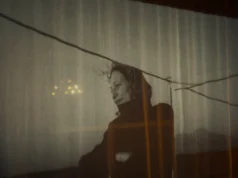
“Muslims go to Mecca, Christians go to the Vatican, but revolutionaries come to Algiers,” was the mantra that propelled Elaine Mokhtefi (née Klein) towards the Algerian capital in the 1960s, reads the synopsis of Mila Turajlić’s Power, Elaine which was pitched September 14 at AJD Industry.
Now in her mid-90s and living in New York, the story of Mokhtefi’s radical activism and engagement with anti-imperialist movements across Africa has become essential reading for today’s engaged youth, claims Turajlić. Indeed, Mokhtefi featured in the director’s last film, Non-Aligned & Ciné-Guerrillas: Scenes from the Labudović Reels (2023), which chronicled the African and Asian Non-Aligned attempts to promote a ‘third way’ during the Cold War.
“What does it mean to be a revolutionary?” Turajlić (who was represented in Sarajevo by producer Carine Chichkowsky) asked in her video presentation. “What does it take to be a revolutionary and how do we answer that question in today’s political climate? For me, the answer came in an unexpected way through an encounter with a 95-year-old woman who lives alone today on the upper west side of New York.”
“In 2018 at the age of 90, [Elaine] published her memoirs…a gripping account of her life as a radical activist, journalist and translator working with anti-imperialist movements across Africa, living with guerillas, revolutionaries, exiles, and visionaries,” Turajlić continued. “Her story allows us to tell a bigger history from an insider perspective, tracing the arc of the progressive dream of the post-World War II youth movement through to the people’s power of the 1960s, and grappling with its spiralling into left-wing revolutionary violence of the 1970s as Elaine found herself close-by when her comrades became involved in intrigue, murder and international airplane hijackings.”
The project “decentres the narrative and brings in the perspective of a woman to reveal a forgotten transnational history of the left with the publication of her memoirs,” Turajlić added.
Elaine has become an interpreter of the past for many young activists, the makers claim, who ask about people who have become today’s icons, but whom Elaine knew personally, such as anti-colonial activist Frantz Fanon, “engaged musicians” like Archie Schepp and Miriam Makeba and members of the Baader Meinhoff Group.
“As she’s confronted with their questions [those of young activists] about the way things fall apart, we see an interrogation between generations in the search to understand what’s left of the ideals of revolution, militancy and solidarity.”
The 90-minute (or 4 x 25-minute) English/French/Arabic-language production is at late production stage and scheduled for completion in early 2025. Confirmed finance sources so far include the Serbian Film Center, Visions Sud Est and JB Films.
While some on the AJD panel questioned the validity of “a white woman coming from New York” acting as a latter-day spokesperson on black empowerment, others noted the project’s undoubted appeal to Gen Z for whom militancy (both physical and digital) is a legitimate and coherent mode of expression. This latter observation chimed with the filmmakers’ assertion that Power, Elaine will provide a transnational portrait of how contemporary social movements remain in dialogue with the history of resistance that preceded them.