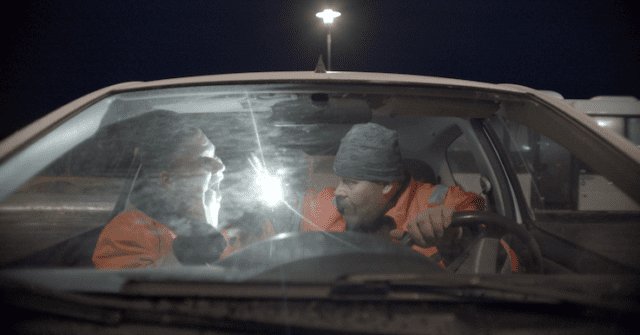
In 2009 director Jukka Kärkkäinen made The Living Room of a Nation which introduced us to Finnish Tero Pihkakoski and his newborn son, Henri. Sixteen years on, Kärkkäinen revisits the pair to record their ongoing journey. In The Beauty of Errors, Tero is now sole provider after his divorce from Henri’s mother. In addition, he has adopted a dog called Juri, named after the Russian cosmonaut Gagarin.
For Tero and Henri, home is the “epicentre of everything.” Nevertheless, Henri is growing ever more towards adulthood and independence. When he starts dating Alina, Tero feels increasingly lonely despite the presence of his dog. He turns to alcohol, which in turn instils within Henri a deep sense of concern.
At the “turning point” in the film, the change in Tero and Henri’s inter-dependency escalates into a conflict. But there is still the promise that Tero made to Henri, that on his eighteenth birthday he would take him to Rome…
“The Beauty of Errors is a deeply human and intimate exploration of universal themes that resonate across cultures and generations,” producer Juha Löppönen tells Business Doc Europe. “At its core, the film delves into the complexities of familial relationships, particularly the evolving dynamic between a father and his adolescent son, but it also explores broader themes such as loneliness, dependency, love, and the fear of loss. These themes, while rooted in the specific Finnish setting of Temmes, carry a global appeal, touching on emotions and experiences that audiences everywhere can relate to.”
Jukka Kärkkäinen “employs a raw, unflinching visual style that positions the audience as equals to the characters,” Löppönen says of his director. “The film is intimate and portrait-like, allowing the viewer to closely observe the inner worlds of its subjects. The camera gazes at the characters with directness, presenting them as they are – unembellished and vulnerable.”
“Jukka has an ability to create great access to his protagonists that can be seen in all his work. He creates warm touching films with a pinch of humour in them,” Löppönen adds. “He has a very recognisable visual language that separates his films from traditional observational documentaries. His approach often resonates well within international audiences and creates unforgettable experiences.”
“Static scenes are meticulously planned, with the camera remaining stationary, allowing the viewer to absorb the landscape and the characters within it. These moments are often lengthy, lasting several minutes, emphasizing the characters’ connection to their environment. Natural lighting is used to create a painterly effect, evoking a sense of stillness and continuity. The intention is to remind the viewer that the characters are an integral part of the world they inhabit.”
In Helsinki the team will be looking to entice a sales agent and a distributor, as well as secure a festival slot for a world premiere in Summer/Autumn 2025.
In his director statement, director Kärkkäinen articulates his intentions for the film and his appreciation of his subjects. “Being around them is easy. I see parts of myself in them. I reflect on my own world through theirs. I envy the presence they radiate—the ability to be fully present, which I feel has somewhat slipped away from me. My goal is for the film to communicate and portray an honest humanity that the audience can truly relate to.”