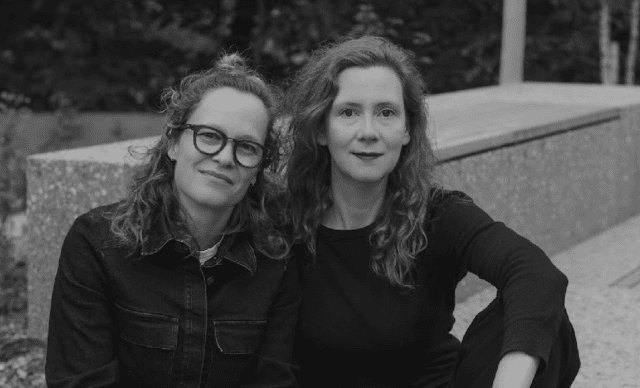
“Documentary film can be a powerful tool to address inequality, corruption and human rights violations,” observes Dokumentale Artistic Director Anna Ramskogler-Witt on the website of Good Media Network, the organisation dedicated to championing change via cinema which she runs with colleague Vivian Schröder.
“But documentaries can also be so much fun,” she reminds Business Doc Europe on the eve of Dokumentale, the new Berlin-based doc fest which kicks off October 10, offering up, over the course of 11 days, an abundance of diverse and contrasting works.
Aimed at Industry and public alike (even at times delivering a nod to über-cool Berlin salon culture), the event will remind German audiences that the doc genre can be as exuberant and vivacious as it is serious and educative.
But first things first. Why, in an already crowded documentary calendar (and October is a particularly busy month), did Ramskogler-Witt and Impact Director Schröder feel compelled to launch a new event? The answer is simple. Berlin may be one of the Europe’s key metropolises, but it has never hosted a full-on dedicated doc-only fest. Munich has one in May and Leipzig has a long-established docfest in late October. But not Berlin. So there was a ready-made audience of savvy film lovers in the nation’s capital ready for such a doc-oriented extravaganza.
“Berlin has lots and lots and lots of film festivals, really fantastic ones, very specific ones from the feminist horror film festival to Berlinale. But as far as we know, it has no unique non-fiction platform, especially one combining documentaries, nonfiction books, journalism for an audience, but also an Industry programme,” Ramskogler-Witt underlines.
“So many people in Berlin are interested in this field, and that was what led us to the idea of the film festival, also because after founding the Good Media Network, which was our initial idea and which is focused on film and Impact (see below), we got so much positive feedback and [encouragement to] do something new.”
Festival programme
The Dokumentale film programme is made up of 47 carefully curated works. Twelve of these are selected for the inaugural Competition section, which includes docs as diverse as The Tempest of Neptun by Katarina Stankovic which questions the limits of tourism; and The Friendship Bench by Reabetswe Moeti-Vogt about grandmothers in Zimbabwe who, in the absence of psychologists, are trained to sit on ‘friendship benches’ to talk and listen to people in need. Lucija Stojevic’s Pepi Fandango tells the story of Holocaust survivor and musician Peter Pérez, who embarks on a search for the fandango music that has given him “life force” since the Second World War. The festival opens with Clara Stella Hüneke’s Sisterqueens, about three Berlin-based friends who find their voices when they form a rap collective.
Meanwhile, the D’Lounge selection features six film screenings in unique locations across Berlin. Filmmaker Elisabeth Ai will present her Competition selection New Wave at the DASHI Canteen, where she will DJ afterwards. Another D’Lounge presentation will feature Barbara Visser’s Alreadymade, which delves into Marcel Duchamp’s ‘The Fountain’ and questions its authorship, at the Berlinische Galerie.
“The aim of the program is that there are films in there that surprise you hopefully and that make you curious,” says co-director Schröder, who further cites the fest’s D’Salon programme and its specific cultural vibe. “If you’re really into one topic, you can dive into it through film. But also then we’ve got books that are on the same topic or a VR project or a podcast. So if you like, you can really dive into a certain topic from all sorts of different, let’s say, nonfiction storytelling sides and perspectives.”
Impact
The other key aim of Dokumentale is to support filmmakers in their need to deliver Impact with their films. As Schröder points out, international festival schedules may be busy but there is ample room in the marketplace (and in the calendar) for another Impact Hub to complement the work of events such as FIFDH Impact Days and Movies That Matter (both in the Spring) in engaging further with projects to design and refine their outreach campaigns. “For a lot of the projects that go through Impact programs, [engagement with] one film festival is sometimes not really not enough,” she underlines to BDE of her intentions for the platform.
Which is why The Good Media Lab and Pitch, supported by AG Dok (German Documentary Association), Swiss-based The StoryBoard Collective and Filmboard Berlin Brandenburg, forms the core of the D’Hub Industry programme, during which six projects approaching completion (or already completed in the case of Clara Stella Hüneke’s Sisterqueens) will present their Impact plans October 14 in Berlin.
“[The initiative] uniquely brings documentary film-makers together with non-profit organizations, foundations, civil society organisations, research institutes, policymakers, brands, and media representatives to address today’s most pressing social and environmental challenges,” reads the online overview. “It’s more than just collaboration—it’s a dynamic platform for the creation of powerful, purpose-driven partnerships that have the potential to bring about real change.”
To underline the Dokumentale’s Impact credentials, the Swiss embassy in Berlin will host a breakfast reception for filmmakers to get to know both its workings and those of FIFDH, the Geneva-based Human rights film festival and its associated Impact Days programme.
Click here to see the full programme of the D’Hub Industry programme.
The appeal of doc
Schröder and Ramskogler-Witt further stress why they believe documentary is something that folk increasingly turn to these days, whether for sustenance, entertainment or comfort, or even to scratch an academic/intellectual itch. Or to understand more the world we inhabit.
“To a certain extent life is full of the most beautiful but also painful stories [and] sometimes you don’t need a fiction film,” says Schröder. “But certainly in an age of mis- and disinformation, documentaries are really, really important, because they are real. And I think this is something that we need in this world right now.” She cites a recent report conducted by Reuters Institute and the Oxford University which claims that, when seeking information on climate change, 39% of the people surveyed chose to obtain information via documentaries as against 33% via established media outlets.
“I don’t know how you consume news or information these days, but I realized that it’s often headlines, sub-headlines, very short social media clips or things you read on the fly without going deeper,” adds colleague Ramskogler-Witt. “Taking the time of between 60 minutes and two hours to dive into one topic relaxes my brain. It gives it food, it gives it things to think about…[and] not tap into the very easy trap of reading something, memorising it subconsciously, and then putting it into the wrong context. Documentaries are wonderful because they offer you more information that is often very digestible in the broader sense.”
Future trajectory
Schröder and Ramskogler-Wit tell BDE how they are looking forward to the feedback they receive when doors eventually close on the first Dokumentale on October 20.
“A successful event for me, maybe it’s different for Vivian, but for me it’s reaching an audience, getting people so much excited that they go to the cinemas, go to the screenings and enjoy the readings…but not just enjoy that, also to start a conversation with their neighbours. To create an environment where people feel connected and excited and happy,” says Ramskogler-Wit. “[And] we have to see how our Industry program works…how we can further develop [the Impact programme] and then sit down, evaluate everything also with international colleagues, get their input, their insights, make decisions and in November put those plans into stone.”
“From my side and maybe audience-wise, obviously it would be great if people say, ‘I can’t wait to next year,’” adds Schröder. “That would be the best feedback I think that we could get. From the Industry side, I think that we are able to build a community in which everyone who has come here walks away with a beautiful bouquet of new contacts that they’ve met. And that sparks new ideas, new collaborations, partnerships, and really building a community to see how we can we better work together.”
“And afterwards we will fine tune and see what else we need to add, what worked, what didn’t work, and then work from there to best serve the audience and Industry.”