Daniel McCabe’s Grasshopper Republic is a beautifully immersive examination of the cycle of grasshopper harvesting in Uganda. The film works both as an analysis of a ramshackle and potentially dangerous makeshift industry and an intimate examination of the life of the grasshopper.
The subtext may well be the impact of global warming and the destruction of ecosystems, but the film indicates how, for grasshopper harvesters, this is both a hit-or-miss and complex industry. Filmed over the course of three seasons, the doc follows a local grasshopper trapping team in verité style as they push into remote forests seeking their fortune by capturing this elusive prey. Elegantly shot in cinemascope, the film offers a fascinating glimpse into an industry that is both mesmerising and brutal.
There is a real sense of vibrancy as director Daniel McCabe and his crew follow Bundibugyo and his team searching for the best place to build their traps. He negotiates with a woman who is worried the traps might have an impact on her maize crops, while at the same time his crew struggles to transport a generator along pot-holed tracks to reach its designated spot.
The film largely follows the trapping crew, though footage of them at work is interspersed with close-up footage of the hatching and growth of the grasshopper as it gradually develops into the green insect we know so well. For the trapping team, it is all about constructing a maze of corrugated iron panels and drums, all linked by a series of chemically treated bulbs which cast a lurid green neon pall over the tree canopy, designed to attract the grasshoppers when they swarm.
Hefty generators are manhandled up collapsing mudbanks to power the system. The trappers – some of whom suffer with sickness caused by the lights – are exhausted as they set their schemes in motion and have to simply wait for the (possible) arrival of the grasshoppers. More rains lead to more landslides which means the traps are damaged. This in turn means more waiting, which renders the whole process immensely frustrating.
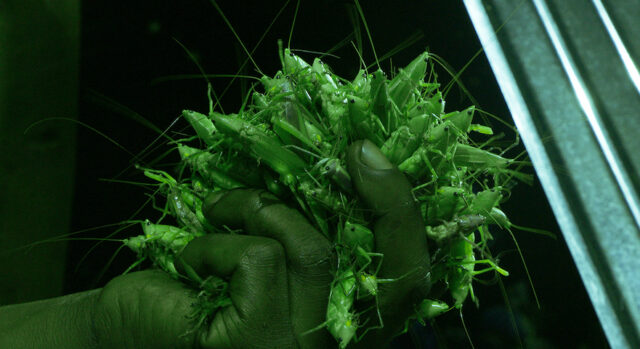
When the grasshoppers finally arrive from the sky – “from the moon”, according to local legend – we see remarkable night-time footage of the green swarm attracted by the lights hitting the corrugated tin like hailstones before becoming trapped in barrels layered with sugary substances. The sequences depicting the grasshopper swarm are oddly beautiful and mesmeric, but soon given way to perfunctory footage of them being gathered, transported, washed and delivered into a frying pan.
The film inspired is by the book ‘Nsenene’ by Michele Sibiloni (also one of the producers and cinematographers). Nsenene is the Luganda name for Ruspolia differens, a bush cricket or long-horned grasshopper.
To an extent, more information and footage of the insects would have fitted nicely into the deftly shot but often slow-moving story of the trappers setting up their operations. But ultimately Grasshopper Republic is a beautifully shot story about man’s relationship with nature as clever trickery sees the determined trappers lure in their prey before shipping the insects to the markets by the sackload.
US, 2023, 94mins
Dir: Daniel McCabe
Production: Nsenene Corp
International sales: Taskovski Films
Producers: Daniel McCabe, Alyse Ardell Spiegel, Michele Sibiloni, Otto Bell
Cinematography: Daniel McCabe, Michele Sibiloni, Michael McCabe
Editor: Alyse Ardell Spiegel
Music: Robert Aiki Aubrey Lowe