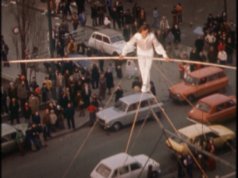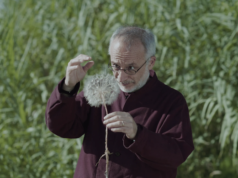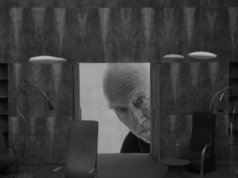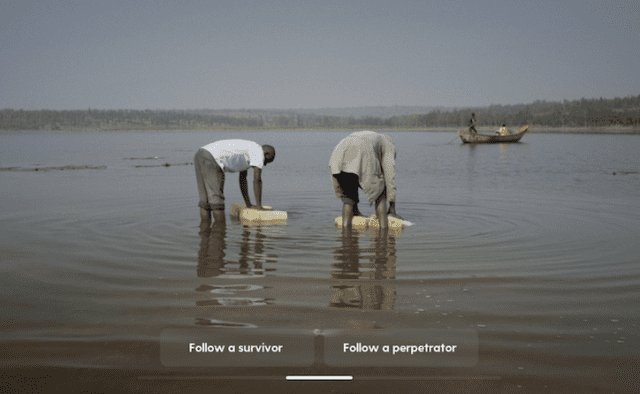
Anja Reiss and Jann Anderegg’s Traces of Responsibility offers a multi-perspective exploration of the origins and aftermath of the 1994 Genocide in Rwanda. In the interactive film, the audience is taken on a journey through modern-day Rwanda but can, at strategic points, choose from the film’ numerous editorial lines, whether they be first-hand testimony, modern-day analyses of events, the trial of a war criminal, or expressions of hope for the future by Rwandan youth.
There is a strong element of ‘j’accuse’ in the film as the filmmakers trace the activities of former Rwandan minister and convicted war criminal Augustin Ngirabatware who studied in Switzerland. Nor does the film hold back from highlighting Switzerland’s dubious financial and political connections to Rwanda which, they argue, have been pointedly ignored by historians.
“The documentary captures the process of coming to terms with the past in Rwanda. Viewers witness the experiences of survivors as well as perpetrators, their co-existence in the same country and the mechanisms of reconciliation. The documentary also portraits the new generation with their vision of a peaceful future and artists reflecting on Rwanda’s past through their work,” the directors underline of their film.
The origins of Traces of Responsibility have a personal undertow. Co-director Anderegg attended school in Switzerland with a Rwandan boy who had never met his father. When, in later years, the boy investigated his parentage, he discovered that his father was Ngirabatware, the Rwandan politician who participated in the Genocide and was subsequently convicted by the International Criminal Tribunal for Rwanda. He was imprisoned for 30 years.
Anja Reiss, Anderegg’s partner and co-director on the film, arranged a meeting between the boy and his father and initially planned to make a regular documentary about them, but both subjects were resistant.
Nevertheless, the filmmakers’ interest in the subject was piqued. As well as telling the story of Ngirabatware, they uncovered many other testimonies during their research, whether from latter-day chroniclers of events or active participants within the Genocide, as well as the younger generation of Rwandans who are seeking to rebuild their country.
But such was the body of evidence (and associated footage) they accumulated, an altogether more expansive approach to their project seemed appropriate.
In 2016, Anderegg edited Late Shift, the first interactive movie out of Switzerland, based on one story, countless storylines and seven different endings defined by the audience’s choices.
Reiss and Anderegg decided to apply a similar model whereby audiences could decide on which line of narrative or which testimony to follow within the doc. The subsequent multiplayer format offers the audience a total of 38 decision points throughout the almost 7 hours of film. In a cinema, all audience members are asked to vote collectively on which direction to take, while on personal devices, viewers can click their preferences.
“The viewer can navigate through a multi-perspective landscape of stories that includes everyday observations, voices of survivors and perpetrators, as well as reflections from artists and the youth,” says co-director Reiss. “At the decision points, we want to encourage the audience to reflect on the fact that our view of the past also depends on our perspective. And that there is not just one truth about history.”
Voices in the documentary include historian Thanushiyah Korn, who wrote a doctoral thesis on the global dimension of the Genocide. She opines in the film: “For the German Reich, Rwanda was a model colony; for Belgians it was a commodity; for Switzerland it was family; for the World Bank it was a fantasy; and for France it was a strategy.” With so many countries shaping the fate of the country, how could the Genocide have ever taken place, she asks.
Swiss writer Lukas Bärfuss is withering in his assessment of Switzerland’s alleged willingness to turn a blind eye to the violence, and talks of the “politics of remembrance,” whereby his country refuses to address its own past vis-á-vis Rwanda. “We are only interested in [seeing] your passport if you have no money,” he says, which is why war criminals have frequently found refuge in Switzerland, including those who committed murder in Rwanda. In the process, the country covers its own back, he further alleges, while the more overt actions of other countries divert attention away from Swiss activities. “We didn’t [create] the bloodbaths,” Bärfuss says. “We just swim in them.”
“It is a fact that the Genocide against the Tutsi in 1994 happened in a country prioritised for Swiss development aid,” co-director Reiss says. “This raises questions about Switzerland‘s responsibility. As Ngirabatware, the former Minister of Planning who studied in Switzerland, was a key figure in relations between the two countries on the eve of the Genocide, the film follows his traces and the filmic journey leads to places that are tied to his court file as well as Switzerland’s presence in Rwanda.”
Reiss was surprised at the high levels of local optimism she encountered during her researches in Rwanda. “How people are coping with the past [and] the idea of reconciliation that they are able to live with their former perpetrators in the same village or in the same country – this effort that people are making, that was a big surprise,” she says. “I think that was also one of the motivations why I wanted to do this film, because I wanted to show the world that it’s possible to somehow find each other after such a tragedy [and the] scale of horror that happened there. So it’s a very hopeful country.”
Given that so many hours of material are accessible during the interactive experience, Reiss freely admits that keeping track on everything was a challenge. “I have to say my husband [Anderegg] was a mastermind and had all the different paths in his mind,” she comments of constructing a dramaturgy from the numerous disparate stories and elements. “But he [still] struggled, because it was, in the end, almost like seven hours of edited material.”
Nevertheless, she is very satisfied with the results. “We see this cinematic search as a puzzle that we piece together out of all the missing parts we find along the way,” she says in her film notes. “Through the interactivity, we want to capture the feeling of the fragmentary composition of an overall picture while watching the film.”