Leading doc sales agent Esther van Messel, founder and CEO of Zurich-based First Hand Films, arrives in Amsterdam this year with an IDFA international competition title on her slate.
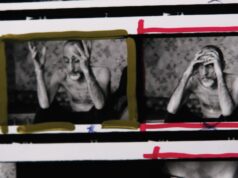
Writing Hawa, from director Najiba Noori, is the story of an Afghan woman who refuses to abandon her dreams finally to learn how to read and start a business after the Taliban sweep back to power.
The project was produced by Christian Popp of France’s Tag Film.
“I really, really appreciate him. I have seen him produce this film through hell and high water with this fantastic director,” the First Hand Films boss says of the film. “I think we need more such stories from Afghanistan. We need stories that convey hope and that are told in such a way that they reach commissioning editors and audiences…we will fight for this film!”
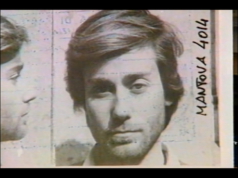
Also in official selection is another new First Hand Films title, The 1957 Transcripts, from director Ayelet Heller, produced by Osnat Trabelsi. The Israeli-made doc, screening in the festival’s Frontlight competition, explores the history behind a massacre committed by the Israeli army in 1956, 10 years after the Naqba and before the Occupation. Esther van Messel describes it as “extremely courageous” to produce and show such a film in current times.
The film had its national premiere in Docaviv where it won the Special Jury Award.
“There has never been made an Israeli documentary about it before and it is time to acknowledge this part of history, too. It was only possible now because the trial transcripts got published. Some efforts are being made to have it banned but films like these are needed to renew the narratives.”
Will it be an easy sell? The First Hand Films boss acknowledges the challenge here. She has noticed wariness among distributors about films and projects touching on the so-called “conflict” or on its roots.
“To pitch anything right now that touches on these areas is giving the buyers all the excuses to say ‘no.’ They say ‘no, this is too early or this is too late or we need this or we need that, or it is Islamophobic or it is anti-semitic…people don’t want to know the stories behind [the conflict].’ They [the buyers] are so afraid of criticism. They want a film about what it is to be in Gaza now, basically a reportage. And that is not how documentaries are made.”
It’s a year since Palestinian filmmaker Mohamed Jabaly’s much-liked feature doc Life Is Beautiful won Best Director at IDFA. Since then, the film has sold to Al Jazeera; to Watermelon Pictures for North America, and, earlier this autumn, won best Nordic Documentary at 2024 Nordisk Panorama in Malmö. However, as van Messel recently noted in a fiery op-ed piece published in BDE, none of the five Nordic broadcasters who gave it the prize in Malmö have actually got round to acquiring it.
“That’s just one part of the story. No public broadcaster in Europe has bought it. But it’s not about Life Is Beautiful only. It’s about [the fact] that nobody is buying anything! I’ve never seen the market like this.”
The stark conclusion van Messel draws is that there is “no courage, no interest, no curiosity any more for authentic and relevant film” among the public broadcasters. “The only thing that is sought after is blue chip researched investigative documentary: ’reportages +’. No personal stories, no poetic films…the market as we knew it is not there anymore.”
The revenues that First Hand Films generates for its filmmakers now come primarily from digital distribution, not from the broadcasters. That’s a seismic change given that the company used to make the majority of its sales to the public channels.
However, van Messel soldiers on. Her determination to find the best homes for the films she represents hasn’t abated in the slightest.
As ever, First Hand Films was offered more titles in the IDFA programme than it has picked up. “We need to be super-passionate about a title to work with it. Otherwise, it just doesn’t make sense,” she says.
The company is already aboard one of this year’s Forum titles in the Producers Connection – Matriarchy from Swedish director, Zara Arrehed.
“We saw them pitch this at Sheffield. We are co-producing it as a company but we are also doing the world sales,” the First Hand Films boss says of the new film, about a young woman torn between her Orthodox family and her secret Muslim girlfriend.”
The First Hand Films CEO pays tribute to Orwa Nyrabia, the IDFA festival director who recently announced he will be standing down next summer.
“In times of obedience, I think Orwa is fierce, and that he did a great job. He has the impeccable ability to have an opinion, a standpoint, a position – a clear line, a very strong backbone. I admire that. You can agree with him or you can disagree with him, he will not waiver, but he will find a dialogue with you. I’ve known him for more than 20 years and I truly appreciate him as a colleague.”
Ask van Messel what she expects from IDFA overall and she highlights the communal, networking side of the event – in other words, the human factor.
“It’s first and foremost a festival; it’s a fest, a party! We are meeting everybody. We are catching up after this horrific year. We are consoling ourselves in hugs with colleagues. We are looking at new projects and discussing opportunities,” she says. “I think it’s important that we meet, remember who we are and why we are in this field.”