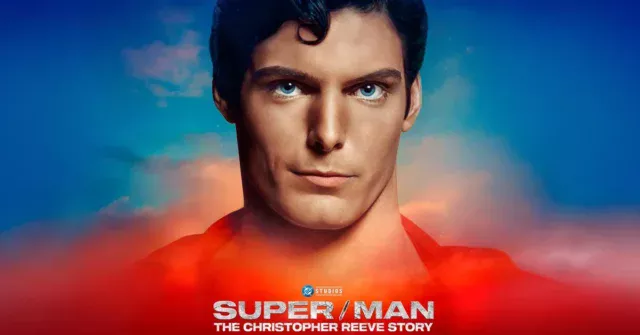
Super/Man: The Christopher Reeve Story by Ian Bonhôte and Peter Ettedgui won the Bafta for Best Documentary at the awards ceremony held February 16 in London.
The feature doc tells the story of American actor Christopher Reeve after a horse-riding accident left him paralyzed, and his subsequent work as an activist for disability rights.
The film pipped two Oscar-nominated films to the post – Black Box Diaries by Shiori Ito and No Other Land by Yuval Abraham, Basel Adra, Rachel Szor, Hamdan Ballal.
The other Bafta doc nominations were Daughters by Natalie Rae and Angela Patton and Will & Harper by Josh Greenbaum.
UK-based Super/Man directors Ian Bonhôte and Peter Ettedgui were determined to make their film on their own terms, without compromises, they told Business doc Europe in November 2024. They didn’t see it as an issue-based documentary.
“We made a film about an actor who broke his neck nine years before dying, but he spent more than 40 years not in a wheelchair before that,” Bonhôte stated.
Nonetheless, Misfits, the London-based company bought by Mediawan earlier last year and which Bonhôte co-runs, takes disability very seriously. “Making Rising Phoenix just opened my mind….we had a majority of people working on the film with disabilities,” he added.
Many UK film and TV companies are based in Soho which has “very tricky” architecture. The buildings may have “lovely little back stairs” but often there are no lifts. Several employees at Misfits have cerebral palsy and can be badly affected by noise and disruption in the office. The company, though, makes sure that they provide the best environment in which their staff can work.
“I don’t know if other companies are doing it,” Bonhôte reflected. “We are not judging the others but, yes, we are making our company as accessible as possible. We want as many creative partners and producer partners form the disability community to feel they can come and work at the office, collaborate with us… We are in the business of telling human stories, and human stories means lots of different shapes and forms.”
One reason the Reeve documentary has had such an emotional impact on audiences is that it’s a love story as much as a film about disability or about how its subject became a movie star. Many audiences don’t realise that Reeve’s wife Dana, who features very prominently in the archive material, was herself to die of lung cancer only two years after Reeve.
“Certainly, Ian and I, when we started on this project, we knew Christopher had died but we didn’t really know who Dana was, let alone that she had died. When we read about her death, it was like a hammer blow,” Ettedgui acknowledged to BDE. “We wanted the audience to have a similar experience…”
Dana’s death does indeed come as a huge shock. At many screenings this is where audiences are hit the hardest. The filmmakers remember that several execs wanted her death to be cut out of the film so the focus would be more firmly on Reeve. Wisely, they ignored the advice.
Another major presence in the film is Robin Williams, Reeve’s co-student at Juilliard and one of his closest friends. Bonhôte insists that they didn’t feature the actor-comedian so prominently just because he was a huge star in his own right. The comedian and Reeve were as close as brothers. Williams went to extraordinary lengths to support Reeve after his accident.
Ettedgui was 13 when the first Superman movie came out and remembers being blown away by it. “I remember going to see it in the Odeon Leicester Square. It must have been the opening weekend and it was just packed…I had a classic childhood experience of Superman that ultimately fed into me wanting to be a filmmaker.”
Bonhôte is slightly younger but vividly recalls when Superman movies were shown on European TV all the time.
“I won’t lie to you. I love my fashion and a man who wears his pants over his tights is not the greatest look,” he laughed. Reeve, though, was the one actor who could get away with such a look. He watched the films on TV many times. All those years later, both men say it was “an honour” to be able to tell Reeve’s story. “It was a challenge but something no-one would want to pass…”