BDE caught up with Elijah Stevens, producer of Barbara Forever. Ahead of the project’s March 26 Work-in-Progress presentation at ParisDOC. Directed by Brydie O’Connor, the film is described as the first ever feature documentary to exclusively tell the story of the lesbian experimental filmmaker, Barbara Hammer.
It’s an important work, with huge impact, a story that needs to be told, suggests Stevens.
“Looking to Barbara as one of the first filmmakers to put a lesbian life on screen that wasn’t there before, her work [has] become a blueprint for a new generation of queer and radical artists to write our own histories into existence. This exploration of both Hammer’s life, work, archive, and her ongoing legacy provides an urgent, necessary story of queer life, feminist history and avant-garde cinema,” Stevens adds. “Barbara Hammer was an avant-garde pioneer, trailblazing the forms of experimental film and queer, feminist art. Over the course of her career, she created over eighty films – as well as performance art, installations and illustrations.”
What’s more, director Brydie O’Connor is uniquely placed to take on such an important icon. She wrote an undergraduate thesis on Barbara’s early work from the 1970s, before meeting her when she moved to New York to become a filmmaker herself.
She writes in her film notes: “As a lesbian in my late twenties, I am of a different generation to Barbara Hammer herself. She lived through historical moments that I have studied, but did not experience first-hand. I have gained invaluable knowledge from interviewing folks of her generation – namely her friends, lovers, and fellow artists – to better understand the worlds in which Barbara orbited, through a specifically anecdotal research method.”
“My position as a queer person and artist in the current cultural landscape informs my lens and motivation behind making this film at large,” she adds.
Producer Stevens picks up the story. “This led her [director O’Connor] to eventually becoming friends with Florrie Burke, Barbara’s widow, and in 2022, they collaborated on a short film, entitled Love, Barbara, which O’Connor directed, telling the story of Barbara Hammer through the lens and love of her partner of over 30 years.” This experience further determined O’Connor to deepen her collaboration with Burke, and to amass an immense archive of Hammer’s life and art.
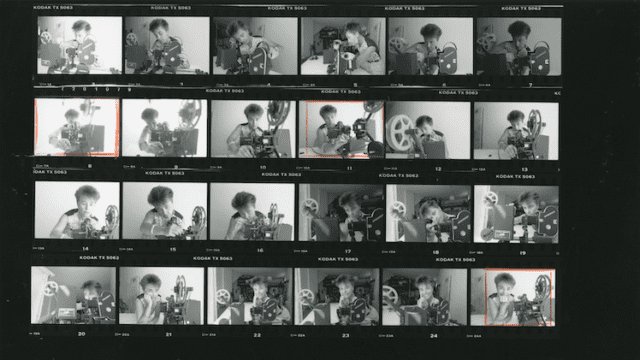
“Driven by her canon of over eighty films, a vast archive of unreleased archival materials – hundreds of hours of footage, personal photographs, letters and drawings – and extensive audio interviews, Barbara Forever tells Barbara Hammer’s story through her own images and words,’ says Stevens.
Cinematically, the film promises to break rules and bring fresh perspectives, taking inspiration from Barbara’s own work. O’Connor tells us more in her director’s note.
“Barbara Forever rebels against traditional biographical documentary structures in its visual experimentation, queered chronology, and thematic exploration of a living legacy unfolding in the present. Visually, the film will be a cinematic collage that playfully overlaps, clashes, and weaves layers of found footage, audio, and stills – a cacophony of imagery and sounds… We adopt her ethos of experimentation to challenge the ways we retell history, while locating the story in the present with a modern visual language.”
The result pays homage to the artist in a unique way, making space for her to tell her own story. As Stevens puts it, the techniques ‘“allow her to be the expert on her life, vision, and intentions.”
“We are supported by an incredible team of queer and feminist filmmakers and scholars consulting on it,” Stevens advises BDE.
The producer himself has strong credentials when it comes to films with a strong archival element, having associate-produced the Oscar-nominated documentary Fire of Love. Also on the team is editor Matt Hixon, who was associate editor on All the Beauty and the Bloodshed, about the artist and activist Nan Goldin. The film is executive-produced by Killer Films, led by Christine Vachon, a pioneer of the New Queer Cinema movement, and is a co-production with Kartemquin Films and Berlin-based Ma.ja.de.
One of only six films (selected from hundreds of entries) to be screened at ParisDOC Work-In-Progress screenings this week, the film is currently at post-production and edit stage. This is the first time a long cut of the film is brought to market.
Stevens is upbeat about the opportunities this presents. “Barbara Hammer often spoke about how she was able to screen her work and get support in Europe and internationally, amongst audiences and curators drawn to her experimental approach, and we feel similarly that this film will find incredible audiences worldwide.”
“So many of the festivals that have programmers attending ParisDOC, including Cinéma du réel itself, have programmed Hammer’s work in the past, and we’re excited to continue that lineage with this film. We’re excited to share the film with programmers, sales agents, distributors and others who will resonate with the creative, artistic approach of the film, and help bring the film to audiences worldwide through festivals, cinemas, museums, classrooms, television, and streaming.”
“ParisDOC and Cinéma du réel cultivate such an incredible audience and network of film professionals who are attuned to the potential of artistic nonfiction cinema, and it couldn’t be a better place to showcase Barbara Forever at this stage in the film’s journey,” Stevens ends.