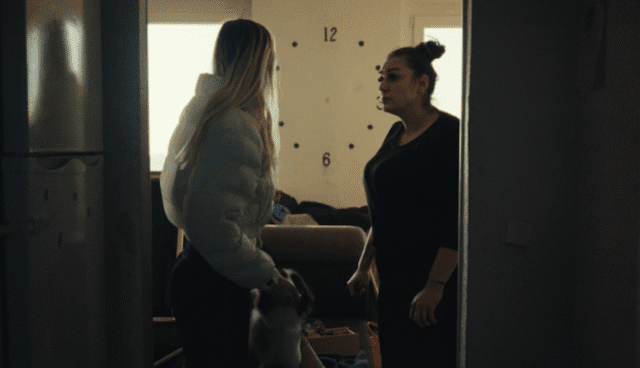
Located in the east-German city of Halle, Kindesmutter tells the story of Anne who became a mother at the age of 17. Her daughter Leonie (now 14) runs the risks of taking the same path of drug addiction. To break the cycle, Anne determines to change her life, but can she become the role model her daughter needs before it’s too late.
“At the first glance, the film looks like a local story from the East German town of Halle, but it becomes clear that this is a quite universal story and has great international potential,” producer Friedemann Hottenbacher (inselfilm production) tells Business Doc Europe.
“At its core, Kindesmutter tells a profoundly human story that transcends its regional setting. While the film is rooted in the social realities of Eastern Germany, Anne’s struggle to break cycles of poverty, addiction, and stigma speaks to universal experiences of motherhood, resilience, and hope.”
The project has a mooted delivery date of 2027. “As a project with a strong regional connection and natural link to DOK Leipzig, it is both a story from East Germany and universally relevant,” Hottenbacher stresses. “We hope to connect with partners for post-production, distribution, including festivals and broadcasters…As it is a long-time observation, we don’t have a fix ending date for the shooting – but overall we are aiming for a festival release [in 2027] followed by a theatrical release and a TV Broadcast.”
The producer is looking to gain “profound” feedback from international partners at DOK Leipzig, as well as pique the interest of potential financial partners, German broadcasters, sales outfits and distributors.
“The film’s intimate perspective and strong female protagonist offer an authentic look into a world rarely portrayed with such empathy and nuance,” Hottenbacher adds. “This combination of personal storytelling and broader socio-political relevance gives Kindesmutter strong potential to connect with audiences and partners across Europe and beyond—particularly in regions facing similar social and generational divides.”
“Its cinematic approach and emotional honesty position it well for the international festival circuit, as well as for broadcasters and platforms seeking deeply human, character-driven documentaries with global resonance.”
Director Konrad Schlaich was born in 1995 in Berlin, where he still lives. He works across both documentary and fiction, having started his professional journey in journalism, focusing on video journalism within a collective of activist filmmakers. While studying Communication and Anthropology at Freie Universität Berlin, Konrad spent a semester in Beirut as an exchange student. There, he met artists and filmmakers engaged in experimental documentary work—an experience that inspired him to pursue documentary filmmaking himself.