Ji.hlava IDFF’s 30th edition will showcase 350 films across its competitive and non-competitive sections, including 106 world premieres, 28 international premieres and 8 European premieres. The Opus Bonum competition will present the best of world documentary cinema, while the First Lights competition will showcase the most remarkable documentary debuts. The best experimental films will be featured in the international Fascinations and Czech Exprmntl.cz competitions. New Czech documentaries can be discovered in the Czech Joy competition, and the Testimonies competition features 15 “powerful” films.
Festival director Marek Hovorka comments: “The thirtieth Ji.hlava will offer a strong programme full of premieres, festival hits and discoveries. The main competitions will bring together new works by James Longley, a two-time Oscar nominee, and Iraqi-Chilean-Costa Rican director Ishtar Yasin Gutiérrez, whose previous film won one of the top prizes at the prestigious European festival IDFA, alongside debuts by filmmakers from Argentina, Colombia, Burundi and South Korea.
“We will also celebrate thirty years of the festival with the largest-ever presence of Czech films in the international competitions and by expanding Czech Joy with a special short film award. Our non-competitive sections will present fresh highlights from Venice and notable films from Cannes, Berlin, Sundance and Locarno. But the festival also helps films in development and production. Iranian director Ali Razi and Pulitzer Prize winner Lindsey Sitz, among others, will present their forthcoming projects at the Ji.hlava New Visions Forum. For several years now, I have felt that documentary film is experiencing a golden age – and this incredible journey continues.”
Hovorka adds: “Over thirty years, the festival has screened 6,388 films, seen by approximately 940,000 viewers in total. We are therefore very likely to pass the one-million-viewer mark this year. Impressive as that figure is, the festival’s ten-day format has in recent years made the event comfortable for both returning and new audiences. The anniversary edition is thus an ideal opportunity to visit, whether you already know Ji.hlava or will be attending for the first time.”
OPUS BONUM COMPETITION (all following annotations written by festival)
The international Opus Bonum competition brings together films about finding one’s place in society, the effects of war and its aftermath, and humanity’s relationship to place, time and the surrounding world. The Taiwanese film The Songs from Within, directed by Elvis A-Liang Lu, follows two siblings from the Paiwan community who do not identify with local ideals of masculinity. Both adopt female alter egos and find room for self-expression through music and dance. This sensitive work explores social exclusion and the discovery of gender identity in a setting that prefers to ignore queer people rather than embrace their differences.
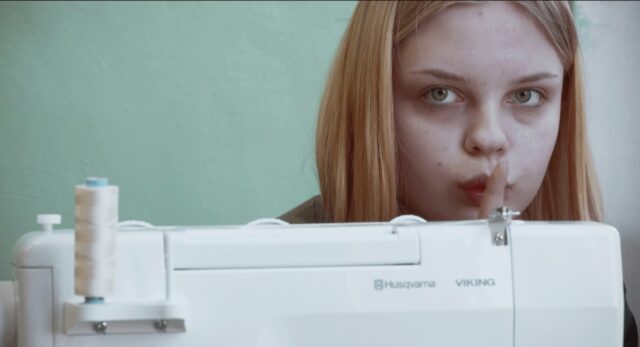
The Swiss film Small Talk by Mateo Ybarra takes audiences inside Switzerland’s last remaining etiquette school, where women from different countries learn table manners, hosting and social protocol. The Swedish-Finnish film Good Girls by Ania Winiarska is set in a Catholic correctional institution for teenage girls in the Polish city of Łódź, where daily life is governed by discipline, surveillance and enforced obedience. Their different experiences are united by the difficulty of escaping the influence of one’s family and upbringing.
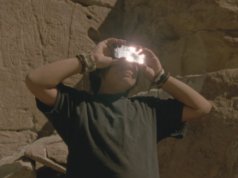
Several films reflect on armed conflicts and their consequences. The Lithuanian-German-Latvian Baltic UXO, directed by Agnė Dovydaitytė and Alexander Belinsky, follows scientists, fishermen and coastal residents around the Baltic and North Seas, where approximately 1.6 million tonnes of unexploded military munitions remained after the Second World War. The film reminds us that the consequences of wartime decisions do not end with the war: they can transform nature and the lives of its inhabitants for generations. The American-Afghan Mohabat by James Longley portrays a twelve-year-old boy growing up in an orphanage after his father was killed in a drone strike. His experience is far from exceptional: many children there have lost parents and other loved ones to war. In this sensitive portrait of a childhood cut short, individual suffering intersects with the wider social consequences of a protracted conflict. The Ukrainian-Latvian I See No Death by Yevhen Titarenko follows a Ukrainian unmanned systems unit. Here war also takes place on operators’ screens, where destruction becomes a technical task and death a handful of pixels.
The Iranian film Outside/Inside by Maani Petgar chronicles seven years in the lives of the director and Ceci, a stray cat who moves from the street into his flat without abandoning the world of other cats, neighbours and the city. In the French film For the Moon, director Éric Baudelaire hands the camera to five students at a Parisian institute for blind young people, who record their everyday lives, memories and artistic work through sound, music, touch and other senses. This sensitive collective portrait shifts attention from what its protagonists cannot see to the ways they perceive the world through hearing, touch and other senses. Explore all films in the Opus Bonum section here.
FIRST LIGHTS COMPETITON
The First Lights competition will present 13 remarkable debuts. Several films return to personal histories, reconstructing them through personal or found images.
The Argentine film I Hope You Fall in Love by Ariel Feldman is an autobiographical chronicle of his romantic relationships. Alongside interviews with former partners and his parents, it features old footage from romantic holidays, the director wandering alone through his apartment, walking his dog and the very process of editing the film. The French-Italian The Lucias by Clizia Centorrino returns to the director’s native Sicilian village, where a procession honouring Saint Lucy has taken place for centuries. The director interviews women who have portrayed the saint over the years, combining their testimonies with amateur recordings of the procession. As perceptions of the saint evolve, the film also traces the history of Sicilian women. The Ukrainian-Czech Water Wears Away by Kateryna Ruzhyna draws on old home videos of her childhood in Zaporizhzhia. She searches them for traces of Russian cultural influence, confronting the images with her present-day experience as an émigré in Prague and conversations with friends from Ukraine and Russia.
Other films observe daily life in places marked by violence or scarcity. The Congolese film Journey by Eli Maene opens with people searching through a landfill in Kinshasa and continues with the story of a local painter who runs out of paint days before an exhibition. Unable to raise money, he decides to become a Christian street preacher. The Swiss-French Saudades Eternas by Emma Boccanfuso takes viewers into a household in Rio de Janeiro’s Chapéu Mangueira neighbourhood, where gunfire is a routine feature of everyday life and police raids only heighten tensions. The director films residents with a handheld camera and joins her protagonists directly in the situations that make up their daily lives.
The competition also features striking experiments with cinematic imagery and the filmmaking process. Erotic Blossoms in a Dream by South Korean director Jihyeon Oh evokes Myeong Wol, a historic Korean courtesan who was also a poet. The first part uses visual montages and linguistic metaphors; the second is a compilation of 79 explicit films converted into negative images and presented as a silent film. Explore all films in the First Lights section here.
CZECH JOY COMPETITION
The Czech Joy competition presents 29 new Czech documentaries. This year’s selection explores people’s relationships to the landscape, changes in communities and social relationships, political conflicts, and personal memory and identity.
The programme includes the visually dazzling documentary Glowing by Martin Páv, which deconstructs outward attractiveness as a norm of global capitalism. A perfect relationship, thousands of Instagram likes, a successful career and, ideally, lighter skin: young protagonists from different social backgrounds in Seoul, New Delhi and Nairobi share the same goal – to ‘shine.’ Light it Before it Burns by Markéta Ekrt Válková examines controlled burning as a possible tool for regenerating landscapes and the differing views of experts, firefighters, politicians and local residents.
The time-lapse documentary Hating by Ondřej Šálek captures an escalating street conflict between pro-Russian activists at a petition stand in Prague’s Klárov district and a group of liberal-minded citizens who have decided to take justice into their own hands. Dear People, Dear Citizens by Andrea Culková follows a unique political experiment over five years: around 800 randomly selected Europeans of different generations – students, workers and pensioners – are given the opportunity to help decide the continent’s future within the European Parliament.
My Life for My Word by Slobodanka Radun captures a year in the life of renowned Czech writer Radka Denemarková between Prague and world capitals. Denemarková writes, makes public appearances and reflects on solidarity, China, the Holocaust, democracy and global injustice. Rather than recounting her past, the film captures her in the present, in everyday situations and at work with language. The Chairman Must Winby Czech-American writer, screenwriter and documentary filmmaker Jan Novák revisits the village of Staňkovice over more than ten years, following a small-animal breeders’ association, its exhibitions, competitions and disputes over personal ambitions, rabbit judging and public funds.
Wasteland Chronicles by Lucie Kašová, Barbora Sliepková and Viera Čákanyová connects three contaminated sites in Slovakia – the ‘triangle of death’ in eastern Slovakia, the tar sludge pits in Predajná and Vrakuňa in Bratislava – combining investigative thriller, meditative essay and dystopian animated documentary. Land of Fire by Nikola Klinger captures north-western Canada in the aftermath of extensive wildfires and the lives of people who remain there.
My Father from the Island Russia by Georgy Mezhuyev uses home archives and video calls to document a young Russian director’s attempt to understand the political views of his father, an influential Russian political scientist who approved of the annexation of Crimea and continues to defend Putin’s regime. Porno para Ricardo by Hana Jakrlová tells the story of Gorki Águila, frontman of the Cuban punk band of the same name. His opposition to the communist regime has brought him censorship, harassment and imprisonment. The documentary looks behind the mask of an uncompromising rebel who, despite displacement and powerlessness, intends to continue his fight until the dictatorship falls.
The gentle film Mushroom Seconds by Aleš Pojar follows poet and mushroom enthusiast Petr Hruška in everyday moments, with family and friends, at literary events and on walks through the city of Ostrava. Explore all films in the Czech Joy section here.
FASCINATIONS COMPETITION
This year’s international Fascinations competition of best experimental films will present 24 films from 21 countries, including two Czech works, revealing diverse ways of discovering and experimenting with audiovisual representations of reality. “It is inspiring and enjoyable to see new forms of storytelling, such as the playful chemical interpretation of an Argentine novel in battle under the pink sky, and encouraging to see artistic disciplines intersect, as in Fashion of Resistance – Shaheen Bagh. Once again, Fascinations offers this abundance of invention, vigour, exploration and unexpected ways of illuminating its subjects,” says section programmer Andrea Slováková. Explore all films in the Fascinations section here.
Czech experimental cinema has its own competition, Fascinations: Exprmntl.cz, featuring 14 films. ‘I am delighted by the creative freedom, courage, consistency and inventiveness I find in Czech experimental films. The Czech scene is strong,’ says Slováková. The selection showcases contemporary Czech experimental filmmaking, bringing together established artists and a new generation. Explore all films in Fascinations: Exprmntl.cz here.
TESTIMONIES COMPETITION
The Testimonies competition presents films exploring authentic human experience, using individual stories to illuminate broader social, cultural and historical contexts. Its 15 films this year address relationships between people and nature, questions of power and influence, and new technologies and their role in personal relationships. Explore all films in Testimonies here.
SHORT JOY COMPETITION: WATCH FOR FREE RIGHT NOW!
The first documentaries for Short Joy Competition are available already. The section brings together 22 short documentaries from around the world, available free of charge online on DAFilms.com from October 8. Viewers can vote for the best film there until October 21.
“Even a short film can encompass complexity: a human story, the tragedy of a fragile territory, intricate historical developments or current political events. Many of the selected films use a carefully considered, synecdochic approach to capture perspectives and arguments, stories and characters alike. And they do so with striking poetic language, precise observation, daring investigation or images that evoke tactile experience,” says Ji.hlava programmer Andrea Slováková.
The winning film will be announced at the opening ceremony of Ji.hlava on Friday, October 23, where it will receive the DAFilms Audience Award. The films in this year’s section share a personal perspective, visual experimentation and sensitivity to contemporary issues, from cultural memory and social and environmental questions to reflections on human identity.
“Short Joy offers audiences a unique chance to watch one of Ji.hlava’s competitive sections before the festival even starts–and entirely free of charge. Short films have long been an important part of the DAFilms programme. They are often where we discover remarkable new talents and contemporary documentary filmmakers seeking unexpected forms and modes of storytelling. We are therefore delighted to introduce these films to audiences ahead of their screenings in Jihlava,” says DAFilms curator Magda Španihelová. Watch all the Short Joy films here.
NON-COMPETITIVE CONSTELLATIONS
The non-competitive Constellations section brings 33 outstanding films from international festivals to Ji.hlava. Together they form a multi-layered portrait of contemporary documentary cinema, exploring how family, work, communities and landscapes shape people, as well as expressions of solidarity and resistance and humanity’s relationship with nature.
The Danish film Christiania by Karl Friis Forchhammer revisits one of Denmark’s most iconic social experiments, established in 1971 when hundreds of young people occupied an abandoned military base in Copenhagen and created a parallel society with its own rules. In the Swiss-French film Summer Drift by Céline Carridroit and Aline Suter, Johanna works in a luxury watch factory and decides to repair her old Volkswagen Beetle rather than sell it, entering a race in Belgium. Johanna is a factory worker in Geneva whose wife has just left for an extended visit to relatives in Mexico.
The American film Union Town by two-time Oscar winner Barbara Kopple follows New York couriers, drivers and warehouse workers during strikes and documents their clashes with management at Amazon and UPS. In Going Home, Palestinian director Kamal Aljafari returns to his parents’ house after three years and watches televised reports from bombed-out Gaza. He transforms news images of ruined houses, burnt-out cars and people searching for drinking water into home video, stripped of its original informational purpose.
Some of You Fucked Eva by Austrian director Lilith Grasmug revisits a mysterious incident in 2002, when a group of cheerleaders at a North Carolina high school fainted en masse. Rather than attempting to reconstruct the event, the film draws on found footage from the internet to dissect the myths and rituals of American high schools. Whispered teenage voices, oppressive ambient sounds and deliberately distorted images of girls’ bodies in prescribed poses expose layers of latent gender-based violence.
Violence against women is also explored in The Second Skin by Mariia Lapidus. Three filmmakers transcribe anonymous accounts by rape survivors and then turn them into scenes in which they re-enact the act from the victim’s perspective. As the attacker remains absent and immersion deepens, the staged experience becomes terrifyingly close to the real one. Explore all films in Constellations here.
FILMS THAT CHANGED THE WORLD. LITERALLY
The anniversary section Films That Changed the World presents works whose impact has extended far beyond cinema screens. Its thirteen films have shaped public debate and turned it into action, helped change legislation or profoundly shifted society’s perspective.
“Can films change the world? We decided to take this question seriously and look across the past century for films that genuinely did. Some helped free people who had been wrongfully convicted; others changed rules, contributed to funding for neglected regions or helped bring about new laws. These are not ideological films, but films that stand with ordinary people–with individuals, communities and society as a whole,” says festival director Marek Hovorka. Explore all films in the section, including works by Frederick Wiseman, Errol Morris and Rithy Panh here.
THE TRANSLUCENT BEING: TRINH T. MINH-HA
Ji.hlava will also present a retrospective of Trinh T. Minh-ha, one of the most distinctive figures in essayistic documentary cinema. This Vietnamese-American filmmaker, writer, composer and theorist challenges conventional ways of representing other cultures, women, minorities and documentary reality itself. The programme includes her debut Reassemblage (1982), a landmark of postcolonial and feminist cinema. Filmed in Senegal, it deliberately rejects the traditional anthropological documentary, in which Western filmmakers assume the authority to explain another culture to audiences. Instead, its images, sounds and fragments of everyday life remain open to different interpretations. Another major work in the retrospective is Surname Viet Given Name Nam (1989), in which Trinh T. Minh-ha uses Vietnamese women’s testimonies to examine who tells their stories and what happens when those stories are translated into cinematic images. Here too she intentionally disrupts the notion of documentary as an objective record of reality. Explore all films in The Transparent Being: Trinh T. Minh-ha here.
DAVID WENGROW AND LEA YPI AT THE INSPIRATION FORUM!
Lea Ypi, one of today’s leading political philosophers and writers, will appear at the Ji.hlava IDFF’s discussion platform Inspiration Forum on October 24. Her talk is part of the new Big Talks series, bringing ‘big names to the big hall’ and opening these events for the first time to visitors without festival accreditation. Other guests include archaeologist David Wengrow, climate comedian Matt Winning, and political theorists Camila Vergara and Samuel Bagg.
LAST CHANCE TO SEND JI.HLAVA IDFF YOUR POSTCARDS
The festival is collecting postcards with visitor memories of Ji.hlava, which will be exhibited at the festival venue to celebrate its 30th anniversary. If you like the idea, just grab a postcard, write a message, put a stamp on it and drop it in a postbox! There are only two weeks left for your analogue message to reach the festival. You’ll find the address to send it here.