Chilean Tiziana Panizza arrives in Leipzig with her project Fossil Matter, which follows twin scientific endeavours undertaken within a natural history museum in southern Patagonia; firstly, to excavate an ichthyosaur, a marine reptile from the Cretaceous period, and secondly to retrieve the carcass of a whale stranded on the shores of Tierra del Fuego.
As we will see in the film, scientists and artists have occupied derelict warehouses, abandoned since European colonisation in the 1930s, to create a self-managed Natural History Museum. “The film follows Judith and Aymara, each leading expeditions that span 130 million years,” says director Panizza.
“Both specimens are brought to the museum, where science meets craft in a meticulous process,” she adds. “Using ‘osteotechnics,’ the team removes flesh and blood from the whale’s body, leaving a fully articulated skeleton suspended, floating, in the museum’s vast hall. In parallel, the ichthyosaur fossil is revealed to expose a sea dragon pregnant with three embryos. These acts of restitution merge science, artistry and material alchemy. Preservation is not about freezing time, but about witnessing matter transform, degrading slowly before our eyes.”
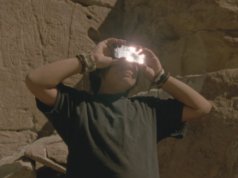
Panizza explains to Business Doc Europe how the convergence of elements, as observed across several disciplines, will make for an engaging, cinematic documentary. “In this space, work with bone and lithic material converges. Additionally, the discovery of celluloid films opens the project to a visual exploration of these materialities,” she says.
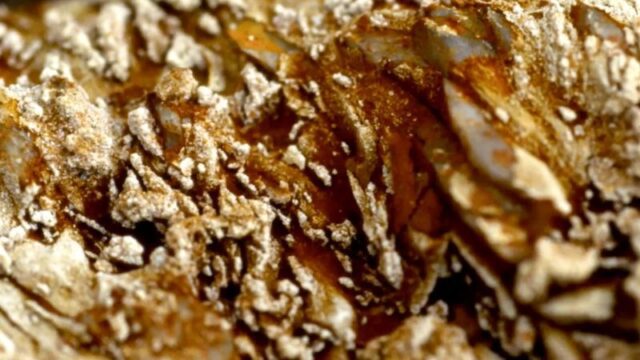
“In the processes of restoration and preservation, all these materials are in dialogue, as some contain compounds of others,” she says. Through an optical exploration using a 16 mm camera, the project seeks to immerse itself in these materials —bone, stone, celluloid— to understand, from an aesthetic perspective, the alchemies that shape everything around us, and that which we are also made of.”
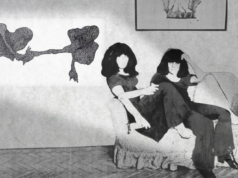
The film also integrates archival footage with found footage. “The editing aims to reveal the perspectives of different eras and how they captured this part of the world. In this sense, it exposes a political gaze, as the film joins a broader movement emerging in the far south: the rewriting of an established ‘official history’ of the settler epic, the domination of a ‘hostile nature,’ the extraction of natural resources, and the extermination of native populations. What was originally filmed to showcase the advance of civilization is, through a contemporary perspective, given new interpretations.”
The director further points out how her knowledge of the region is a particular boon to the production. “I began traveling there in 1998 as part of the team for Paola Castillo’s film La Última Huella, about the Yagán community on Navarino Island. At that time, I read extensively about the history and came to understand, from various angles, what had taken place there. I was also struck by how little this is known in my own country. It is not a history taught in the current education system.”
“Some years later, I made the documentary Tierra Sola on Easter Island, and I realized that both places —referred to in Chile as ‘extreme zones – had experienced the same type of colonization, both Chilean and from European capital,” Panizza continues. “This opened up a new understanding of the formation of the Chilean nation-state, which is fully applicable to other Latin American countries.”
“At DOK Leipzig, we will seek potential collaborations to complete the film, reaching out to those who feel drawn not only to Fossil Matter, but to a project rooted in the far south that involves scientists, artists, historians, and filmmakers who are convinced that research – across all its disciplinary expressions – can be a step toward rewriting the story of southern Patagonia and envisioning possible futures for the planet.”