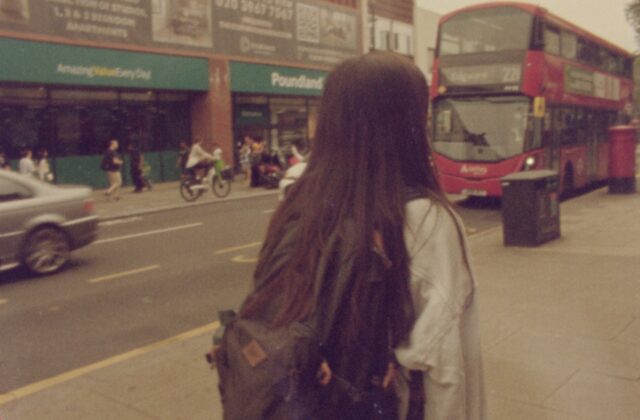
In May 2019, Uruguayan Melania Geymonat was violently assaulted on a London bus, because she was gay, and she was with her girlfriend. The story went viral but the violence of the hate crime was amplified by the virality and the brutality of mass media. Melania immediately became an object of media scrutiny, reduced to the role of victim.
After her friend, filmmaker Laura Gabay, came to visit her, Melania suggested that they make a film together, so as to heal from her trauma. Gabay agreed, but was determined to tell the story “from an intimate place, not to repeat the story as it was told by the mass media,” she told the Ji.hlava audience.
Gabay was outraged by an “indescribable” feeling of incomprehension at the attack, and felt compelled to tell Melania’s story from a particular perspective — to shed light on this “intolerable reality” that Melania and thousands of others experience daily in our so-called “progressive” societies. “Because this isn’t just about London; the phenomenon is global and seems to be on the rise.”
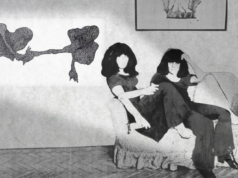
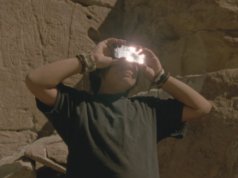
The film will be divided into three parts, the first part detailing Melania’s relocation from Uruguay to Europe to finish her study of medicine. The second part narrates the attack, looking to reconstruct it in an “experimental” way. The film finishes with Gabay and Melania in Edinburgh, where the latter now lives. The narrative is built from the WhatsApp audio recordings that Melania sent Gabay over the years, and the images she filmed on a Bolex 16mm camera, as well as archival footage.
“Working with analogue film is for me a form of resistance, a way to slow down the constant consumption of images,” the director further underlined. “And I want to finish saying that with this film we want to respond to violence through poetry, friendship and care, gestures that together open a path toward healing.” The poems of Cristina Peri Rossi, a Uruguayan poet exiled in the ’70s, will run through the story.
The film’s running time will be approximated 70 minutes. Producer Vania Jaikin is hopeful of delivering the film in March 2026.
“Our goal is to engage with distributors, curators, and collaborators from around the world who are interested in joining a project with strong international potential – a film grounded in social issues and personal narratives that also explores innovative formats that merge fiction and documentary aspects,” says Jaikin.
In her statement for the pitch event, Gabay expresses the need she, in particular, feels to complete and exhibit this film.
“The impact this [attack] had on me was profound, especially since I work with images and sound. From that moment on, I understood both the danger an image can hold and its potential for healing and empowerment,” she says. “The film reveals how care and friendship are essential elements in the healing process — a friendship that can be sustained despite distance thanks to modern technology.”
“I believe the importance of this film lies in its ability to offer an intimate and moving perspective on a traumatic event that received widespread media coverage, without repeating the narrative shaped by mainstream media, but instead exploring its consequences and raising questions. I think that intimacy is the most political way to tell this story,” she ends.