IDFA’s focus programme Dead Angle returns this year with a far-reaching thematic deep dive into the structures that shape civic life. Conceived as a way of exploring what sits “just outside our field of vision,” the focus launched in 2024 with a chapter on borders. For 2025, programmer Joost Daamen turns the spotlight on institutions — democratic, administrative, medical, colonial, archival — and on the frictions, contradictions and aspirations that define them.
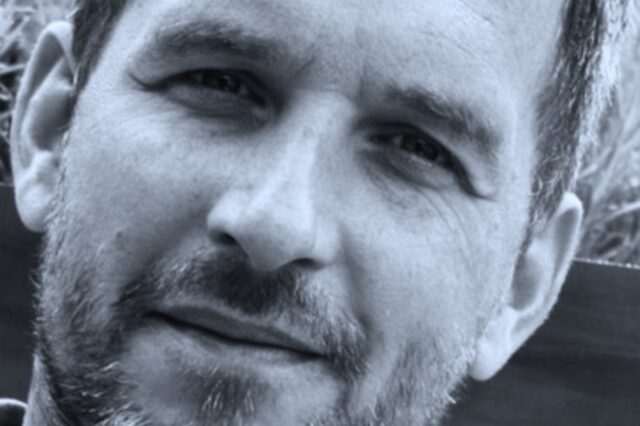
“In a way, the idea [behind Dead Angle] is twofold,” Daamen explains to Business Doc Europe. The first impulse came from the present: “There’s a lot of conversation going on about our democratic institutions — from courthouses to the parliament to the free press.” The second came from the past: “The depiction of institutions has a long-standing tradition in documentary. When I say ‘Wiseman’, I think you say ‘institution’ nearly in one sentence.”
This year’s selection indeed acknowledges that lineage. Frederick Wiseman’s State Legislature (2006) is prominently featured, offering its patient, procedural portrait of the Idaho Legislature. Other titles extend the gaze beyond Euro-American institutional frameworks. In How to Build a Library (2025) by Maia Lekow and Christopher King, a former colonial library in Nairobi is slowly reimagined as a centre for African literature. Malek Bensmaïl’s Checks and Balances(2015) revisits Algeria’s journalists at El Watan, fighting for press freedom in the face of state pressures. The programme also includes Venice-bound Cover-Up by Laura Poitras and Mark Obenhaus (2025), Abbas Kiarostami’s Fellow Citizen(1983), and Claire Simon’s Our Body (2023), among others — each an inquiry into how civic systems operate, whom they serve, and what escapes their grasp.
Daamen says he wanted the programme to offer a prism — a way not only to “read” institutions themselves, but also society’s shifting projections onto them. “These films are a little bit like science-fiction. They’re never about the future, they’re always about the fears and ideas we have in the present about the future.” For the Programme Head, institutions function similarly: “They give you an interesting insight into the ideas we have of a society at that particular moment in time. They’re documents of how we build our society and the ideals we have — and those ideals are always on the horizon.”
To build the programme, Daamen established a series of pillars: law, parliaments, healthcare, education, the free press, and archives. Archives, he notes, are especially revealing. They show “how a society thinks about what’s worth preserving,” how collections are categorised, and how a national narrative is constructed. Several films in the programme interrogate these mechanisms — questioning who gets represented, and who gets written out.
This process of categorisation, Daamen says, is not merely technical. It is political. It is structural. And it is deeply tied to how societies understand themselves. “Archives tell us a lot about how a society sees itself… how it shapes a narrative.”
He stresses that, while the selection is rigorously curated, he resisted the temptation to impose an ideological scorecard on each title. “I don’t want to put a lot of judgment on it. I want the audience to project their own ideas. Institutions are often loaded with ideology — different people see their function in different ways.” His goal was to keep the overall frame open enough for spectators to form their own conclusions.
A key part of the curatorial logic was expanding the conversation beyond Western institutional frameworks. Daamen emphasises that institutions are not fixed; their meanings shift across eras and political contexts. “There are also aspects of how institutions can have neo-colonial functions. There are a few examples in the programme that show how we try to push this or change the direction of an institution and make it more valuable in the present.”
This planetary perspective anchors the programme within a broader, ongoing conversation across IDFA about decolonisation, historical repair, and institutional transformation.
Notably, the programme also features three Italian filmmakers on the rise: the directing duo Massimo D’Anolfi and Martina Parenti, with War and Peace; and Gianluca Matarrese, with GEN_.
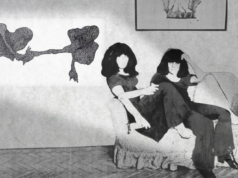
For Daamen, War and Peace is “a very good example of an archive film,” but one that exposes the mechanism underpinning a national self-image. Through their exploration of military archives, D’Anolfi and Parenti show “how we depict a patriotic view of our army… how the institute functions, how it produces a heroic image of itself.” He was particularly drawn to its structure of multiple chapters, each peeling away another layer of the military’s institutional machinery.
GEN_, meanwhile, enters the healthcare system from an entirely different angle. The film follows two groups: individuals wishing to change gender, and couples seeking IVF treatments. These are, Daamen notes, “two very different groups in society,” yet they share a reliance on medical professionals who, enabled by scientific evolution, can “play the role of God” — making possible what once seemed impossible.
What Matarrese accomplishes, in Daamen’s view, is a universalisation of vulnerability and desire. “He makes something very universal… an invitation to understand the other.” The film, he argues, offers an elegant way to connect issues typically framed as politically or morally polarised. The desire for a child, for example, “happens across all of society — conservatives, liberals, devout Catholics. It doesn’t matter.”
The film also demonstrates how an institution — in this case, the healthcare system — can serve diverse needs without being restricted by ideology. “We have a health system that is very open. It can help people with IVF, and it can help people who want to change their gender. It’s an invitation to keep that openness.”
‘Dead Angle’ was conceived as a three-year thematic arc. With “Borders” in 2024 and “Institutions” in 2025, a third chapter, as yet undefined, is slated for 2026. However, with IDFA undergoing a leadership transition this summer, the programme’s long-term evolution remains an open conversation.
“For the moment, we started as a three-year programme,” Daamen says. “Possibly next year we have the last chapter… but it might be extended.” What’s certain is that the programming team views Dead Angle as a valuable structuring tool — a frame that sparks internal debate and offers audiences a coherent entry point into urgent themes. “It’s been a very interesting conversation starter,” he notes. “Now that we’ve had two editions, that will also play a role in shaping what comes next.”
For Daamen, the core mission remains constant: to use documentary cinema to illuminate the systems we live within, the ones we depend on, and the ones we often overlook. “I wanted to offer a programme that is curious about what institutions are,” he says. “A wide range of films in which people can engage with institutions — and maybe shape their own ideas about what they mean.”