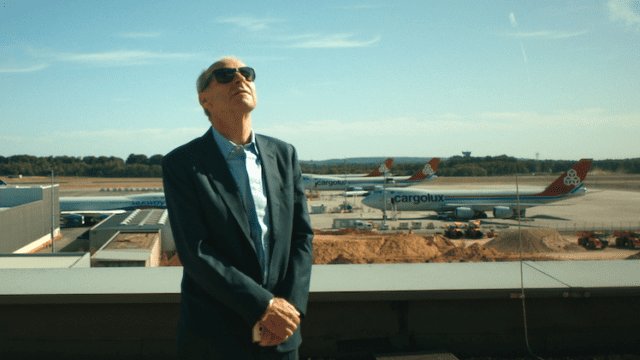
It’s not often that audiences get to see close up how the international art market works, but they’re given a very privileged glimpse of this mysterious, hidden world in Danish director Andreas Dalsgaard’s excoriating new TV series The Oligarch & The Art Dealer (whose first part screens in Sundance’s ‘episodic’ strand).
The project tells the extraordinary story of how hugely wealthy Russian businessman Dmitry Rybolovlev fell out with his Swiss art dealer, Yves Bouvier, accusing him of overcharging him hundreds of millions for paintings he had bought on the Russian’s behalf.
There was so much material to unpack that the director and his co-creator Christoph Jörg both felt they needed a series to do the subject justice.
“What we realised was, here was a unique opportunity to see ten years of art deals from the inside-out at the very highest level between what was maybe the biggest art dealer in the world and a Russian oligarch,” Dalsgaard remembers.
The legal dispute meant the details of these deals between the two men were suddenly flushed into the open.
Bouvier agreed to appear on camera to put his side of the story. “He is definitely a very charismatic person and, to people around him, also very good company,” the director says of the Swiss businessman. “To my mind, he participated because he felt his story hadn’t been told. After being hung to dry for many years as the biggest fraudster in the history of the art world, [he felt] that by telling the story in much more detail, it would add a much more fair and nuanced picture of who he, is and how he built this business.”
Rybolovlev doesn’t appear on camera. He’s a secretive figure who has rarely, if ever, given an interview to anyone. However, the filmmakers represent his point of view as thoroughly and fairly as possible. “We negotiated access with his people,” Jörg explains.
Both men are determined to give their own version of events.
At times, the filmmakers asked questions which challenge the stories their subjects were telling them. It seems that neither Rybolovlev nor Bouvier realised quite how much Dalsgaard and his team knew. The filmmakers had been working with top journalists from publications like The Wall Street Journal and The New York Times who had followed the dispute. They had also done extensive research of their own.
“We had such thorough access to documents through these legal proceedings that we can then contrast his [Bouvier’s] version with the facts that can be found in the documents,” Jörg notes that the art dealer’s occasional attempts to pull the wool over their eyes invariably failed.
Circumstantial evidence against Bouvier may seem pretty damning, but the filmmakers point out that he has not been convicted in any court of law.
“It has not been possible for Rybolovlev to prove that what Bouvier did was a crime. We provide multiple perspectives into how the art market works, the typical way of doing business, and [ask] is the way that Bouvier did business uncommon,” Jörg says. It’s clear that the Swiss maverick negotiated “incredible mark-ups” on the art he bought for his Russian investor. “That we can see in the documents. It’s just important to say that when you trade, whether you’re in the market of trading bananas or apples or you’re trading art, he as a seller is allowed to put the price where he wants.”
Rybolovlev is no innocent either. You don’t come through the roaring 90s in post-Soviet Russia unscathed, and emerge with a vast fortune, unless you know how to look after yourself. Nonetheless, when it came to his Swiss art world fixer, he clearly let his guard down. As the poster for the series puts it, “trust comes at a price.” In this case, that price was the multi-million dollar marks-ups which later filled the Russian with so much buyer’s remorse.
It’s a very murky story. The filmmakers themselves say that their sympathies sometimes switched while they were making the movie. Audience response so far has been very sharply polarised. Some viewers feel Bouvier behaved monstrously. Others believe that Rybolovlev himself is to blame for not doing his due diligence.
“I trust neither of them and never trusted them. They play a billion-dollar game that complicates things for everyone,” says Dalsgaard. “The game that they play becomes more and more dangerous to themselves, and the stakes grow higher and higher.”
At its core, the director continues, the story offers insight into “very basic emotions like greed and pride or revenge that drive even these two people.” One journalist interviewed by the filmmakers likens the two protagonists to Shakespearean heroes.
The series will roll out on TV channels across Europe in May. There will be some festival outings before that. Intriguingly, a feature version is also in the works. US distribution is yet to be secured.
The feud has been covered extensively in the press over the last decade or so – but the series still breaks plenty of new ground. “There’s no one who knows this story better than us. We followed it for five years as the story was unfolding,” Dalsgaard states. The filmmakers have pored over the emails and the most intimate communications between the principals.
It remains to be seen how folk in the art world will react to a documentary that portrays them in such an unflattering light. Dalsgaard predicts that they will say this is an unusual case, not representative of how business is normally done. “[But] by getting into the nitty gritty details of these deals, we see something that happens every day in the art world – and that involves the biggest auction houses and the biggest dealers,” the director insists.
Several observers believe the spat between the oligarch and the dealer may already have changed the art world. “For the first time, the public was able to look into these high-level deals, how they were conducted, how the auction process was operating. That access has never been given before. This was because the relationship between these two guys blew up and they fought it out in courts all over the world. Suddenly, the public got to see inside a world that is normally completely closed off to them,” Dalsgaard says.
The filmmakers and the broadcaster partners have double and triple-checked every assertion and piece of information in the documentary. They know their subjects have “endless” amounts of money and don’t want to become embroiled in legal action themselves.
As for Rybolovlev and Bouvier themselves, the documentary suggests they do love the art, as well as the money and power that can come with it.
“For Bouvier to do what he does, he needs to be passionate about art – to be able to recognise the beauty of it and what makes something stand out but he is also someone extremely driven by creating his business and building his empire. I think it goes hand in hand,” Dalsgaard ends.