The 41st DOK.fest Munich kicks off May 6 with the world premiere of Ingeborg Bachmann – Someone Who Was Once Me, a hybrid documentary by Regina Schilling starring Sandra Hüller as the celebrated Austrian writer.
The film heralds 13 days of festival and Industry activity, during which 100 international and German documentaries “will open up new perspectives on our world,” the festival writes.
For documentary professionals, DOK.forum, the industry platform of DOK.fest, will run 7 to 11 May. This year will see a two-day conference on film education and DCampus Exchange Munich, a symposium on digital transformation in documentary storytelling.
DOK.forum again consists of two core elements: DOK.forum Perspectives, a specialist programme for filmmakers on media policy, technological and narrative trends, and the DOK.forum Marketplace, a co-production and distribution market where filmmakers present their documentary projects in development to a specialist audience. This year, more than 50 projects were selected for DOK.forum Marketplace.
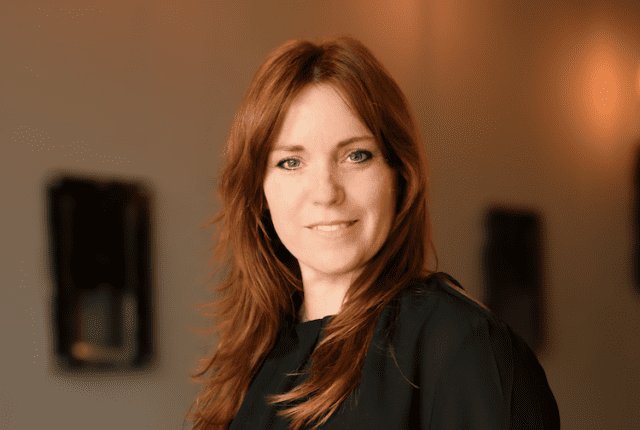
As doors open on the 2026 event, director Adele Kohout outlines her programming priorities to BDE. “My main focus is on ensuring that the festival serves as a vibrant space for dialogue, exchange, and connection. We wanted to place even greater emphasis on this, and actively strengthen it by creating new formats designed to foster it precisely,” she says.
“Last year, we organised our programme thematically and restructured it accordingly. We have now built on this approach in a meaningful and sustainable way. In each thematic section we have introduced a ‘Signature Film’; a selected film from the section serves as a representative of the respective theme and is also accompanied by an in-depth ‘FocusTalk’, which places greater emphasis on the films thematic dimension,” she continues, adding how the festival’s competition and Q&A structure “remain unaffected and complement this new facet of the programme.”
Awards are handed out across a series of competition sections, core ones being International, German and Cinema of Urgency.
In times of such political uncertainty, as evidenced both on the global stage as well as domestically, how does Kohout reflect both on the role both of docmakers, and indeed that of festivals such as DOK.fest Munich?
“The documentary is the best form of expression for our times. Particularly when it comes to making sense of the many events, conflicts, and issues taking place around the world, it can help us form an opinion, foster a deeper understanding, shed light on complex situations, or bring us closer to topics, people and events – for example in a personal way,” she tells BDE.
“I see the documentary as a magnifying glass, and its relevance is greater than ever. People have a need for the real, the authentic, especially when they…trust images less. And that is exactly what the documentary offers,” she adds. “Documentary film is, moreover, always political, because it engages with immediate reality. But our role is not to provide simple answers or dictate positions. We want to create a space where different perspectives can be seen and where people can form their own views. For me, that is the true strength of a festival.”
“Especially at a time when cultural events are under pressure, it is all the more important for us to view the festival as an open space for dialogue in all directions,” Kohout continues. “We see our role not merely as presenting a programme, but as facilitating encounters, exchange, and diverse perspectives. It is particularly important to us that, as a cultural event, we do not allow ourselves to be co-opted or exploited, either politically or by the media. The current debates surrounding festivals clearly demonstrate how quickly cultural spaces can come under pressure to take a clear stance or to champion certain narratives.”
Together with DOK Leipzig, and to a lesser extent Berlinale, DOK.fest Munich offers an opportunity for professional and public audiences alike to assess the current state of German docmaking, whether in terms of its qualities or as a vehicle for co-pro investment.
“On the one hand, German documentary film is currently thriving; on the other, it is under pressure,” Kohout opines. “There is great artistic diversity, and relevant films with social and political impact are constantly being produced. However, when one considers the structural challenges, it becomes clear: funding conditions are becoming increasingly difficult, the distribution of funding between fiction and documentary is uneven, and then there are limited opportunities for distribution, particularly in cinemas. Unfortunately, very few documentaries are shown there [in cinemas].” That said, DOK.fest Munich attracts a healthy number of (approx) 55,500 people per year.
“Speaking specifically about our programme, in addition to the international competition, we have launched our own competition for German-language documentary films, DOK.deutsch. This competition encompasses and showcases the full creative potential, the diversity of themes, and the relevance found in Germany, Austria and Switzerland. Once again this year, we received a great many exceptionally good and relevant films,” she adds.
“Our industry platform, DOK.forum, deliberately focuses on the German-speaking world; this is our clear unique selling point. Over the years, DOK.forum has established itself as a key meeting place for the industry, serving as a hub for networking, exchange, and practical collaboration. At the same time, it serves as a key industry hub for international filmmakers, enabling them to engage in targeted collaborations with partners from German-speaking countries and to take concrete steps towards developing their projects further.”
Kohout further guides BDE through her Industry programme for 2026, pointing out that revered German director Wim Wenders will be a Special Guest of the festival.
“Since 2013, our African Encounters programme has focused on fostering exchange between filmmakers from the African and European continents. This format is truly unique in Germany, and on 10 May, a very special encounter will take place: Wim Wenders meets his former fellow student from 1967, the Ghanaian filmmaker King Ampaw,” she comments of his input at the fest.
“Creating opportunities for encounters and facilitating exchange are at the heart of the festival, and so it was very important to us to join forces with Kultur.Konvoi to host a live link-up with a recording studio in Ukraine following the screening of CHANGE MY MIND, thereby establishing a direct connection,” she adds.
“The theme of building relationships continues…with our new ‘Personal Memoriams’, [where] we aim to foster a lively dialogue. We are dedicating three evenings to great figures from the world of documentary film who have passed away. The aim is not to erect a monument, but to create a personal encounter. For example, the writer and film curator Hannes Brühwiler will speak about his relationship with Frederick Wiseman.” Other subjects, recently departed, are Georg Stefan Troller and Rosa von Praunheim.
Another highlight is the festival’s two-day conference that focusses on film education,nad is designed as a workshop format aimed at producing concrete outcomes. “Film education builds bridges between film and society and promotes film and media literacy across generations,” says Kohout. “Films have their greatest impact when viewed together, discussed and reflected upon; yet, at the same time, the professional field remains structurally underdeveloped: There is a lack of clear job profiles, transparent fee guidelines, defined training pathways, sustainable funding models and stable networking structures. This is where [our] conference comes in.”
In DOK.forum Master’s Pitch, eight projects with particularly strong international potential will be presented on stage and will receive feedback from leading international industry experts.
Additionally, Kohout and colleagues have created a new format in collaboration with Documentary Campus, the DCampus Exchange hub, where factual storytelling meets digital transformation. “We will focus on digital transformation in factual storytelling to highlight the emerging trends on the European audiovisual landscape, enabling traditional and digital factual producers, creative storytellers and brands to work effectively together: nine panel sessions, case studies and workshops designed to clearly and concisely deliver the latest insights and opinions on various key aspects of the digital shift in the screen-based sectors,” Kohout signs off.