

The 23rd Millennium Docs Against Gravity docfest opens May 7 across seven Polish cities – Warsaw, Wroclaw, Gdynia, Poznan, Katowice, Lodz, Bydgoszcz – running 8 to 17 May 2026 in cinemas, before going online 19 May to 1 June. Approximately 180 documentaries will be offered up to Polish cineastes during a period when doc is paramount.
A dozen films are selected for Main Competition, whose €10,000 top prize also comes with fast-track access to potential Oscar nomination, following MDAG’s addition to the list of Oscar®-qualifying festivals within the Best Documentary Feature Film category. Awards for Best Cinematography and Best Editing will be presented in the festival’s Main Competition and for the first time, a three-member FIPRESCI Jury will present an award.
Other prizes include the Best Polish Film Award, the First Screen Award and Chopin’s Nose Award for the best documentary on music and art.
In addition, the inaugural FIPRESCI Documentary Grand Prix will be awarded during the festival’s opening gala to the best film of the previous year, as selected by the international film critics affiliated to the organisation.
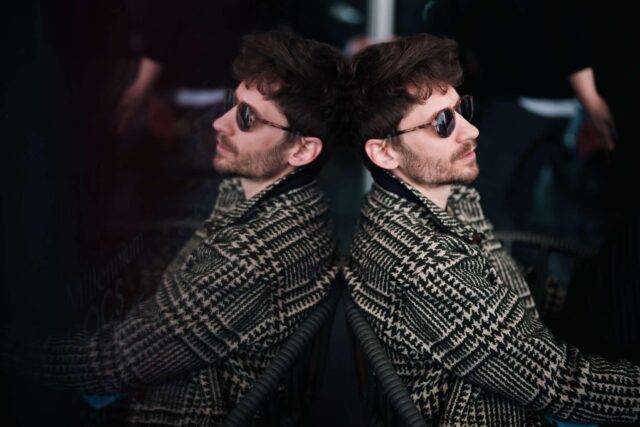
MDAG Artistic Director Karol Piekarczyk sat down with BDE on the eve of the festival’s 23rd roll-out to discuss not only this year’s offer, but also its very raison d’être.
“I think there is no imperative for documentary films to change the world. But you can’t deny the fact that they do have an impact on our reality,” he tells BDE, as he reflects on the global crises that have formed a grim backdrop to all our lives over the past years. “Whether it is on a personal level, we as audiences often experience documentaries in a therapeutic way, but sometimes films carry wider social change. There is a multitude of such examples throughout history.”
“I think that we do have to take certain stances,” Piekarczyk adds of the role of the festival as a public, and loud, voice of reason within culture and the arts. “Those could be labelled by some as political, but it is absurd. Since when has talking about war, genocide or basic human rights become political? We are only political inasmuch as things that should be universal rights have been politicized, usually by people who want to disregard them. But just because some actors on the world stage have the urge to divide and call things political, it will not stop us from talking about injustices. We represent filmmakers and their films, furthermore, often the protagonists who fight for a better world. I cannot imagine not standing beside them.”
MDAG is the largest film festival in Poland and claims to be second-largest documentary film festival in Europe, attracting an audience of 180,000+ viewers in 2025. “The audience has been central always to the whole process, being a hidden programmer in all of this,” Piekarczyk explains the symbiotic relationship between the festival and its loyal public. “We have been doing extensive audience surveys for many years, we are in touch with them in a variety of ways. Although, with the audiences often choosing titles whilst focussing on the topic, I think that the cinematic aspects are sort of implied here. Meaning that if the artistic value of films would suddenly plummet – everyone would notice.”
“There is an expectation from us (or at least I feel/hope there is) to look for a variety of not just topics, but form too. Naturally, in documentary cinema sometimes you have to work with the means that you are given. The protagonist of this year’s poster, Soraya – who is also the protagonist and director of the film A Fox Under a Pink Moon (co-directed with Mehrdad Oskouei) – had to make the film using her phone. But nonetheless, the end product is that of extremely thoughtfully crafted shots, creating often compositional planes, with depth both in the foreground and the background.”
He expands on this year’s Main Competition programme. “I think that the competition still represents what has always been of the utmost importance to us – to show the best, in our humble opinion, new documentary films,” he underlines. “The chosen 12 represent a variety of form, from beautiful and immersive settings of Nuisance Bear, To Hold a Mountainor Whispers in the Woods, through a variety of different kind of footage in Time and Water to conceptual shots in Two Mountains Weighting Down My Chest, where the director often becomes the protagonist.
“The Main Competition titles touch upon many topics, but most of them work on a multitude of levels. For example Mariinka talks about the war in Ukraine, but at the same time is a story of brotherly bonds, of growing up in times of extreme hardship, all weaved into a visually stunning portrait.”
As one would assume, Polish documentary is very much in the frame at MDAG. Indeed, the festival opens with Closure, by Michał Marczak, which played in Sundance World Documentary Competition in January 2026.
“I definitely think that it has, and will be, a great year for Polish documentaries. Already in the fall of 2025 we had the film Confessions of a Mole by Mo Tan premiere at IDFA and it is continuing to make its rounds on the festival circuit,” says Piekarczyk. “Then the year started with the world premiere of Closure at Sundance, with the film collecting an array of great reviews. At Thessaloniki we had the premiere of Candidates of Death (by Maciej Cuske), which is a beautiful tale about family relations, at the same time being an ode to the love of cinema.”
“This year’s MDAG will feature, as always, the Polish Competition, which has become one of the most important parts of our line-up, and that is down to the amazing work of its director, Wojciech Diduszko,” Piekarczyk continues. “With many programmers coming from all over the world we hope to highlight to them the extraordinary film qualities and universal values, which these titles represent. This is also the role of our Industry programme, overseen by Anna Szczypinska, who has made the promotion of Polish cinema one of her priorities. The industry professionals can participate in Pole Position – a presentation of all the Polish films in the programme of the current festival, as well as participate in pitching sessions of upcoming projects. This initiative has seen not only interest from international programmers, but it also has jumpstarted co-productions with other countries.”
The strap-line of MDAG is ‘In Search Of Great Cinema.’ Does that mean that, for Piekarczyk and his colleagues, documentary is a genre that is best suited to big screen?
“The genre is definitely best suited for the big screen and we have always put a strong emphasis on this. We have an online part of the festival, but it does not start till the cinema part finishes,” he responds. “Plus we never publish the programme of the online edition until the cinema one ends, so that if you really want to see something – you better go see it on the big screen.”
“Apart from the obvious reason for choosing cinema, as in the films being works of art which are only given their due in such a setting, there are also other aspects of it. Namely, for us, it is experiencing the films with other people. When you sit in a packed cinema hall you can really feel the audience performing what I can only call co-feeling. This then ties into discussions after the films, both in the screening room and outside.”
“And even if you don’t talk about it, watching a film which really moves you, with the knowledge that other people might be also experiencing it in a similar way, makes us feel less alone,” Piekarczyk ends.





