Organisers of the 69th DOK Leipzig (26 Oct to Nov 1) have announced the first details of this year’s programme, which include the new ‘Positions’ section which is designed to create more space for exchange and debate.
Set in motion by new festival director Ola Staszel, the selection of films is intended as “a starting point and catalyst for dialogue and exchange – listening to one another, having conversations, accommodating differing views and contradictions, and questioning our own convictions,” the festival writes.
The festival notes how the films variously follow family members searching for traces of those who were disappeared during the Spanish Civil War (Atlas of Disappearance by Manuel Correa), or counter oil extraction in Nigeria with poetry (Hope is a Word by Maria Galliani Dyrvik) or observe doubts giving way to obedience and routine at a French training facility for prison guards (Detention by Guillaume Massart).
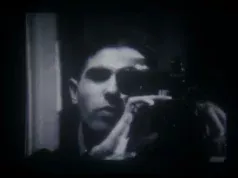
The other films are every bit as “rich and complex.” Laura Cazador’s Tricontinental, Letter to Open in Case Of, for example, sheds light on a socialist movement during the Cold War and Fracture, Israeli activist Keren Kraizer’s video diary, documents her ambivalence at returning to her home country, where everything is about to explode. Two-time Oscar winner Barbara Kopple completes her trilogy exploring workers’ rights with Union Town. The line-up also includes the world premiere of The Masturbator – The Adventures of Edgar Hilsenrath, by François-Xavier Destors, Charlie Mars, which tells the story of Leipzig-born writer and Holocaust survivor Edgar Hilsenrath, who was born 100 years ago, told through a powerful blend of animation and archival footage.
The ‘Positions’ section will also feature two debate formats, developed in cooperation with Critics’ Week, that “break with established forms of discussion between audiences, filmmakers and critics,” the festival writes. These debates will follow two different film screenings. Organised by the German Film Critics Association and running parallel to the Berlin International Film Festival, Critics’ Week has been trying out different ways of talking about film since 2015. The festival has since developed a wide range of playful and experimental discussion formats, now compiled in a glossary established in 2025. In addition to these jointly developed discussion events, further screenings in this series will be followed by Extended Q&As with filmmakers and invited experts.
The ‘Camera Lucida’ and ‘Panorama: Central and Eastern Europe’ will be discontinued. Films with unconventional artistic styles as well as those with a focus on Central and Eastern Europe will no longer be grouped into separate programmes but will instead be included in the festival’s competitions, the festival says.
As of 2026, the DOK Leipzig Audience Award, a Golden Dove for a feature-length documentary, will no longer be decided by a jury but by the audience in an online vote.
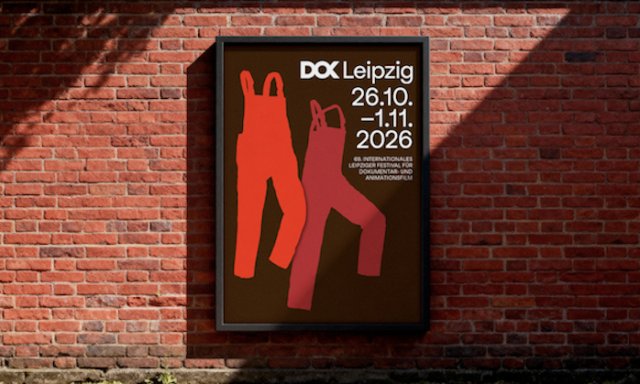
The festival motif, once again designed by Leipzig-based graphic designer and illustrator Stefan Ibrahim, will be visible throughout the city in the weeks leading up to the festival.
“Our poster this year is deliberately open to multiple interpretations,” says festival director Ola Staszel. “In its references to the labour movement, politics, feminism and pop culture, the strength of the motif lies in its layers of meaning. That also ties in with the many voices within a community, which we want to place firmly at the heart of this year’s festival.”
Designer Stefan Ibrahim emphasises the unifying dimension of his motif: “The motif depicts bodies in motion and people interacting. Its association with work and production is, of course, intentional. Whether it be art, crafts, services or care work, everyone is included, everyone is seen. At DOK Leipzig and far beyond the festival, artists and cultural practitioners make an almost daily choice to engage in a creative process, with all its highs and lows, and to lay that process bare in all its many facets – whether to tell a story or to make it accessible to a wider audience. This poster pays tribute to that essential artistic labour and invites audience members to become active participants in an idea, a dialogue and a shared exploration.”
A second new section, which also includes the opening film, will be announced in mid-September. Further film series for this year’s festival will be presented in the coming weeks.
The full programme, including all screening times, will be available on the DOK Leipzig website from 8 October.