Back in late October, just before the UK parliament finally voted to endorse Boris Johnson’s Brexit deal (and let’s see how matters progress given parliament’s subsequent agreement to a December general election), Nick Broomfield laid out just why Brexit makes such a fundamentally fascinating, tragic and filmable tale. And one he would be tempted to take on? Very much so, he says.
“It’s a very simple…micro-story between these two Etonians who were equally privileged – equally ambitious,” Broomfield comments from his home in Los Angeles. “Amazing debaters and charming in their own ways, but also representative of ancient systems that are not representative or in touch with the rest of the country. We’re still living out that drama in this day and age, which is really incredible.”
“I think that it’s an amazingly personal and wonderful story, with all [these] contradictions and personal things in it, and the personal pain that Cameron has to feel, and the humiliation [at how] his legacy as Prime Minister caused a terrible crisis. And the very, very ambitious and charismatic Boris who will do anything to be in power, including sell the NHS (National Health Service) off to the Americans… At one point he was very much a Remain supporter, but for his own personal hubris and need for power, completely reversed his position. So it’s an incredibly personal story, which has nonetheless thrown the whole nation into terrible disarray.”
If he is ever to tackle this complex tale of political chicanery and shifting loyalties, then it will have to wait as he supports the release strategies of My Father and Me, which screened at the New York Film Festival in October 2019. On top of that he is mulling over a documentary series about “iconic artists who represent a particular time – the 1950s to now. I’m talking to the BBC and a couple of other partners. It will be costly to make, so I can’t do it with just one producer – [co-production] is happening more and more these days.”
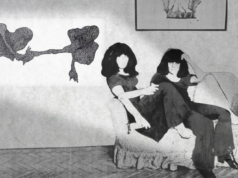
My Father and Me, produced by Lafayette Film, is a deeply personal film about his relationship with his dad Maurice, a post-War photographer whose beautifully crafted work contrasted markedly with son Nick’s left-wing “chaotic and confrontational” approach. Nevertheless they came to share a strong and mutual respect for each other’s work, and by the time Maurice died aged 94, Broomfield released the extent of his father’s influence in terms of his work and outlook on life.
In October 2020 the V&A in London will mount an exhibition of Maurice’s works.
“We were very close,” says Broomfield. “We went from that hero worship from when I was very young to disagreeing fundamentally about our own work. We went through a difficult period. [But] we had the luxury of a lot of time to enjoy what we liked about each other. Really wonderful. It is a film about that kind of love between a child and a parent and the way it changes over the years.”
IDFA 2019 has selected Broomfield’s Marianne & Leonard: Words of Love for its Masters programme. It is a highly moving and haunting documentary about the relationship between the revered musician Leonard Cohen and his muse Marianne Ihlen, the inspiration for the song So Long Marianne. As importantly, the film stems from Broomfield’s own relationship with Marianne during a period when he stayed on the idyllic Greek island of Hydra, where the illustrious couple lived during the 1960s.
“Marianne was somebody who touched me very deeply, helped me very much and was a very generous person. I had enormous gratitude and respect for her,” Broomfield stresses. “I didn’t have an intimate relationship in the same way with him, but they are certainly two people I hold in very high regard. I was concerned to make something that I felt reflected that, even if it also had some of the contradictions. It was not a straightforward hagiography… you love them for their completeness. They don’t have to be heroes and heroines, it’s their very humanness that you love, their totality, with all their funny little quirks and other sides as well.”
“I wanted the film to be that, not the portrait of a saint,” he continues. “I wanted it to be an accurate portrait of that time, of them and their love and also a portrait of an enduring love so many of us have… which isn’t always happily ever after. It’s often quite painful at times and doesn’t work out in the most straightforward way, but is nevertheless something that lasts throughout your life. Something that you cherish and remember.”
So after the positive critical and commercial response to the film does Broomfield feel more marketable, or indeed more in demand? It is a question he answers in circuitous, albeit satisfying, fashion. “Film is a very expensive way of telling a story, one of the most expensive. Part of the requirement is that it has the ability to reach a very wide [audience]… You try and satisfy the demands of the cost by reaching an audience that wants to see it.”
He admits to a lack of meaningful interest/competence within the social media arena, but recognises its importance in reaching audiences. “[It] is now so important, unfortunately, as boring as it is. Someone like Louis Theroux, who’s more of a TV guy, but who has a fantastic, dedicated following of people who are very active on social media, has 2 million followers on Twitter. Our world has changed radically from getting great reviews in the newspaper – that kind of presence on social media is replacing it.”
“One of the things I’ve loved about the BBC is the fact that they’re not as dominated by that desire as most other broadcasters that you can think of,” he continues. “So many broadcasters will look at the ratings/figures first and [then] make their decisions. I think at the BBC there’s still a real belief in providing a service that doesn’t have to be just madly popular – they can also be about cultural worth, or something that they consider to be culturally, historically, significant and important. That’s really rare – that’s why something like the BBC is so crucially important. It’s a service for the nation, not just about making money. Unfortunately that’s a real exception.”
Inevitably the conversation turns to Trump and how Broomfield views the business of politics in the US, as compared to back in the UK.
“I feel very English… I love all those parliamentary debates that are always so ridiculous and funny and very much more human than the politics in the United States of America. I think Trump is an embodiment of America, and America unfortunately deserves it.”
“I think he [Trump] is in a way representative of the values of America – which is no respect for the rule of law, no real respect for democracy, no respect for all those conventions [which] since the end of the First World War we’ve all struggled to believe in. It’s an admission of a gigantic departure from all those kinds of democratic beliefs that America has at least pretended to believe in before. In a way he’s just moronic.”