The moka pot may be an icon of Italian domestic life, but its story is not simply about how coffee is made. In Moka, with a Small M, director Matteo Severgnini – grandson of inventor Alfonso Bialetti – revisits the people who turned an aluminium coffee maker into a global design icon, drawing on previously unseen family archives to ask how innovation emerges amid technological change. Produced by TIWI, the 56-minute documentary is in the final stages of post-production and will be presented at Rome’s MIA 2026.
The story begins in 1933, when Alfonso Bialetti developed the original coffee maker in Omegna, on Lake Orta. According to a family account shared in the film by his daughter Tina, inspiration came from watching his wife Ada use a lessiveuse, an early laundry device that circulated boiling water and steam. The process suggested a new use: brewing coffee on a stove. In detail, the film explores how an inventor’s insight can acquire a much larger cultural life.
Two further figures supply the next chapters. Alfonso’s son Renato transformed a modest manufacturing operation into a mass-market business, recognising the potential of advertising to make the coffee pot familiar to successive generations. The doc also traces the origins of the name ‘moka’, which Renato associated with Mokha, the Yemeni port historically linked to the coffee trade. Then came Modena-born illustrator and animator Paul Campani, creator of the Omino coi Baffi – the Little Man with the Moustache – who gave the product its enduring visual identity.
Through Campani’s studio Paul Film, the narrative enters the golden age of Carosello, the television advertising programme that helped shape Italy’s post-war consumer culture. In the filmmakers’ account, these three men brought together distinct forms of ingenuity: industrial invention, entrepreneurial ambition and an enduring visual language. Their combined contribution offers a way of telling the history of twentieth-century Italy through an object still found in kitchens far beyond the country’s borders.
The producers also connect those earlier shifts to present-day technological change. The questions are contemporary: when new tools transform habits and expectations, who recognises a useful possibility, who takes the commercial risk and who finds a way to communicate it? Rather than treating the moka as a nostalgic symbol of a supposedly simpler age, the documentary positions it as an example of how invention, manufacturing and storytelling can reinforce one another.
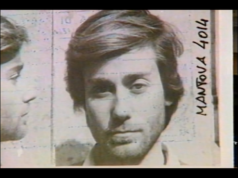
Severgnini’s family relationship is central to the project’s access. The idea originated with the helmer, who is also Renato Bialetti’s nephew, and grew around a substantial collection of private family material not previously made public. This archive is combined with interviews with historians and specialists, widening the perspective from the Bialetti household to the social and economic transformations that helped industrial design become an expression of Italian identity. TIWI maintains that Severgnini’s personal familiarity with the story is balanced by the critical distance required to examine a family legacy rather than simply celebrate it.
The production also draws on several visual techniques to bring the historical material to the screen. The credits include cinematography by Massimo Costanzi and Maura Morales Bergmann, art direction, animation, stop-motion work and editing by co-writer Mariaromana Casiraghi. The original score has been composed and performed by Rodrigo D’Erasmo. These elements are intended to give the material a cinematic life beyond the succession of archival documents and expert interviews typical of many industrial biographies.
“What instantly drew us to this project was the chance to unpack a globally recognized icon through an unprecedented, intimate lens,” reads a statement supplied by TIWI’s production team. “By supporting Matteo Severgnini’s vision, we aren’t just telling the history of Italian design; we are unlocking a treasure trove of private family archives and untold anecdotes.” The producers add that the film explores the relationship between technological disruption, creativity and risk, which they see as central to its appeal beyond Italy.
Moka, with a Small M is produced by TIWI, with Federico Riboldazzi, Nicola Bigi and Gianluca Parisi credited as producers. The firm has secured backing from the Emilia-Romagna Film Commission and Torino Piemonte Film Commission and is working towards securing Italy’s national tax credit. No co-producer, broadcaster, distributor or sales agent has been announced, leaving the project open to international partnerships.
At MIA, the team is looking particularly for an international sales agent, and distributors able to develop a festival and release strategy, whilst remaining open to pre-sales, co-production arrangements, broadcasters and streaming platforms. The target is to translate the moka’s worldwide familiarity into interest from buyers in factual programming, design, history and culture, without assuming that recognition of the object alone guarantees an audience for its story.
The final master is expected in November 2026. TIWI has yet to determine whether the documentary will launch through the international festival circuit or via a television or streaming premiere. For now, its presentation in Rome marks a shift from the private history behind one of Italy’s best-known inventions to the task of finding that history an audience of its own.