The effectiveness of DOK Industry as a launch platform for excellent new feature projects designed for theatrical and festival exploitation is exemplified by the numerous selections in this year’s festival programme. These are docs which have also premiered at leading festivals, but in great part can thank Leipzig’s Industry programme for enabling their realization.
“We follow the journey of the project alumni of DOK Industry over the course of many years, tracking their appearances at other markets and festivals, catching up with them regularly, tracing and recording their progress, marketing and distribution,” DOK Industry Head Nadja Tennstedt tells BDE.
“It takes documentary projects, that have participated in DOK Co-Pro Market when in early development, an average of 3 ½ years until completion. Projects that involve a lot of animation usually need much longer. I feel proud of the many successes of the projects that have participated in either the DOK Co-Pro Market or our other project platforms such as DOK Preview Germany (26 Oct), DOK Preview International (27 Oct) and Short n’ Sweet (28 Oct) for short-form docs.”
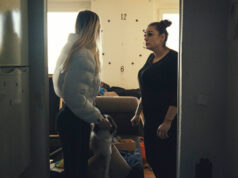
Industry alumni in the programme include Kindesmutter by Konrad Schlaich, which world-premieres in the festival’s German Competition, following its selection for DOK Preview Germany in 2025; and two films in International Competition which can boast similarly solid Leipzig credentials. Andrei Kutsila’s Letters from the Silenced Country was selected for DOK Co-Pro Market in 2024, and this year world-premiered Out of Competition in Venice. Patronymic by Mariia Ponomarova pitched at DOK Short n’ Sweet in 2022 and world-premiered at TIFF 2026.
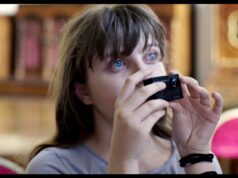
Three films in Audience Competition also started their public life at previous editions of DOK Industry. Baby Jackfruit Baby Guava by Nhat Quang Nong was pitched at DOK Co-Pro Market in 2020, before an eventual world premiere at Visions du Réel. White Lies by Alba Zari was also presented at DOK Co-Pro Market in 2020, and premiered at IFFR 2026. Meanwhile, Hope is a Word by Maria Galliani Dyrvik was selected for Leipzig’s Co-Pro Market 2024 and Preview International 2025 before an eventual world premiere at world premiere at Sheffield DocFest 2026.
“Our emphasis is always on providing a welcoming, meaningful and inclusive working space for all DOK Industry participants,” Tennstedt underlines her offer to professionals. “Our guests arrive at very different stages of their careers – from newcomers to experienced filmmakers and producers – and with a wide range of interests and goals. What unites most of them though, is what brings them to DOK Industry: new encounters, collaborations, inspiration, exchange and skill sharing. We design the programme to present these types of offers across every strand of the industry we serve: documentary, animation, archive and XR/gaming.”
Animation has been a particularly important component of the festival for many decades, and therefore features highly in Industry activities. In 1995, an animation competition was introduced while the role of animation was further strengthened by the introduction of the Golden Dove for the best Animated Feature in 2023.
“With our offers – the project platforms, networking events and programming – DOK Industry aligns with the strategic orientation of the festival,” says Tennstedt. “While animated documentary has played a significant role in the Co-Production Market, and the short film platform Short n’ Sweet has long featured short animation and short animated documentary, we have continuously expanded the animation offers. To mirror the emphasis of the festival on creative animation features, the DOK Co-Pro Market is also including creative animation features in addition to documentary and animated documentary projects.”
At the Animation Lab (organized together with CEE Animation) documentary producers who are developing features involving animation, receive a three-day immersion into the ins and outs of animation production. Tennstedt and her Industry colleagues also cooperate with ASIFA Germany who host a panel on pathways to greater visibility of European Animation this year, and have started a partnership with Animation Production Days Stuttgart that centers on a roundtable discussion around the production and distribution of adult animation in Europe – the first edition was presented last spring in Stuttgart, Leipzig 2026 will host the second, and the event returns to Stuttgart in spring 2027.
Another feature of DOK Industry in 2026 is the Generation Africa 2.0 initiative by the South African non-profit media company STEPS, aimed at producing films from 21 countries across Africa. “This project amplifies African voices and actions in the ongoing climate crisis. Climate justice is an important issue for Africa because the continent has been disproportionately affected by the effects of climate change. African countries are more vulnerable to extreme weather events, increased temperatures, and water scarcity” Industry writes.
Likewise, DOK Industry’s Talks programme will grapple with the core issues that are germain to docs and doccers, an obvious example being AI. Together with the Future Memory Lab, Industry will host the Re-platforming – AI and Its Ethics for Archives, Producers and Archive Researchers panel that examines how AI is shaping our world and influences how filmmakers find and use archival footage and how this practice raises ethical questions. A second discussion – Is There a Red Line? – AI in Documentary Filmmaking – looks at AI-enhanced and AI-generated ‘archive’ material, and what that means for documentary filmmaking and how we understand truth on screen.
At the DOK Exchange XR Conference, the panel titled Living Archives – Preserving (Extended) Realities in the Age of AI looks at the same question from another angle. It asks what happens when AI enters the archive, whether deepfakes have any legitimate place in the work, and how the archives of the future can build trust and strengthen democratic resilience.
‘For me, this is one of the urgent conversations our field can have right now,” says Tennstedt. “Documentary rests on an implicit agreement with the audience that what they’re seeing has a “real” relationship to the world. Archive footage is understood as evidence. Once that material can be convincingly generated or altered, the question isn’t only a technical or legal one. It’s about whether audiences can still trust what they are shown. I don’t think the answer is to reject the technology outright. There are real creative possibilities in it. But the industry needs shared standards and transparency, and we need to set them quickly.”
In March 2025, DOK Leipzig and the Thessaloniki International Documentary Festival launched the Doc Together initiative which advocates for filmmakers whose livelihood and vital work is under threat. “With threats to open discourse, assaults on democracies and ever escalating international conflicts and wars, we feel that the need to provide a space for discourse, community and action is more important than ever,” says Tennstedt. “This was also the motivation for Doc Together to dedicate to supporting displaced or exiled filmmakers, as well as those working under perilous conditions in their home countries. The initiative aims to build a coalition for sustained support, going beyond isolated opportunities, and to create secure and nurturing environments for filmmakers at risk to develop and market their work.”
“As part of this ongoing work, we’ve recognised that the documentary sector has much to learn from the long-standing structures and strategies developed in journalism,” Tennstedt adds. “At this year’s DOK Leipzig, we’ll explore the challenges facing journalists and documentary filmmakers in Europe in the panel Doc Together: When Freedom of Expression Is at Risk.”
Hosted by Julie Nederkoorn, Head of Industry at Movies that Matter, the panel will include Andreas Lamm, Managing Director of the European Centre for Press and Media Freedom (ECPMF), and Bente Roalsvig, Project Director and Deputy Director of the Fritt Ord Foundation, and will look at the different realities of working under political pressure: what does it mean to challenge authoritarianism from within, and when might leaving become necessary to continue one’s work in safety? “It will also explore the importance of solidarity and of sharing skills, strategies and experiences among peers, particularly between journalists and documentary filmmakers facing similar challenges,” Tennstedt signs off.