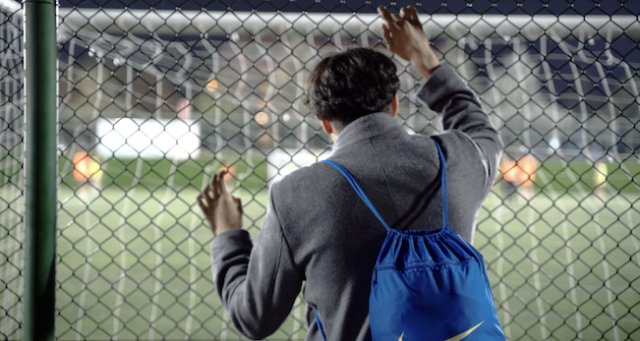
Iranian director Farzad Khoshdast, talks to Business Doc Europe about his new film Third Land, produced by Kaveh Farnam and Dorri Rezaei and selected for Czech Joy, about an exiled Iranian family in Turkey caught in a desperate 13-year limbo having fled their oppressive homeland, only to be stonewalled in their desire to repatriate to the US. The move was precipitated by father Hamid’s discovery that equipment he had manufactured was being used in a missile-related project connected to the Islamic Revolutionary Guard Corps (IRGC).
“Unfortunately, the situation surrounding my film and my personal safety has become increasingly serious. I am facing renewed judicial pressure from the Iranian authorities, including a case at Branch 26 of the Tehran Revolutionary Court, where I have been accused of “propaganda against the Islamic Republic,’” the director tells Business Doc Europe.
“I have also received disturbing and hostile messages connected to the film. These developments have placed me under considerable psychological pressure, particularly because I am deeply concerned about the safety of my family and the real people featured in the documentary,” he adds.
On 30 October Khoshdast received a response from the International Coalition for Filmmakers at Risk (ICFR), following an urgent request for assistance, requesting further details on how they and their partner organizations might be able to help.
“At this moment, I believe that international media attention is especially important. I am not simply trying to promote my film. I am trying to ensure that the pressure and threats surrounding it do not remain invisible,” Khoshdast stresses.
In written replies to questions sent by Business Doc Europe, further elucidated on the film, the power of documentary and his own situation in exile.
He describes the psychological torture that the family we encounter in Third Land are undergoing. “I believe that one of the cruellest forms of political violence is to deprive a person of their future: to place someone in a situation where they can neither return to their past nor make decisions about tomorrow,” he says. “Hananeh, Hamid and Kian have lived in Turkey for many years. They are not tourists, nor are they migrants who freely chose to leave their country. Their lives are the consequence of political pressure and threats that began in Iran and whose effects continue today.’
“Thirteen years of waiting is not merely a thirteen-year delay in migration. It means thirteen years of psychological erosion, lost opportunities and altered human relationships. For thirteen years, you sink into a suspended existence, somewhere between not living and gradually being emptied of life.”
For years, the family have hoped to migrate to the United States, but changes in US immigration policy have cast grave doubts over their much longed-for future.
“The truth is that, in my view, American politicians, despite all their declarations about freedom and human rights, sometimes show a troubling resemblance to politicians of the Islamic Republic in their disregard for ordinary human lives,” says Khoshdast. “In the film, we see how an American election and the return of someone like Donald Trump to the presidency can overturn the life of an Iranian family on the other side of the world. They have no vote in the US presidential election, yet they must pay the price of the decisions made by its winner.”
The director further explains to BDE the serious charges laid against him. “’Propaganda against the Islamic Republic’ is a political and security-related charge in Iran and can carry criminal penalties, including imprisonment. My concern is not confined to the formal charge or its statutory punishment: my experience of security practices in Iran suggests that other consequences may also await the accused,” he says.
“I do not want to be deprived of the right to return to my country because I make films, choose certain subjects or tell the stories of people facing political pressure,” Khoshdast adds. “But I cannot trade my professional independence and my conscience for the right to return. During this period, various people in Iran, including some connected to state institutions, have contacted me and warned that even my wife should not travel to Iran. That means the security concerns do not stop with me. People close to me may also be at risk.”
Khoshdast tells an astonishing tale to illustrate his belief in the power of the documentary form.
“Documentary cinema can even save lives,” he says. “With Narrow Red Line, a documentary I made in an Iranian juvenile correctional facility, I had an experience that permanently changed how I understand the power of documentary cinema. A screening of my film helped save an eighteen-year-old boy from execution.”
“For four years, people had been trying to persuade the complainant in his case to grant forgiveness, but he had refused. Through extraordinary efforts, my colleagues managed to bring him to a screening of Narrow Red Line. He watched the film and left the auditorium in the dark, without saying goodbye to anyone.”
“That same night, he sent me a voice message. I still have it. He said, ‘After watching this film, I thought a great deal and decided that Milad should not be executed. He must stay alive and live his life.’”
“Today, both Milad and the complainant are still in touch with me. Milad has grown into a successful man. That is the power of documentary cinema. I hope something equally positive can happen for Hamid and his family through Third Land. As my teacher Abbas Kiarostami used to say, what more could we ask of a film?”
Khoshdast further articulates both why Third Land is so personal to him, and appeals directly to international organisations to take up the case of Hananeh, Hamid and Kian.
“When I began making Third Land, I did not imagine that my own life would come to resemble the lives of its subjects so closely,” he says. “For years I made films about people whose lives and freedom had been taken away, in part, by political power. Then, in the course of my own life and filmmaking, I too was forced to leave Iran.
“That parallel has profound meaning for me. On one hand, I am a filmmaker trying to tell the story of an exiled family. On the other, I am someone who has experienced being forced from his homeland, separation and an uncertain future.”
“Yet I do not want my own story to overshadow the people in the film,” Khoshdast adds. “They found themselves in this situation many years before I did, and their suffering must not become merely a device for explaining my life. Perhaps the most important thing Third Land taught me is that, for many people, exile is not an event in the past. It is a condition they experience anew every single day.”
“As a documentary filmmaker whose earlier film helped save a young man from execution, I ask every human rights organisation, refugee advocacy group and individual in a position to help to take action so that this family can leave Turkey safely,” he appeals.“Today – not tomorrow. Tomorrow may be too late.”