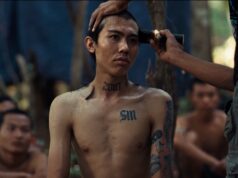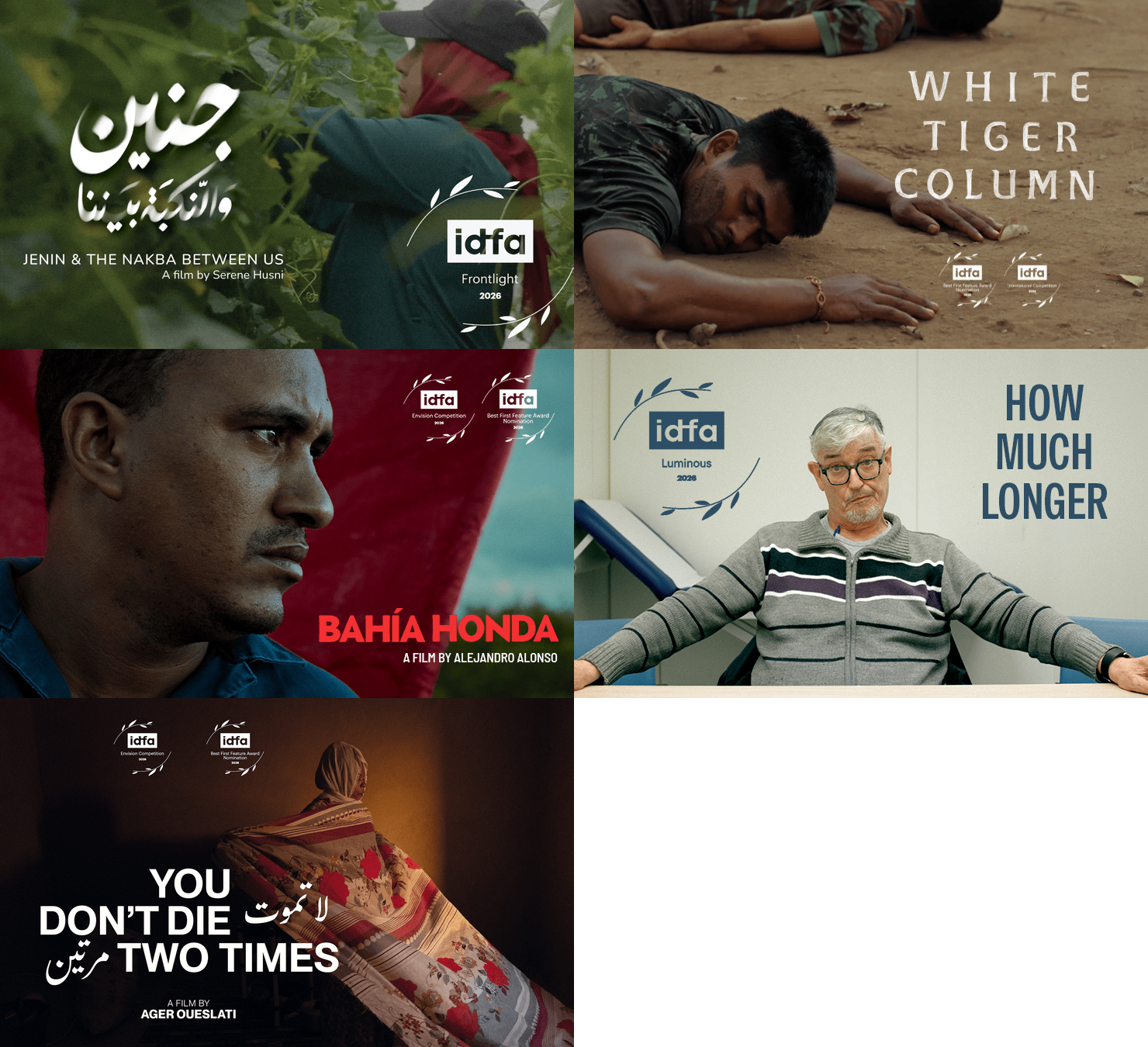
The 39th IDFA opens today with the world premiere of White Tiger Column, the debut feature of Robert Mentov, Dwight Jantzi and Bryan Dickie, heralding 11 days of frenzied doc activity undertaken by public and professionals alike. This year sees the selection of some 250+ docs and new media projects, presented across three film competitive programmes, three DocLab competitions, and a series of core themed programmes.
For Isabel Arrate Fernandez, who is overseeing her second IDFA as Artistic Director, this year’s programme reveals a heightened sense of nuance among the makers. “I think we have more films, particularly in the premier sections, that don’t go straight into explaining everything, or giving clear solutions to the themes and the topics that they’re dealing with, but offer much more of a palette to reflect upon,” she says. “They are really dissecting the themes and their subjects…and showing how complex these issues are, [whether] family relationships or world politics.”
She cites the opening film as an example. “White Tiger Column is about this generation that cannot take it anymore and decides, ‘we have to change this. I don’t want this for my future.’ And in their case, they go into the jungle to join the guerrilla movement.”
“Look at what is happening around us with young people voting in elections, wanting to change the course of their country,” she references the new radicalism evidenced recently across the globe. “Like what happened in Serbia now, or the people protesting in France or the percentage of young people that were part of having Lula win in Brazil. I find that something that is very interesting.”
Arrate Fernandez further reflects on the festival’s perceived shift over the past decade, especially under Orwa Nyrabia’s direction, towards it being an even more politicised event. Yes, Nyrabia joined the festival with the stated intention to apply root and branch re-appraisal of gender and geo-diversity imbalances within the programme, but Arrate Fernandez argues that it is just as much the intensely fraught global political context that has set the festival course over past years.
“The festival and the leadership react and adapt to that,” she tells BDE. “It is all related to changes in the world around us. The world becoming more political. Politics entering our lives more in an impactful manner.”
She also addresses accusations of an anti-Europe bias at IDFA. Not so. It’s the world that has changed, not IDFA, she maintains. “The world has become a much more open place. Filmmaking is happening in many more places. Films are stepping out of their own national context and are reaching platforms like ours, so the spread of films that reach us is much bigger and is also much more diverse, so that leads to a different selection – different options, different interests, different triggers.”
Which opens up a wider argument on who is determining what we see, how we are looking at the world and how stories are being told. “That is something that I take with me also in this new position [Arrate Fernandez was formerly head of IDFA Bertha Fund], in looking at how we programme and who we platform. How do we really approach being an international event in the true meaning of the word international.”
Arrate Fernandez insists on IDFA’s role in “safeguarding the space for creative freedom in documentary filmmaking,” both in the sense of the finance mechanisms it has developed and in the festival’s programming responsibilities. “What motivates me and stimulates me and colleagues here at IDFA is seeing what documentary can be as an art form, and creating space to give it oxygen so that new things can arise, new filmmakers can get access, new ways of looking at storytelling [can emerge]… I think that that is something that I feel is very important in these times where you see how this documentary space, in terms of financing, in terms of what is being programmed and in terms of freedoms, is under pressure and is being limited.”
IDFA has been, over the past 40 years or so, a festival in equal part issue-led, educational, political, at times polemical and campaigning, and catholic in the vast range of topics and subjects it embraces. Another criterion is its insistence on high cinematic values, and a desire to reflect the vagabond diversity of styles out there and how they evolve according to the needs of the stories.
If, however, Arrate Fernandez and her team were left with one final film to programme, and their choice was ‘content over style,’ or vice versa, where would the final decision fall?
“The interesting thing about your question which you are putting as a dilemma is that this is something that we accomplish in our programme anyway, so it never comes down to that one moment,” the IDFA boss gently rebukes BDE for the naivety of its question. “It’s never this or that because we’re always looking at that balance overall. If we put very essayistic films that explore, or inform, against films that have a clear, very important message, for me it’s not a contradiction. In the end it’s also about how a film touches you as an audience, and that can be in many different ways. It can be celebral, or it can be something that you really feel and that can be in your heart. It’s something that can actually exist in the same space.”
On a more serious note, Arrate Fernandez highlights the vulnerability of docmakers when she is asked if the role of overseeing a large festival such as IDFA is comparable to a producer who must control all aspects of a documentary, such as planning, logistics, finance, staff management and creative vision.
“No, I think we’re better off than an independent film producer these days, and that’s purely because of the financial basis that we know we have, and that a film producer doesn’t have,” Arrate Fernandez ruefully reflects, conceding that hers is a salaried position, with all of the associated benefits. “What is at stake for them [producers] is often much more personal in terms of consequences, particularly talking financing, than what it is for us. Your comparison is right in terms of all the things that me and Cees (van’t Hullenaar, IDFA MD) and the board of directors have to oversee, but we’re lucky that we have a team. We have a basic subsidy that comes in every four years that we fight for, we work hard for, and we have to write very good plans for it, but we are part of a system that gives us a solid basis.”
“Of course, we’re always struggling because we always want more. We want to do more and we want to be able to have more filmmakers here and take care of everybody and organize interesting talks and whatever… But we have a financial basis that, if you look at independent documentary production in Europe and in many other parts of the world, is just not there. And that makes a difference.”
This year marks the 39th IDFA, which means there is a big anniversary around the corner. “The preparations for the 40th really literally start from the moment we finish this one and we evaluate what we have done,” says Arrate Fernandez, pointing out that celebrations next year will be less about popping champagne corks and more about highlighting what has been, and continues to be “meaningful and interesting and inspirational” within her festival, and the doc world at large.
But first there is the 2026 edition to navigate. What does she believe will constitute a job well done? “What is success for this festival? Somehow, even though I did a festival last year as Artistic Director, I also feel like it’s still new. I’m not used to it completely yet, Nick. I’ve lived through so many IDFA festivals, but still it’s different.”
“Of course, we want the audience to come and see the films, and that is looking good so far in the pre-sales. So I think that’s obviously a measure for success, but it’s also really creating the conversations that people find meaningful in a world where things are happening so fast and changing so often,” she says of a core principle that applies to audiences and professionals alike. “And I believe many of the films we have programmed will lead to those conversations. I’m really looking forward to that.”