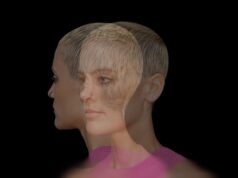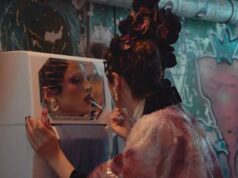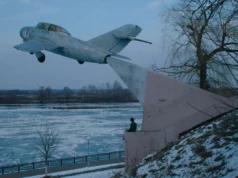
Aquarius, a fictional AI agent, disappears after an update error in Josefina Buschmann Mardones’ Artificial Clouds, sending a digital investigator on its trail through Chile. The filmmaker uses the mystery to explore the landscapes, resources and histories that sustain contemporary technologies.
Selected for IDFA Forum’s Rough Cut Presentations, the 70-minute project sends its investigator from Valparaíso to the Atacama Desert, searching for the missing Aquarius and encountering workers, activists, animals and minerals along the way. Its fictional framework connects research into AI’s environmental footprint with questions about the narratives through which people understand technology.
Buschmann describes it as “a mutant film made of science and fantasy, observation and speculation; a cable that dwells between worlds: the artificial and the material, the submarine and the subterranean, the living and the dead.”
The disappearance allows her to address what is absent from familiar accounts of “the cloud”: minerals extracted for digital technologies, water used to cool data centres, and local histories connecting resource exploitation with dictatorship. The narrator-investigator also creates space for other forms of life inhabiting this infrastructure, from crabs alongside submarine cables to birds perched on telecommunications equipment.
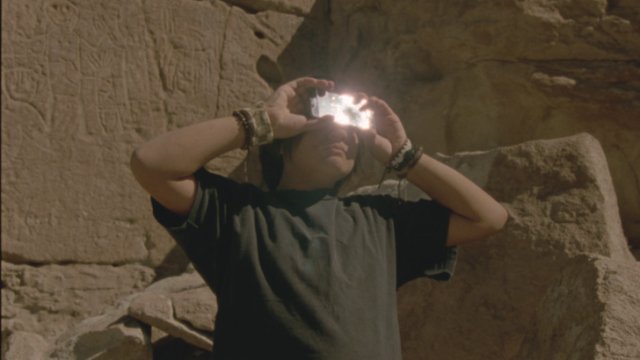
Those connections have shaped a visual approach that the director calls an “analog-digital glitch.” Shooting contemporary technologies on 16mm film introduces a tension between images associated with the past and machinery presented as the future. Buschmann further draws on adventure and mystery films from the 1950s to the 1970s, while synthesiser music and Chilean songs from the 1970s contribute to the film’s tone.
“The idea is to move away from dystopias or utopias around technology through a lateral gaze that is complex but also funny and absurd, just like life itself,” she tells Business Doc Europe.
The voice-over was developed through editing, with text repeatedly tested against images and sound. Within the central investigation, Buschmann incorporates smaller narratives, including the tale of the ghost of a telecommunications worker detained and disappeared during the dictatorship, and a volcano love myth told by an indigenous Lickanantay person.
“There are as many ways of narrating as there are narrators in the film,” she explains. “This structure enables more voices to come into the film, complexifying it without losing the main thread.”
The helmer explains that the emergence of autonomous AI agents also changed her thinking during the edit, drawing her towards the relationship between storytelling and the behaviour of systems trained on human narratives. The environmental investigation consequently developed an existential dimension, with Chile providing the concrete setting for these questions.
Artificial Clouds is produced by Daniela Camino Valdivia for Mimbre Films in Chile and Boris Garavini for Les Films Invisibles in France, in co-production with Viana González for Mexico’s Autonauta Films. Cinematography is by Francisca Sáez Agurto, editing by Clément Pinteaux, sound design by Maja Rojas and Arturo Salazar, and music by Ekiem Barbier.
Garavini puts the production budget at €394,786, with €339,786 secured. Backers include Chile’s Ministry of Cultures, Arts and Heritage, the Sundance Institute and Sandbox Films, the Alter-Ciné Foundation, Mexico’s FOCINE and Churubusco studios, and France’s CNC and Occitanie Region. Outstanding costs include music rights, production salaries, communications and distribution expenses.
Picture editing is nearly complete. Sound post-production is scheduled for early 2027 in Mexico, with colour grading and visual effects due to finish in France in early April. The team is targeting a festival launch after completion; the world premiere remains available.
Camino Valdivia is developing an impact campaign connecting the film with debates around mineral sourcing, cooling infrastructure and climate justice. “We plan to engage with academic institutions, policymakers, and the film industry through university screenings, research collaborations, and a high-profile festival premiere,” she says.
Plans in Chile include a public forum at the National Museum of Fine Arts, an accompanying multimedia exhibition, and community workshops in Santiago, Antofagasta and San Pedro de Atacama. These would involve environmental campaigners, researchers and Indigenous representatives, alongside screenings in universities and cultural centres.
At IDFA 2026, the team is seeking finishing partners, potentially through a grant or television pre-buy, while opening discussions with international distributors and sales agents. Garavini says those conversations have only recently begun, with further developments expected during or after the festival.