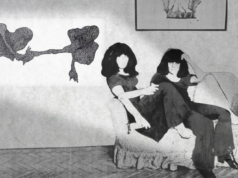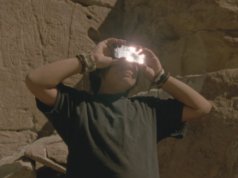
“Characters always come my way like a casualty,” explains Mexican director Sérgio Morkin of his feature doc Maricarmen, selected for Docs for Sale.
The film tells the story of an extraordinary woman, artist, cellist (both classical and rock) and marathon runner. But Maricarmen is also totally blind, and attributes her strength and determination to a mother with whom she has suffered a fractured relationship.
The day before Morkin spoke with Business Doc Europe, the film had picked up the audience prize at Zanate Doc Fest (Mexico) and prior to that had received another audience nod at the Morelia Film Festival (also Mexico). At its premiere at It’s All True, the film received an honourable mention in Latin American Competition. Sales are handled by Imcine, who also co-produced the film with Morkin’s Lupe & Hijos Filmes.
“Maricarmen is an active and creative woman, an artist, a true artist,” Morkin explained via his head of production Decislava Silva. “I didn’t dare to start a movie about her until I read her writings within her autobiography… when I really connected with her poetry, with her inner sense, of how she feels about the world, and also [I saw] how potentially cinematograph her writings were.”
We see Maricarmen brilliantly playing her cello (she was trained at a Moscow conservatoire), but also running and arguing, and all the time revealing a ferocious sense of humour. We also see her walking at pace through the metro, her cello on her back, bashing a path through her fellow commuters.
Morkin argues that his film is much more than an account of a woman overcoming adversities that few of us could even countenance. “The movie is about the complexity of being alive, of existential emotions that we all feel, about the need to be loved, about being alone, and the complexity of relationships.”
One of these relationships is with a mother who instilled enormous senses both of strength and resolve in her daughter, but at a price. Maricarmen felt abandoned by a mother she felt was ashamed of her, somebody who would have preferred a ‘normal’ daughter.
But the process of making the documentary proved to be emotionally profound for Morkin’s characters. “Maricarmen and her mother tell each other things that they never said before. The film becomes a medium for them to express themselves, a re-encounter between two adult women, one of 82 years, the other 55, who come back to each other, and the film talks about the possibility to forgive as well.”