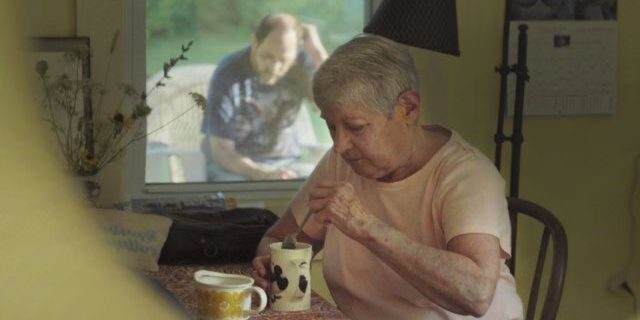
It’s an intriguing question, and one that most viewers of documentary will have mulled over. What happened next to the film’s subject after the cameras have stopped rolling or after the film’s high profile premiere or release. How are they bearing up? What are the effects on them after having had their lives examined in graphic detail? Why indeed did they sign up in the first place for such a rigorous, privacy-blowing process of exposure? Did they know to what extent their lives were about to change?
Ask Margie Ratcliff who, as a teenager, featured in Jean-Xavier de Lestrade’s The Staircase, about the trial of her father accused of murdering his wife/her mother, and she will tell you how the nightmare has continued unabated. When the series transferred from the Sundance Channel to Netflix, the billboard posters went back up and the pain returned. To compound matters HBO Max has recently made a dramatized version of the story, with Colin Firth starring as her dad and Game of Thrones’ Sophie Turner playing Margie. And so it continues…
When Jennifer Tiexiera and Camilla Hall were developing their doc, selected for AJB DOC Last Minute Cinema, a chance meeting with Ratcliff convinced them that the project had merit. “She [Ratcliff] said, ‘I never thought in a million years, I would participate in a documentary ever again. But this is something I think is really important…I’ve spent my whole life on camera almost at this point – the last 16 years. And it’s something I think about all the time, and I would love to explore this with you,’” co-director Tiexiera tells Business Doc Europe of Ratcliff’s positive response to their suggestion that she join them. “That was kind of the impetus to dig deeper in this.”
So Ratcliff became a partner on the project, as did other notable documentary ‘subjects’; Arthur Agee (Hoop Dreams, US), Ahmed Hassan (The Square, Egypt), Mukunda Angulo (The Wolfpack, US) and Jesse Friedman (Capturing the Friedmans, US), all of whom discuss their experience of being in the doc spotlight, for good or bad. For Agee, Egyptian Hassan and Angulo it was fulfilling – although for Hassan the doc is now a mere “memory,” and Angulo’s desires to work in film doesn’t extent to him ever wanting to make a documentary.
Perhaps unsurprisingly, the effect on Jesse Friedman (who features in the controversial child abuse-themed Capturing the Friedmans) has been the most profound, with his former partner Lisa observing: “It has a permanent psychological effect. Jesse has been a subject all his life…And Jesse got lost in that. So the cost of being a subject in Jesse’s case has been complete.”
“Obviously our participants are a huge part of this [film],” says Subject co-director Jennifer Tiexiera. “They truly are our partners. They’re also our co-producers and were really instrumental in shaping this film with us…It was so important for them to hold agency and really feel like they own this. That’s a very different power dynamic than their last power dynamic.”
The film also invites contributions on the theme from a host of docmakers and professionals, many of which are very telling. Filmmaker Davis Guggenheim honestly and candidly observes how, “when you’re a filmmaker, especially when you are just starting out, you don’t have time to think of the ethical consequences of your choices. You’re just saying ‘oh my God, here is a story. I have to chase this.”
Kirsten Johnson (whose own father was the subject of her acclaimed doc Dick Johnson is Dead) tells how “things are done ‘at or towards’ the subject without the subject’s capacity to do ‘at or towards’ back.”
Assia Boundaoui points out that at the core of many docs is “the asymmetrical power relationship between the filmmaker and the subject.” Director Tiexiera agrees, telling how she and co-director Camilla Hall were reacting to a “power dynamic [that] seemed so imbalanced.”
What’s more, Tiexiera tells how when Hall, a former journalist, moved across to documentary, “she was like ‘it’s really the wild west. At least in journalism, we have some sort of outline or resources,’” referring to the lack of protections offered to subjects and the overall duty of care that should be provided to doc subjects, whether financial or in terms of pastoral support.
It is a point raised by Boundaoui about the trauma felt at times by all involved, filmmakers and subjects alike: “You need therapy. Your subjects definitely need therapy, because often we are asking subjects to reveal their most vulnerable selves and it’s retraumatizing.”
Tiexiera takes up the point. “If you’re doing a documentary that’s laden with trauma and based on the traumatic experiences of your participants, why isn’t therapy, or a therapist, or someone to help guide us through that, mandatory, or part of the line items?” she asks.
The 93-minute film is produced by Lady & Bird Films, founded in 2021 by Tiexiera, Hall and Rita Baghdadi to focus on stories from underrepresented voices. The company has been working with NY-based Looky Looky Pictures on an impact campaign. “We’ve already reached out to partners and it will be in film schools, and there’s a young filmmakers’ collective which has already requested the film,” says Tiexiera. “We joke with our lawyer – he said that this is gonna be required viewing for everybody who walks into his law office to start working there…because sometimes they forget, as we all do, how human stories at the center of this.”
“We came together to make this film to identify what we can do better individually as filmmakers using a “nothing about us, without us” approach,” she adds in her press notes, co-written with Hall. “Who better to help guide these conversations than the people who have spent decades on the other end of the camera? Our hope is that Subject can help inspire a larger industry wide conversation when it comes to some of these ethical challenges and shed light on the participant/filmmaker relationship for documentary audiences.”